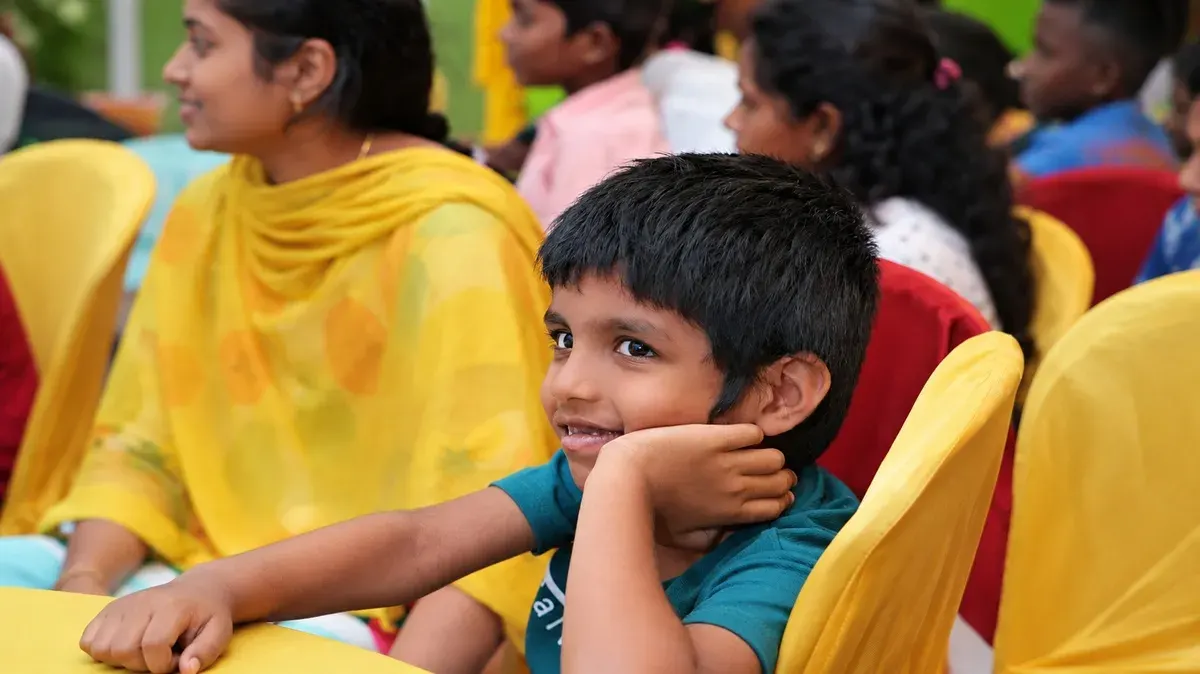
Ask a seven-year-old how school went, and the answer is almost always the same: "Fine."
Ask again an hour later, while you're both doing something else (folding clothes, walking to the shop, stirring a pot) and sometimes the real story comes out. A friend who wouldn't sit with her. A teacher's comment that stung. A worry about an exam she hasn't mentioned to anyone.
Children feel as deeply as adults do, often more intensely. What they lack is the vocabulary, the confidence and sometimes the safe moment to put those feelings into words. When feelings can't be spoken, they tend to come out in other ways: tantrums, silence, stomach aches, trouble sleeping, sudden anger over something small.
Helping children express their feelings isn't about one big conversation. It's about many small ones, woven into ordinary days. This article sets out simple, practical habits that parents, grandparents, teachers and caregivers can start using today, at home or in a care setting.
Why talking about feelings matters so much
Emotional development in children is as real and as important as learning to read or count. A child who can recognise and name what she feels is better able to:
calm herself when she's upset
ask for help when she needs it
understand how other people feel
solve problems with friends instead of fighting
concentrate in school, because worries aren't taking up all her attention
tell a trusted adult if something is wrong
That last point deserves special attention. Children who are used to talking about their feelings are more likely to speak up when something frightening or harmful happens to them. Open conversation at home is one of the quiet foundations of child safety.
Emotional skills aren't fixed at birth. They're learned, mostly from the adults a child spends time with. Every calm response to a difficult moment teaches something.
Why children find it hard to express their feelings
Before the practices, it helps to understand what gets in the way.
They don't have the words yet. A young child may know only "happy", "sad" and "angry". Feelings like disappointment, embarrassment, jealousy, loneliness or nervousness often show up as one of those three, or as behaviour.
Feelings arrive in the body first. A racing heart, a tight stomach or hot cheeks may come before any thought. Children often notice the body sensation without connecting it to a feeling.
They've learned some feelings aren't welcome. "Don't cry." "Big boys aren't scared." "Stop being dramatic." Many of us grew up hearing these phrases, and many of us say them without thinking. Children quickly learn which feelings to hide.
They worry about the reaction. A child may not tell you she broke something, failed a test or is being teased, because she fears anger, punishment or disappointment.
The moment isn't right. Direct questions, eye contact and a serious tone can feel like an interview. Many children talk more easily when the pressure is off.
The practices below are designed around these barriers.
Ten small daily practices
None of these need special materials or much time. Most take just a few minutes. What matters is doing them consistently.
1. Name feelings out loud, including your own
The simplest way to build a child's emotional vocabulary is to use it around them.
When you notice a feeling in your child, name it gently: "You look frustrated that the tower keeps falling." "You seem a bit nervous about tomorrow." You're not telling them what they feel. You're offering a word they can accept or correct.
Do the same with your own feelings, in a calm and age-appropriate way: "I'm feeling tired and a little irritable this evening. I'm going to sit quietly for a few minutes." Children learn far more from watching how adults handle their feelings than from anything adults tell them.
Over time, add richer words: disappointed, left out, proud, worried, excited, embarrassed, relieved, overwhelmed.
2. Make a daily feelings check-in
Choose a regular moment, such as after school, at dinner or before bed, and make a short check-in part of the routine.
A few ways to do it:
A feelings chart with faces showing different emotions. The child points to how they feel.
A weather report: "Is your day sunny, cloudy, rainy or stormy?" Many children find this easier than naming a feeling directly.
A number scale: "From one to five, how was today?"
Two parts: "What was the best part of your day? What was the hardest part?"
The aim isn't to fix anything. It's to show that feelings are an ordinary, welcome subject of conversation.
3. Talk side by side, not face to face
Some of the best conversations with children happen while you're doing something together: walking, cooking, drawing, travelling, sorting clothes, or sitting together after the lights are off.
Side-by-side conversations feel less intense than sitting across from each other. There's less pressure to answer, and silences don't feel awkward. Many parents find that children, especially boys and older children, open up most during these moments.
4. Listen more than you speak
When a child starts sharing something difficult, the most helpful thing an adult can do is listen properly.
Put down your phone and turn towards them.
Let them finish before responding.
Reflect back what you've heard: "So you felt left out when they started the game without you."
Resist the urge to immediately solve, lecture or reassure.
Children often just need to feel heard. Solutions can come later, and are often better when the child helps find them.
5. Accept the feeling, guide the behaviour
This is one of the most important distinctions in positive parenting practices.
All feelings are acceptable. Not all behaviour is.
A child may feel furious with a sibling. That's understandable. Hitting isn't acceptable. You might say: "It's okay to feel angry. It's not okay to hit. Let's find another way to show you're angry."
When we accept the feeling while setting limits on behaviour, children learn that their emotions aren't shameful. They also learn how to handle them safely.
6. Use drawing and play
Some feelings are easier to show than to say.
Invite children to draw how they feel, draw their day, or draw something that worried them. Ask about the picture with curiosity rather than interpretation: "Tell me about this part."
For younger children, play is their natural language. Toys, puppets and pretend games often reveal what a child is thinking about. A puppet that's "scared of going to school" may be easier to talk about than the child's own fear.
7. Read stories and talk about the characters
Stories give children a safe distance from difficult feelings.
When reading together, pause to ask: "How do you think she felt when that happened?" "What would you do if you were him?" "Has anything like that ever happened to you?"

Stories in your family's own language, as well as folk tales, grandparents' memories and stories from your community, work just as well. They also help children see that feelings are a shared human experience.
8. Notice body clues together
Help children connect sensations with emotions: "When you feel nervous, where do you feel it? In your tummy? Your hands?"
Once children notice their body's signals, they can use simple calming strategies:
slow breathing, such as smelling a flower and blowing out a candle
counting slowly to ten
squeezing and relaxing their hands
a short walk or stretch
a quiet corner with a cushion, a book or a soft toy
These aren't ways to switch feelings off. They're ways to feel calm enough to talk.
9. Repair after difficult moments
Every family has days when adults lose patience, raise their voices or say things they regret. What matters is what happens afterwards.
When things are calm again, go back to your child: "I shouted earlier, and I'm sorry. I was frustrated, but it wasn't okay to shout at you." Then talk about what happened.
Repair teaches children that relationships can survive conflict, that mistakes can be put right, and that adults take feelings seriously, including the child's.
10. End the day with a quiet reflection
Bedtime is often when children's worries surface. A few quiet minutes at the end of the day can become a precious ritual.
You might ask:
"What made you smile today?"
"Was there anything that felt hard?"
"Is there anything you're thinking about for tomorrow?"
Some families keep a simple gratitude or feelings journal, where children draw or write one line each night.
Daily emotional activities by age
Children's emotional needs change as they grow. These practices can be adapted:
Age & What helps
2 to 5 years
Name feelings simply, feelings faces, picture books, puppets and play, calming routines, plenty of comfort
6 to 9 years
Daily check-ins, weather reports, drawing, stories, side-by-side conversations, simple breathing techniques
10 to 12 years
Richer emotional vocabulary, journaling, problem-solving together, respecting growing privacy, talking during shared activities
Teenagers
Listening without judgement, respecting independence, being available rather than pushing, keeping confidences where safe
What to avoid
Even loving adults sometimes say things that make children less likely to share.
Dismissing feelings: "It's nothing." "You're overreacting."
Gendered messages: "Boys don't cry." "Girls shouldn't get angry."
Rushing to fix: solving the problem before the child has finished explaining it
Interrogating: firing questions until the child shuts down
Shaming or teasing: laughing at fears or embarrassment
Sharing what they told you with others without their permission, unless their safety is at risk
Punishing honesty: if a child admits a mistake, respond calmly so they keep telling you the truth
Supporting children who communicate differently
Some children need different tools to express what they feel.
Children with intellectual or developmental disabilities may benefit from picture cards, visual feelings charts, simple consistent words and lots of repetition. Their feelings are just as real. They may simply show them differently. Pain, fatigue or frustration can easily be mistaken for "bad behaviour", so careful observation matters.
Children with hearing or speech difficulties may express feelings through sign, gesture, drawing or communication devices. When the adults around a child share their way of communicating, everything changes. The importance of this is explored in International Day of Sign Languages 2026: When a Child Has No Words to Be Heard With.
Children who've experienced trauma or loss may need more time before they trust adults with their feelings. They shouldn't be pushed to talk. Patience, predictability and consistent caring relationships come first.
Practices for care settings
For children growing up in children's homes or other care settings, emotional expression can be especially important and especially difficult. Many have experienced separation, loss or instability, and may have learned to keep their feelings to themselves. What children in care are often managing beneath the surface is described in World Mental Health Day 2026: The Emotional Lives of Children Growing Up in Care.
In care settings, the daily practices above work best when:
the same caregivers are consistently present, so children can build trust
routines are predictable, including regular check-in times
group and individual moments both exist, since some children share more easily in a group and others only one-to-one
children have a trusted adult they can approach, who isn't the person responsible for discipline
quiet behaviour is noticed, not just disruptive behaviour
Elders can also play a lovely role. Grandparents, and grandparent figures, often have something busy parents and staff don't: unhurried time. A child who sits with an elder, hearing stories and sharing small worries, gains another safe listener. That's the thinking behind intergenerational programmes such as Paavai Anbucholai, where elders and children spend time together.
When to seek professional help
Everyday practices help most children. Some children need more support, and that's nothing to be ashamed of.
Consider talking to a doctor, school counsellor or mental health professional if a child:
seems persistently sad, anxious, irritable or withdrawn for more than a couple of weeks
shows big changes in sleep, appetite, school performance or friendships
stops enjoying things they used to enjoy
has frequent unexplained headaches or stomach aches
talks about feeling hopeless, worthless or wanting to hurt themselves
seems frightened of a particular person or place
India's national mental health helpline, Tele-MANAS, is available on 14416, and guidance on supporting young people's mental health is published by the World Health Organization.
If a child tells you about harm or abuse, stay calm, listen, believe them, tell them they did the right thing, and don't promise to keep it secret. Don't question them repeatedly. Seek help from the appropriate authorities. The child helpline 1098 is available around the clock.
Building emotional intelligence, one day at a time
Emotional intelligence in children isn't built through lectures. It's built through thousands of small moments:
a feeling named instead of dismissed
a worry listened to instead of rushed past
an apology after an argument
a story that sparks a question
a calm adult who stays steady when a child can't
Parents don't need to get it right every time. No one does. What matters is the pattern a child experiences over months and years: my feelings are allowed, the adults around me will listen, and I can find words for what's inside.
Practical parenting resources, including guidance on emotional development and communication with children, are available from UNICEF.
Where our work sits
At Paavai Foundation, emotional well-being is treated as part of a child's care, not an extra.
Through Paavai Abhayam, our child protection and care initiative, emotional care and counselling sit alongside safe living environments, nutrition and health monitoring. Our work for children with intellectual disabilities includes emotional and psychological well-being as a core component. At our Trichy campus, the children's home for girls is built around safe residential care, continuous education, emotional support and mentorship, and encouragement to build identity and self-belief. Life inside it is described in Inside the Girls' Home: Growing Up With Confidence and Courage.
Across all our programmes, the aim is the same as in any loving home: children who feel safe, feel heard and grow in confidence. That's the thinking behind Paavai Shishumithra, which nurtures children to grow into confident, responsible individuals.
Support Paavai Foundation in Nurturing Children's Emotional Well-being
Start small, start today
You don't need a new routine or a special course to begin. Choose one practice from this article and try it tonight.
Maybe it's asking about the best and hardest part of the day at dinner. Maybe it's naming one feeling out loud. Maybe it's simply putting down your phone the next time your child starts telling you something.
Helping children express their feelings is one of the most lasting gifts we can give them. It's a skill they'll carry into friendships, studies, work and the families they create.
It starts with a small question, a patient silence, and an adult who listens.
Care for Life.
FAQs
How can I help my child express their feelings?
Name feelings out loud, including your own. Make a short daily check-in part of the routine. Talk side by side during shared activities. Listen without rushing to fix things. Use drawing, play and stories to help children show what's hard to say.
Why do children struggle to talk about emotions?
They may not have the words yet, may feel emotions in the body before understanding them, may have learned that some feelings aren't welcome, or may fear how adults will react.
What are simple daily emotional activities for children?
Feelings charts, "weather report" check-ins, best-and-hardest-part questions, drawing feelings, reading stories and discussing characters, breathing exercises, and a quiet reflection at bedtime.
How do I respond when my child is angry?
Accept the feeling while setting limits on behaviour: "It's okay to feel angry, but it's not okay to hit." Help them calm down first, then talk about what happened.
How can I build emotional intelligence in my child?
Through consistent, everyday practice: naming feelings, modelling calm responses, listening carefully, repairing after conflicts, and helping children understand how others feel.
Should I make my child talk about their feelings?
No. Offer gentle, regular opportunities, but let the child set the pace. Pressure often makes children close up. Being available matters more than pushing.
How can I help a child with a disability express emotions?
Use visual supports such as picture cards and feelings charts, consistent simple language, sign or communication devices where needed, and careful observation, since distress may show up as behaviour.
When should I seek professional help for my child's emotions?
If sadness, anxiety, irritability or withdrawal last more than a couple of weeks, if there are big changes in sleep, appetite or school, or if a child talks about hopelessness or self-harm. Tele-MANAS (14416) is India's national mental health helpline.
What should I do if a child tells me they're being hurt?
Stay calm, listen, believe them, reassure them they did the right thing, and seek help from the appropriate authorities. Don't promise to keep it secret. Call the child helpline 1098 for support.

Comments
Loading comments...
Leave a comment
Your email address will not be published. Only your name is shown with your comment.