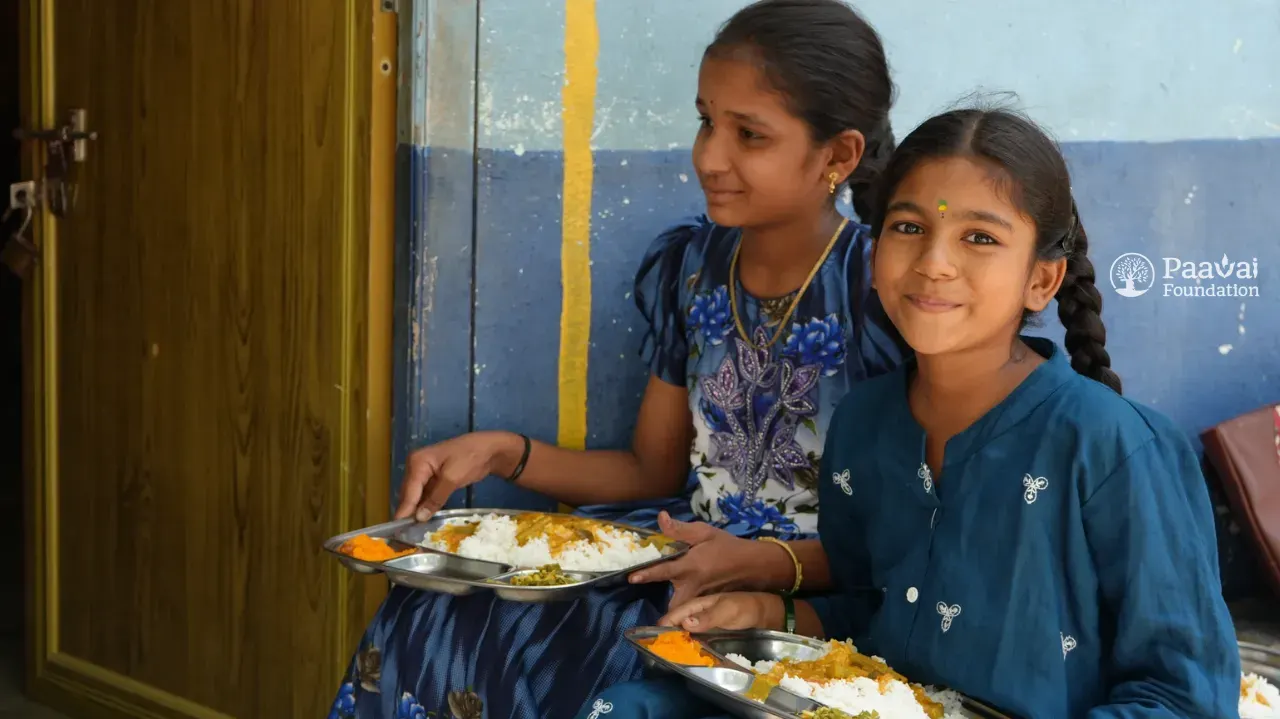
There is a sentence parents hear constantly and almost nobody explains: the first thousand days matter most.
It is true. Conception to a child's second birthday is where the foundations of growth, brain development and lifelong metabolic health are substantially laid, and much of what happens there cannot be undone later.
But stated on its own, that sentence does something unhelpful. It tells the parent of a six-year-old that the important window has closed. It tells the parent of a ten-year-old that whatever happened, happened. And it quietly directs almost all nutrition attention public, institutional, and household towards infants, leaving a decade of childhood with very little said about it.
That decade is not a holding pattern. Between two and twelve, a child builds bone that will carry her for sixty years, develops the brain architecture that determines how well she learns, establishes food preferences that will prove remarkably durable, and enters puberty with whatever nutritional reserves she has accumulated.
The window does not close at two. It narrows.
The thing most families get wrong about food
Ask a parent whether their child is eating enough and the answer is usually yes, and usually accurate.
Ask whether the child is eating well and the question becomes harder, because the two are not the same and most of us were never taught the difference.
Hunger is insufficient food. Malnutrition is insufficient or inappropriate nutrition, and a child can be entirely free of the first while experiencing the second. A child eating rice three times a day is full. She may also be short of protein, iron, calcium, zinc and vitamin A, and nothing about her plate or her appetite will reveal it.
This is why the importance of nutrition in child development is so persistently underestimated in households that are not poor. The visible marker of a nutrition problem is a thin child. The actual markers are a child who falls ill often, tires quickly, cannot concentrate in class, is shorter than her cousins, or has simply never been energetic and has been described as a quiet child for years.
Three forms are worth knowing by name.
Stunting low height for age reflects chronic undernutrition over a long period. It is not about yesterday's meal.
Wasting low weight for height reflects recent, acute undernutrition.
Micronutrient deficiency, sometimes called hidden hunger, affects children of entirely normal weight. Iron deficiency anaemia in particular is widespread, affects concentration and learning directly, and is routinely mistaken for a behaviour or ability problem.
What is actually being built between two and twelve
Four things, each with a different timetable.
The brain is still under construction. Most of the structural growth happens early, but the processes that continue through childhood, the insulation of neural pathways, the pruning and strengthening of connections depend on steady supply. Iron, iodine, zinc, vitamin B12 and essential fatty acids all have established roles here. A child who is iron deficient at eight is a child learning at reduced capacity, in a classroom where nobody has thought to ask about her haemoglobin.
Bone is being banked. Childhood and adolescence are when peak bone mass is built, and it is drawn down for the rest of life. Calcium, vitamin D and protein in these years determine skeletal strength decades later. This is one of the clearest examples of a childhood input with a late-life consequence.
Also Read: What Long-Term Support Actually Looks Like for a Child in Care
Immunity is being established. Children who are adequately nourished fall ill less often and recover faster. The reverse is a loop that compounds: a poorly nourished child falls ill, illness depletes her further, the next infection lands harder, and she loses school days throughout.
And habits are being set. This is the most underestimated of the four. Food preferences formed in childhood are remarkably persistent. A child who never encountered green vegetables becomes an adult who does not eat them. Taste is partly learned, repeated exposure genuinely works, and the window where it works best is the one this article is about.
The Indian problem specifically
India's situation is distinctive and it is not primarily about food availability.
The country runs one of the world's largest grain procurement and distribution systems and holds substantial buffer stocks. Whether there is enough food is not the live question in most places. What is in the food is.
Cereals are cheapest per calorie. For a household budgeting at the margin, rice and wheat deliver the most energy per rupee. Pulses, eggs, dairy, fruit, vegetables, meat and fish all cost considerably more per unit of energy. A household buying calories first is behaving rationally.
The systems that reach furthest deliver grain. Procurement, storage and distribution are built around storable cereals. Perishables the foods carrying the nutrients children are short of are harder to move and therefore less present in the programmes with the widest reach.
Girls get less. In many households the sequence at mealtimes is men, then children, then the woman who cooked, and within the children, sons before daughters. This is one of the significant drivers of anaemia in adolescent girls, and it transmits forward: a nutritionally depleted adolescent becomes a depleted young mother, and her child's starting position is partly set before birth.
And knowledge is thin. A household may understand that food matters without knowing that iron absorption improves markedly with vitamin C, that cereal and pulse eaten together provide better protein than either alone, or that milk with a meal can reduce iron absorption from it. These are not obscure facts. They are simply not taught.
Information on national nutrition programmes is published by the Ministry of Women and Child Development, and public health guidance by the Ministry of Health and Family Welfare.
A balanced diet for children, in practical terms
Nutrition advice frequently fails because it describes an ideal plate that a working household cannot assemble. What follows is framed around what is usually affordable and available.
Protein, every day. Pulses and dal, eggs where acceptable, milk and curd, groundnuts, soya, fish or meat were eaten. The common failure is not absence of protein but insufficiency of a thin dal alongside a large quantity of rice. Thickening the dal costs little and changes a great deal.
Iron, with something to help it absorb. Green leafy vegetables, pulses, jaggery, ragi, and meat or liver were eaten. Pair them with a source of vitamin C lemon, amla, tomato, guava, orange in the same meal, because the absorption difference is substantial. Cooking in iron vessels contributes too.
Calcium and vitamin D. Milk and curd, ragi, sesame seeds, green leafy vegetables, small fish eaten with bones. And daylight, which is free and frequently overlooked.
Vitamin A. Carrots, pumpkin, sweet potato, papaya, mango, green leafy vegetables, egg yolk, milk.
Diversity over quantity. The single most useful heuristic available to a parent: more different things on the plate, rather than more of the same thing. A child eating five foods is better nourished than a child eating a larger volume of two.
Cheap wins worth knowing. Ragi, groundnuts, eggs, seasonal local vegetables, curd, jaggery, bananas and amla all deliver disproportionate nutritional value for their cost. A sprouted pulse carries more than an unsprouted one and costs nothing extra.
And what to limit rather than ban. Packaged snacks, sugary drinks, deep-fried items and biscuits are calorie-dense and nutrient-poor. The concern is displacement: a child filled with these has less appetite for food that would have nourished her. Outright prohibition tends to backfire; reduced availability at home works better.
What changes at each stage
Stage - 2–5 years
What matters most - Protein and micronutrients for rapid growth; exposure to varied tastes; frequent small meals
The common failure - Giving in to fussiness and narrowing the diet permanently
Stage - 6–9 years
What matters most - Energy and protein for school and activity; iron for concentration; calcium for bone
The common failure - Breakfast skipped or reduced to tea and a biscuit; school lunch displaced by packaged snacks
Stage - 10–12 years
What matters most - Pre-pubertal reserves; iron especially for girls approaching menarche; calcium at peak bone-building
The common failure - Adolescent food autonomy without adolescent nutrition knowledge; girls' needs unaddressed
The ten-to-twelve band deserves particular attention and almost never gets it. A girl entering puberty with low iron stores enters it at a disadvantage that compounds every month afterwards, and the household has usually not registered that her requirements have changed.
Building habits that outlast you
Six things that work, drawn from what paediatric and nutrition practice consistently reports.
Offer repeatedly without pressure. Children frequently reject a food several times before accepting it. The parent who offers it once, meets refusal, and concludes the child dislikes it has ended the experiment far too early.
Do not use food as reward or punishment. Sweets as a prize and vegetables as a penalty teaches exactly the valuation you did not intend.

Eat together where possible. Children eat better in company and copy what they see adults eating, which places an uncomfortable but accurate obligation on the adults.
Let them cook. A child who has helped prepare something is considerably more likely to eat it.
Protect breakfast. Of all the meals, this is the one most often skipped or reduced and the one most directly connected to classroom concentration.
And do not comment on a child's body. Framing food around weight, thinness or appearance is how disordered eating begins, and the association formed in childhood is durable. Talk about strength, energy and growth not about size.
When to seek help
Nutrition content tends to stop at advice. It should not, because some of what it describes needs a doctor.
Consult a paediatrician if a child is not gaining height or weight as expected, is persistently tired or breathless on mild activity, falls ill unusually often, shows pallor of the inner eyelids, nails or palms, has persistently poor concentration that has been attributed to effort or ability, or is markedly shorter than peers without a family explanation.
Anaemia is common, straightforward to test for and treatable, and in a great many children it is simply never looked for.
Under-nutrition at the severe end is a medical condition requiring clinical management, not a dietary adjustment.
What communities and schools can do
Household behaviour is only part of the picture, and some of the most effective interventions are not household-level at all.
School meals do more than feed. A midday meal improves attendance, concentration and nutritional status simultaneously, and Tamil Nadu pioneered school feeding decades before it became national policy. Where quality and composition are monitored, the return is considerable.
Entitlements go unclaimed. Supplementary nutrition, anganwadi services and scheme benefits are available to households that never enrol, usually because of documentation, information or distance rather than ineligibility. Helping one family complete an enrollment is worth more than most awareness activities.
Growth monitoring finds what nobody is looking for. Regular height and weight measurement identifies faltering early, when it is still correctable.
Adolescent girls are the most neglected priority. Nutrition in these years affects the girl's own trajectory and her future children's starting position. It is intergenerational work that produces no visible result for decades, which is precisely why it is under-funded.
And some of it is simply ordinary. A kitchen garden. Seasonal local produce rather than packaged food. A school that does not permit biscuit stalls at the gate.
Where our work sits
At Paavai Foundation, nutrition is not a standalone programme, and the reasoning is the same as this article's.
A child's nutritional status is connected to her household's income, her mother's health, her school attendance and the healthcare her family can reach. Our work spans child protection and care, education, health and wellness, nutrition, disability inclusion, youth leadership, elderly care and district-level community development, built to connect because households do not experience their difficulties in separate categories.
The relationship between nutrition and outcomes is not theoretical in our work. Nutri Heal, our community-based initiative for tuberculosis patients, exists because nutritional status shapes how illness progresses and how recovery goes described in Nutri Heal: Supporting TB Patients Through Nutrition, Care and Community Support. And the long-horizon case that feeding a child properly is preventive medicine with a thirty-five-year lag is set out in World Heart Day 2026: Why Adult Heart Disease Often Begins in a Childhood Without Enough Food.
Our work with girls through Paavai Shishumithra connects directly to the adolescent point above, which is among the most neglected nutritional priorities in the country.
Donate now to support child nutrition, health and community development work across South India.
The decade nobody talks about
The first thousand days deserve the attention they receive. They are irreplaceable, and a child who misses them carries it.
But a child does not stop being built at two. She spends the next decade laying down bone she will stand on at seventy, developing a brain that determines how much of school she can actually use, forming food preferences that will follow her through adult life, and arriving at puberty with whatever she has accumulated.
Almost none of that requires expensive food. It requires variety rather than volume, a thicker dal, a lemon squeezed over the greens, an egg where one is acceptable, a protected breakfast, and an adult willing to offer the same rejected vegetable a seventh time.
The importance of nutrition in child development is not a message aimed only at families in poverty. It is equally aimed at households where the child is full, the fridge is stocked, and nobody has ever checked her haemoglobin.
Ask what is actually on the plate. Then ask who at the table is getting the least of it.
FAQs
Why is nutrition before age 12 so important?
Between two and twelve a child builds peak bone mass, continues critical brain development, establishes immune resilience, and forms food preferences that persist into adulthood. The first thousand days are irreplaceable, but the decade afterwards determines a great deal that is still open.
What is the difference between hunger and malnutrition?
Hunger is insufficient food. Malnutrition is insufficient or inappropriate nutrition. A child eating three full meals of rice daily is not hungry and may still be short of protein, iron, calcium and vitamin A.
What does a balanced diet for children look like practically?
Protein daily from pulses, eggs, milk, curd or groundnuts; iron from green leafy vegetables, pulses and ragi paired with a vitamin C source; calcium from milk, curd, ragi and sesame; vitamin A from orange and green vegetables. The most useful rule is diversity over quantity.
How can I tell if my child is undernourished?
Visible thinness is not a reliable marker. Watch for falling behind in height, frequent illness, tiring quickly, pallor of the inner eyelids or nails, and persistently poor concentration. Consult a paediatrician rather than adjusting diet alone if any of these persist.
What is hidden hunger?
Micronutrient deficiency iron, vitamin A, zinc, iodine, vitamin B12 in a child of normal weight. Iron deficiency anaemia is the most common and directly affects learning and concentration.
How do I get a fussy eater to try new foods?
Offer repeatedly without pressure, since children often reject a food several times before accepting it. Avoid using food as reward or punishment, eat together, and involve the child in preparing meals.
Which affordable foods give the most nutrition?
Ragi, groundnuts, eggs, curd, seasonal local vegetables, jaggery, bananas and amla all deliver high nutritional value relative to cost. Sprouting pulses increases their value at no extra expense.
Why do adolescent girls need special attention?
Girls approaching and entering puberty have substantially increased iron requirements, and in many households receive less food than male family members. Low iron stores at this stage affect the girl's own health and the nutritional starting position of any future children.
Does school food really make a difference?
Yes. Midday meals improve attendance, concentration and nutritional status at once, and for many children represent the most reliably balanced meal of the day.
Is childhood malnutrition only a poverty problem?
No. Dietary quality rather than quantity is the issue in a great many households that are not poor. A well-fed child on a narrow, cereal-heavy or packaged-food-heavy diet can be micronutrient deficient.

Comments
Loading comments...
Leave a comment
Your email address will not be published. Only your name is shown with your comment.