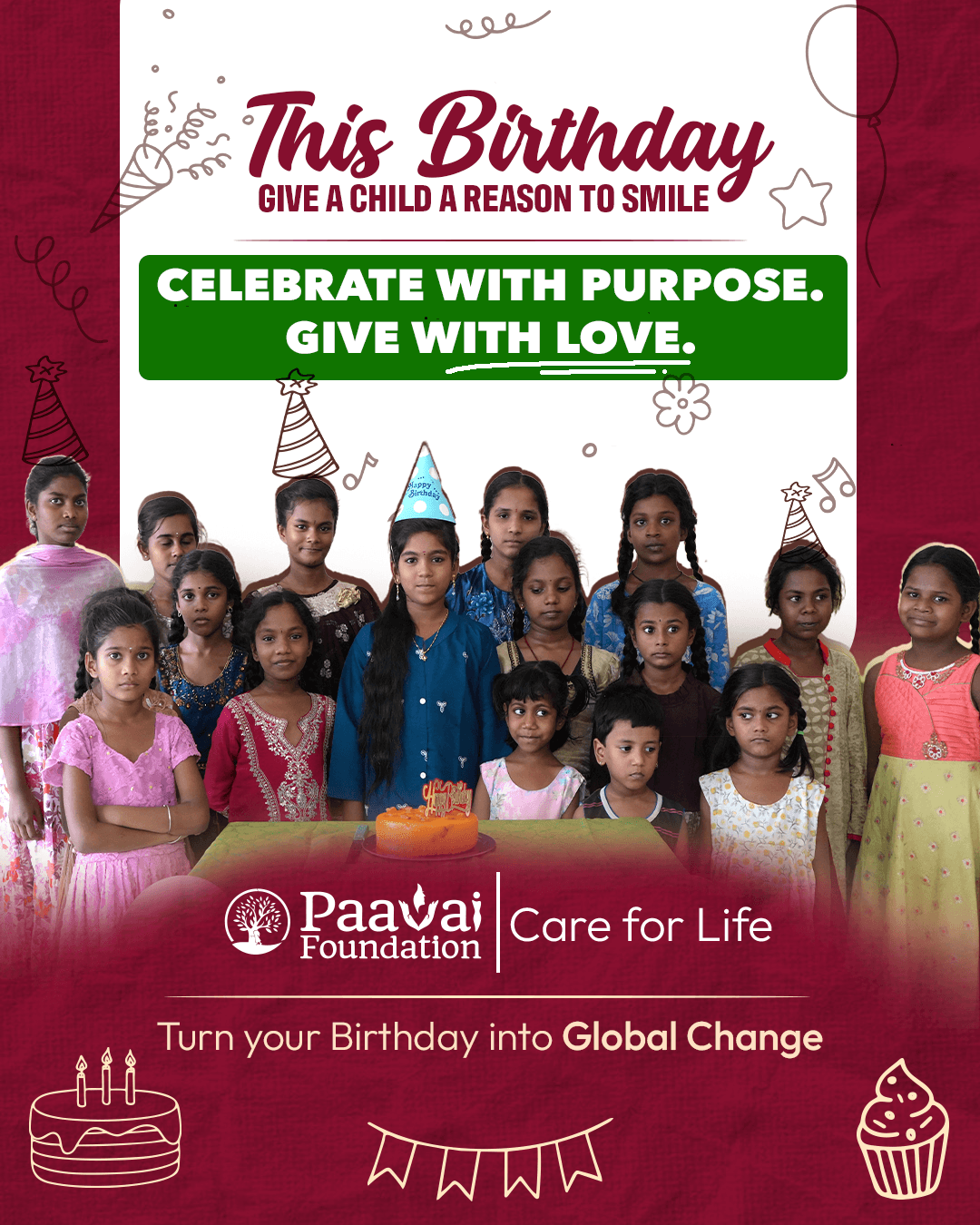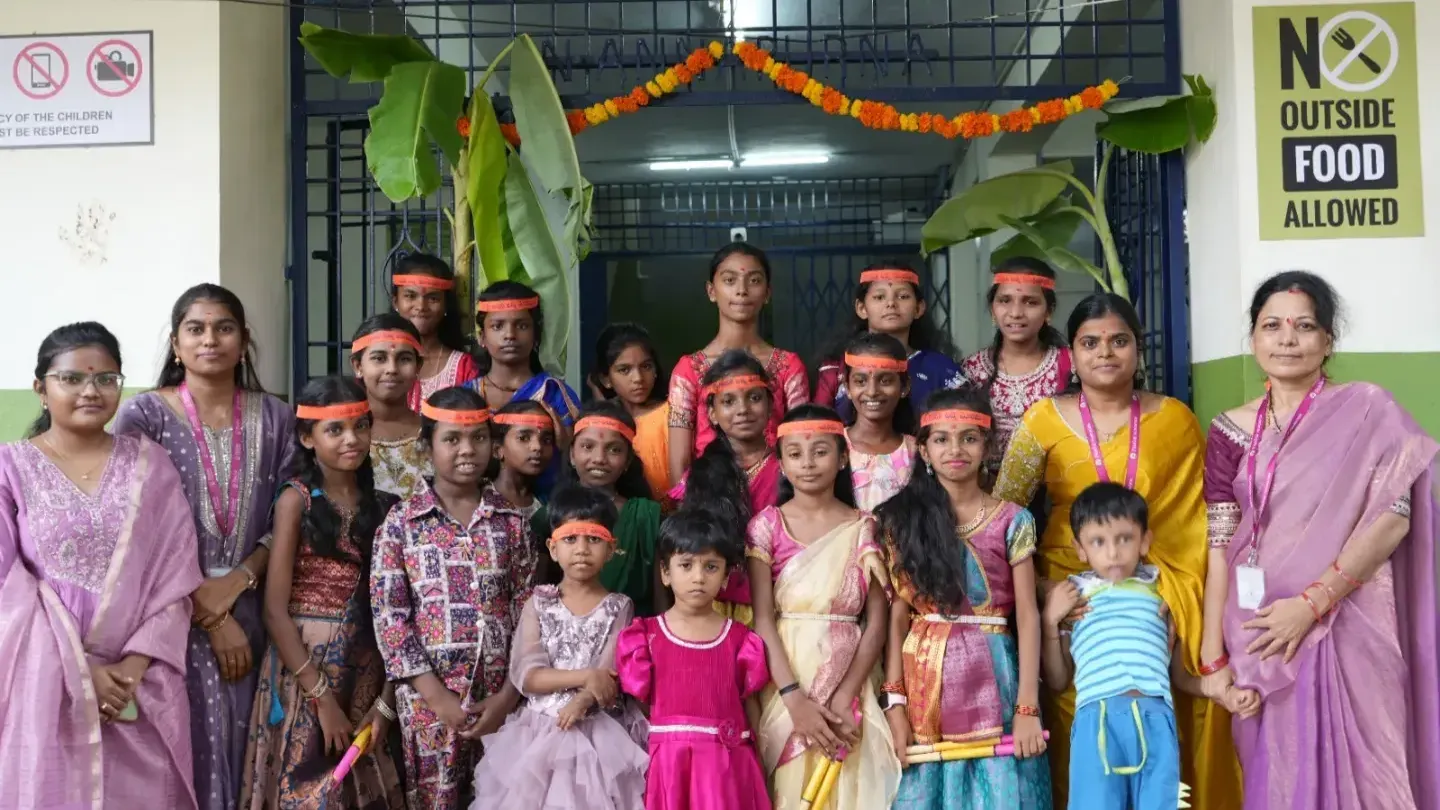
A photograph can capture a day. It cannot explain a year.
On the day a child comes into care, you can provide a meal, a medical check, a school uniform. You can see immediate relief. What you cannot see on that day is whether the same child will still be safe three months later, still in school six months later, still confident enough to speak up nine months later.
Paavai Foundation describes its work as Care for Life, with a development model called Cradle-to-Career-to-Community. The phrase is intentional. It treats protection, education, health and empowerment not as separate projects but as a continuous chain. One year is the smallest unit in which that chain can be understood honestly, because a year is long enough for trust to form and short enough to see what steady presence actually does.
What follows is not the story of one named child. It is what a supported year typically holds when care is designed for continuity rather than for events.
Why a year tells the truth that a day cannot
Most child-support efforts are measured by activity: children enrolled, kits given, sessions held. A year asks different questions.
Is the child still living in a safe and predictable environment months after arrival? Is attendance in school continuous rather than interrupted? Are health needs noticed early, not only when there is a crisis? Is the child speaking more freely than at the start of the year?
Paavai organises this progression as CARE → EDUCATE → EMPOWER → LEAD. The sequence matters because each stage makes the next possible. Without stable care, learning does not hold. Without learning, confidence does not build. Without confidence, participation does not follow. A single intervention can help for a day. A connected year allows these stages to hand off to one another.
The first months are about safety, not progress
The earliest part of a year in care is rarely about achievement. It is about steadiness.
For a child who has experienced vulnerability, the first change is that basic needs become reliable. A secure living environment, consistent nutritious food, support with personal hygiene and dignity, timely medical care and health monitoring, and emotional care that does not have to be earned.

This is the ground Paavai Abhayam is built to provide, and the Foundation describes it as the foundation of its child-care work for that reason.
Alongside physical safety, there is health in its quieter form. Preventive care, regular monitoring and attention to emotional security rather than only treatment after illness. Paavai Arogya frames health this way as a continuous system that includes mental well-being, daily wellness practices and careful follow-up, not just response to sickness. In practice this looks like routines a child can rely on: waking, eating, washing, learning and resting at predictable times, with adults who respond calmly and consistently.
Progress in these months may be invisible to an outsider. A child may simply start sleeping through the night, eating without anxiety, or asking for help when unwell. Those are not small things. They are the sign that the child no longer needs to remain on alert.
When learning stops being interrupted
Many vulnerable children are not out of school because they cannot learn. They are out because their education has been interrupted repeatedly — by a move, a family crisis, a period without support, a lack of materials or guidance.
Paavai Gurukul is described in the Foundation's material as a response to that pattern, with an emphasis on uninterrupted access to formal education, academic support and mentoring, and exposure to digital and future-ready learning. It is not framed as a separate schooling project but as continuity that protects the year from breaking.
In a supported year, this continuity shows itself gradually. The child has the same place to study. Someone notices when homework is difficult and stays to help. Absences are followed up. Learning support is paired with attention to confidence and well-being, so a child who struggled to read aloud in month two may be willing to try in month seven.
Paavai Shishumithra adds a second layer to this period. Its focus is balanced development for both girls and boys — continuous education alongside nutrition, healthcare, physical fitness and discipline, and creative and personal development. Discipline here is not framed as control, but as structure and responsibility the child participates in. Over months, that structure becomes self-direction. The child begins to manage time, care for belongings, help younger children, and take pride in a task completed well.
For children with intellectual disabilities, this same period includes the additional, lifelong care Paavai ID Care provides: special education and assisted learning, therapy and rehabilitation, continuous health monitoring, and support for emotional well-being and basic life skills. The timeline is longer than a year, but the year still matters because therapy, learning and health are held together rather than offered in separate places.
Confidence grows quietly, and that is why it is often missed
By the second half of the year, the changes an outsider can see are not academic scores. They are behavioural.
A child who once waited to be told what to do begins to ask questions. A child who avoided eye contact begins to describe what they like. A child who stayed silent in a group tries a sentence in front of others and is listened to.
Paavai Nayak names this stage directly. It is described as voice-first leadership — the idea that leadership begins when a person is heard, not when they hold a position. Its components are confidence, communication, awareness of rights and responsibilities, decision-making and participation. None of these are taught in a single workshop. They are practiced over months, in small moments: being asked for an opinion, being given a choice, being allowed to make a mistake and try again.
Emotional well-being is central here. Counselling, patient accompaniment, celebration of small gains and careful work with educators and caregivers are described across Paavai's programmes as infrastructure rather than an add-on. A year allows that infrastructure to do its work, because a child learns over time that support will not disappear after a good week or a difficult one.
What a year does not fix — and why honesty matters
A year of steady support does not resolve everything.
A child may still carry grief or fear that appears without warning. Learning may still be uneven. Health needs may still require referral and ongoing follow-up. Family circumstances may still be fragile. An intergenerational network like Anbucholai Elderly Care, where elders serve as mentors and storytellers, can add warmth and cultural grounding, but it cannot replace what a family and community must provide over a longer period.
Naming this is not a limitation of long-term care. It is its justification. If difficulties are continuous, support must be continuous too. A one-time help model assumes a single need. A year-long model assumes a life that is still unfolding, and it plans to stay.
This is also why Paavai's community-level work is structured through district and block-level delivery, working with government hospitals and primary health centres where possible, as seen in initiatives like Nutri Heal and the Arogya Mobile Units under Community Connect 360. Care that is connected to existing systems is more likely to continue after any single year ends.
What continuity asks of the adults
Long-term support looks simple from the outside. From the inside, it is made of repeated, unremarkable decisions.
To keep a child in school every day rather than celebrating enrolment once. To provide the same nutrition and health attention in month eleven as in week one. To notice when a child withdraws and to respond with steadiness rather than pressure. To maintain records, routines and relationships even when there is no event to photograph.
Paavai Foundation framing of care as an ecosystem is a reminder that no single programme does this alone. Protection makes education possible. Health makes attendance possible. Emotional support makes participation possible. Community connection makes all of it sustainable where the child actually lives.
For donors and well-wishers, the implication is practical. Support that is recurring, even in modest amounts, protects continuity more than larger support that arrives once. It allows a child's year to remain intact. For volunteers and partners, time and skills shared steadily matter more than short involvement that starts and stops.
A year is a promise kept in small parts
There is no dramatic turning point in most supported years. The child does not transform on a particular date. Instead, a series of small continuities accumulate until the child can imagine a future reliably enough to work toward it: to stay in school, to care for health, to speak, to help others, to belong.
That is what long-term support for a child in care actually looks like. Not a single act of help, but a full year in which help does not leave.
Care for Life. Every Life. — not as a slogan for a day, but as a practice that has to hold for a year, and then for the year after.