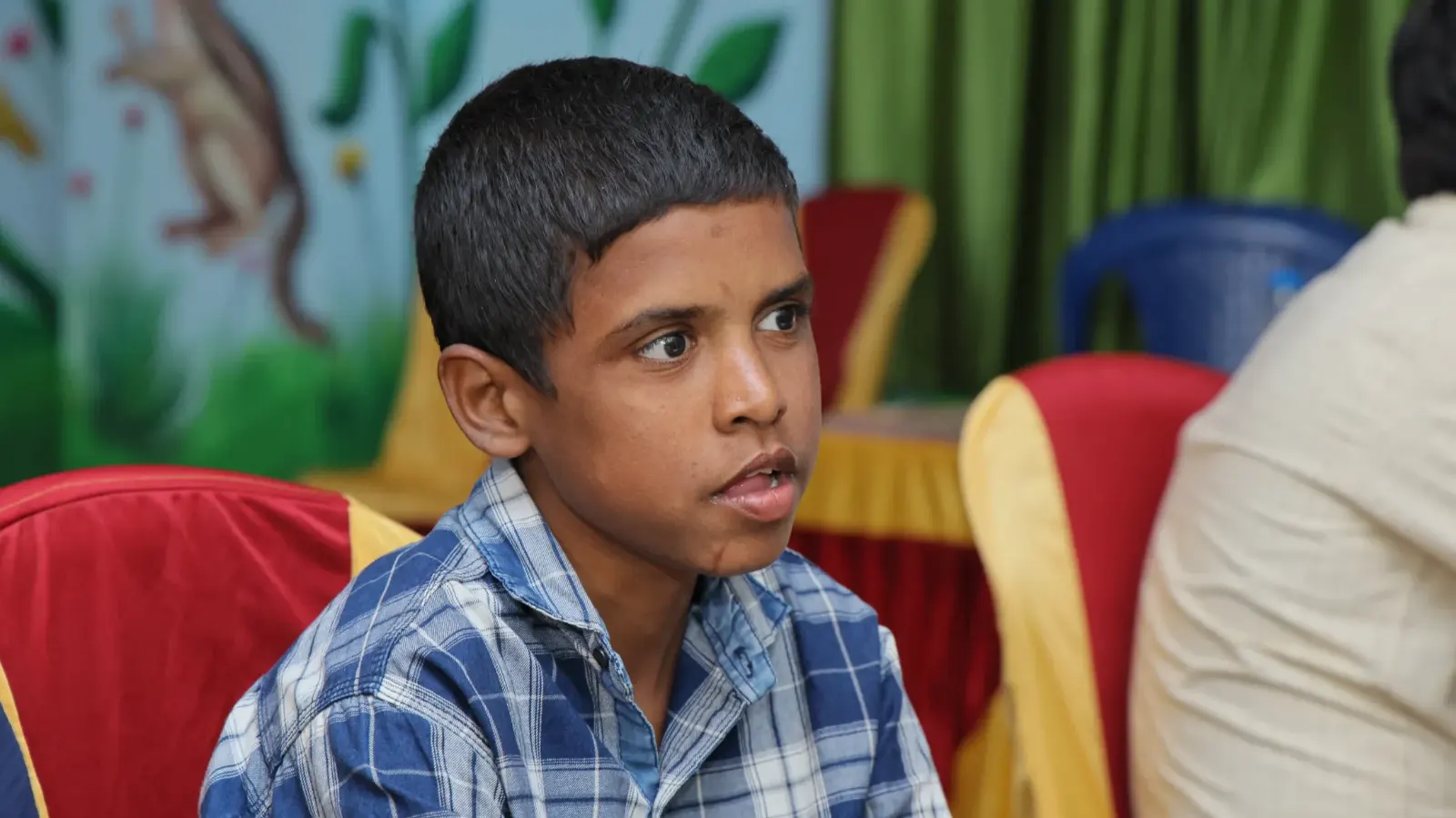
Ask a parent of a child with an intellectual disability what frightens them, and very few will say the diagnosis, the therapy schedule or the school admission fight.
What they say, almost without exception, is a version of the same sentence.
What happens to him after I am gone?
It is not an abstract fear. It is a specific, calculable one, and most parents have already done the arithmetic in their heads at three in the morning. They know roughly how many years they have. They know which relative might step in and which will not. They know that the sister who says she will look after him is twenty-six and unmarried, and that the answer may change when she is thirty-four with children of her own.
India's disability support architecture has very little to say to that parent. Almost all of it is built around childhood. Early intervention, special education, therapy, the right to free schooling, examination accommodations, all of it concentrated in the first eighteen years. Then the eighteenth birthday arrives and a system that was, whatever its gaps, at least oriented towards the child simply stops being oriented towards anything.
A note before you read further: this article provides general educational information and is not legal or financial advice. Procedures, forms, schemes and rules vary by state and change over time. For a specific situation, consult a qualified legal professional, your district's Local Level Committee, or the relevant government department.
The cliff at eighteen
Several things end or change at once, and families rarely see them coming as a group.
Schooling ends. The right to free education for children with benchmark disabilities runs from six to eighteen.
Whatever structure the school day provided routine, supervision, peer contact, a place to be stops. For many young adults with intellectual disabilities, the years after eighteen are spent almost entirely at home, and the skills painstakingly built over a decade begin to erode from disuse.
Also Read: From Giving to Change: How Local Communities Can Create Lasting Social Impact
Legal status changes. At eighteen a person becomes an adult in law, with the capacity to enter contracts, operate a bank account, own property and consent to medical treatment. For a young adult who needs support with decisions, this creates a practical problem that did not exist the day before, and it is the reason guardianship becomes relevant.
The parent ages out of the role. Not immediately, but the trajectory is fixed. A parent who was forty at diagnosis is sixty-five when the child is thirty. The person providing round-the-clock care is themselves becoming a person who needs care.

Siblings acquire a question they did not ask for. Brothers and sisters carry an unspoken expectation, often never discussed openly, sometimes never raised until a parent's funeral.
And nothing replaces any of it. There is no widespread day programme, no supported employment infrastructure, no residential option that most families can afford or trust, and no default pathway of any kind.
Legal guardianship in India: the two Section 14s
Families researching this run into an immediate and genuine source of confusion, so it is worth clearing up before anything else.
Two different laws both deal with guardianship, and in both of them the relevant provision happens to be Section 14.
Section 14 of the National Trust Act, 1999 provides for the appointment of a guardian by a Local Level Committee, for persons with autism, cerebral palsy, intellectual disability and multiple disabilities.
Section 14 of the RPwD Act, 2016 provides for limited guardianship, a restricted form of support intended to preserve as much of the person's own decision-making as possible.
So when someone searches for legal guardianship in Section 14, the answer depends entirely on which statute they mean. The two take different philosophical approaches, and choosing the wrong route can strip a young adult of rights they were entitled to keep.
National Trust legal guardianship
The National Trust for Welfare of Persons with Autism, Cerebral Palsy, Mental Retardation and Multiple Disabilities Act, 1999 created a statutory body under the Ministry of Social Justice and Empowerment, along with the mechanism most families actually use.
Under this Act, Local Level Committees are constituted at district level, comprising an officer not below the rank of District Magistrate or District Commissioner, a representative of a registered organisation, and a person with a disability.
A parent, a relative, or a registered organisation may apply to the committee for appointment of a guardian.
The significant features from a family's point of view:
The application goes to a district-level committee, not a court, making it far cheaper and faster than civil proceedings.
A guardian appointed under this route is responsible for the person and their property, and must account for that property to the committee.
Parents can apply during their lifetime, which is the point most families miss.
A guardian can be removed by the committee where the guardianship is abused or neglected, or where it is no longer necessary.
A person aggrieved by the committee's decision may appeal to the Board of the National Trust.
National Trust Act legal guardianship covers four conditions only: autism, cerebral palsy, mental retardation (the statutory term, reflecting 1999 drafting) and multiple disabilities. It is not available for every disability. Scheme details, registered organisations and current procedures are published by the National Trust.
Limited guardianship under the RPwD Act
The Rights of Persons with Disabilities Act, 2016 takes a deliberately different position.
Section 13 recognises that persons with disabilities have legal capacity on an equal basis with others, including the right to own and inherit property, control their financial affairs and access bank credit. Section 14 then provides for limited guardianship, defined as a system of joint decision-making operating on mutual understanding and trust, with the guardian's decisions restricted to specific periods and specific matters, taking the person's own will and preference into account.
Appointment under this route lies with the District Court or an authority designated by the State Government, rather than a Local Level Committee.
The Act frames plenary guardianship the older model, where a guardian simply decides everything as the exception rather than the norm, and provides for existing plenary arrangements to be challenged and converted.
The practical implication matters enormously. Legal guardianship for a disabled adult in India is not meant to be all-or-nothing.
A young adult who needs help managing money may be entirely capable of deciding where he lives, what work he does and who he spends time with.
An arrangement that removes all of those decisions because one of them needs support has taken away more than it needed to.
Ask whichever authority you approach for the narrowest arrangement that meets the actual need. Our complete guide to the RPwD Act 2016 sets out Sections 13 and 14 alongside the Act's other entitlements.
The legal guardianship process, step by step
This is where most families get stuck, because the information is scattered and the terminology is unfamiliar. The sequence below describes the National Trust route, which is the one most families of a person with an intellectual disability will use.
Who can issue a legal guardianship certificate
For the four conditions covered by the National Trust Act, the authority is the Local Level Committee constituted for your district, headed by an officer not below the rank of District Magistrate or District Collector. Not a court, not the Trust's national office, and not a hospital. The certificate of guardianship is issued by that committee.
For disabilities outside those four conditions, or where limited guardianship under the RPwD Act is sought, the appropriate authority is the District Court or the authority designated by your State Government. Ask the District Social Welfare Office which authority has been designated in your state, because this varies.
This distinction is worth getting right at the outset, since applying to the wrong body wastes months.
Who can apply
Under the National Trust Act, an application may be made by a parent, by a relative of the person with a disability, or by a registered organisation with the consent of the person's parent or relative.
The Act defines relative broadly, which is why legal guardianship of a disabled sibling is available to a brother or sister rather than requiring a parent to be alive and applying. This matters in two common situations: where both parents have died without making arrangements, and where ageing parents want a sibling appointed while they are still available to support the transition.
The National Trust legal guardianship form
The application is made in the prescribed form, obtainable from the Local Level Committee office in your district and published on the National Trust's website. Forms and required annexures are periodically revised, so download the current version rather than relying on a copy circulating elsewhere.
Before writing to me to ask which form number: check the Trust's site, because this is exactly the detail that changes and that a family cannot afford to get wrong.
Procedure for obtaining a legal guardianship certificate
The broad sequence is as follows, though the detail varies by district:
One. Obtain the disability certificate and UDID if you do not already have them. Guardianship applications rest on established disability status, and certification is separately essential for almost every other entitlement.
Two. Collect the prescribed form and the current list of required documents from the Local Level Committee office or the National Trust website.

Three. Assemble the annexures. These typically include proof of identity and address for the person with a disability and the proposed guardian, the disability certificate, medical documentation, photographs, and a declaration by the proposed guardian consenting to act. Where property is involved, details of that property are required.
Four. Submit the application to the Local Level Committee for your district.
Five. Attend the committee's consideration of the application. The committee may require the person with a disability, the applicant and the proposed guardian to be present.
Six. On approval, the committee issues the guardianship certificate.
Seven. Comply with the ongoing duties. A guardian is responsible for the care, protection and well-being of the person, and for their property, and is required to submit an inventory and accounts of that property to the committee. This is not a one-time formality; it continues for the duration of the guardianship.
Eight. If the application is refused, the appeal route lies to the Board of the National Trust.
Two pieces of practical advice apply throughout the legal guardianship process. First, do it while the parents are alive and well — an arrangement made calmly in advance is orderly, and one made in crisis is not. Second, name a successor, because appointing a seventy-year-old solves the problem for a decade at most.
What happens to a disabled child after parents die
This is the question the search engine gets asked at two in the morning, and it deserves a direct answer rather than reassurance.
There is no automatic state guardianship in India. If no arrangement exists, what actually happens depends entirely on which relatives step forward, the family's financial position, and whether anyone outside the household knows the situation exists.
Outcomes range from a sibling taking full responsibility, to an extended family arrangement that works, to one that does not, to institutionalisation, to genuine destitution.
That is an uncomfortable range, and the spread between its ends is determined almost entirely by what the parents did beforehand.
The preparations that make the difference:
Appoint a guardian now, through the appropriate route, with a named successor.
Get the certification done. A disability certificate and UDID are the gateway to nearly every entitlement. A young adult without a certificate is invisible to every system designed to help them.
Write a will, and structure the inheritance carefully. Leaving property outright to a person who cannot manage it independently can create vulnerability rather than security. Take proper legal advice on the available options, including trust arrangements, and on protecting the inheritance from relatives who may view it as available.
Consider insurance and savings designed for this purpose. The National Trust operates schemes in this area. Check current names, eligibility and premiums directly with the Trust or your Local Level Committee.
Write down how your child actually lives. This is the document families never make and every future carer needs: daily routine, what calms and what distresses, communication preferences, food, medication, medical history, which sounds are unbearable, what the signs of pain look like in someone who cannot describe pain. A person cared for by the same two people for thirty years has a life that exists almost entirely in those two people's heads. Written down, it transfers. Undocumented, it is lost the moment they are.
Tell the siblings, explicitly, early. An honest conversation at twenty-five about what is expected, what is not, and what has been arranged is a kindness to everyone.
Build a circle wider than the family. Neighbours, a community organisation, a place of worship, a local group that knows the young adult by name. Isolation makes every other risk worse.
Adult life with an intellectual disability is more than a care plan
There is a version of this conversation that treats a disabled adult purely as a safety problem to be solved — who will feed him, where will he live, who holds the money. Those questions matter. They are not the whole of a life.
Adults with intellectual disabilities want, in broadly the same proportions as everyone else, something to do that feels worth doing, people who are theirs rather than assigned, a measure of choice over ordinary daily things, and to be treated as an adult rather than a permanent child.
That last point is worth sitting with. A great deal of well-intentioned care infantilises. A twenty-eight-year-old is addressed as a child, has his food chosen for him, is not asked what he thinks, and is spoken about in the third person while present. None of that is necessary and all of it does damage.
Occupation matters more than most families expect. Structured activity — work, training, a day programme, a role in a family business, a routine with responsibility attached — protects skills, self-esteem and mental health. Its absence produces decline often mistaken for the disability progressing.
Ageing carries specific health considerations, some well documented for particular conditions. Ongoing medical review matters, and someone with an intellectual disability is less likely to report symptoms in the way a clinician expects, which makes proactive care more important rather than less.
Mental health is systematically missed. Depression and anxiety in adults with intellectual disabilities frequently present as behaviour change and get attributed to the disability rather than treated. This is a recognised diagnostic failure and worth raising directly with a doctor.
Planning for adult life with intellectual disability should therefore cover occupation, health, relationships and autonomy, not only custody and money.
Disability livelihood in India: what is actually available
Employment prospects for adults with intellectual disabilities in India are limited, and it helps to be realistic about the landscape while being clear that possibilities exist.
Reserved government employment. The RPwD Act reserves four per cent of vacancies in each group of posts in government establishments for persons with benchmark disabilities, with one per cent set aside for a category that includes autism, intellectual disability, specific learning disability and mental illness. Before 2016 this group had no reserved share at all. The reservation is real, requires certification to access, and is more usable for some individuals than others.
Supported employment. Structured work environments with training, job coaching, supervision and adapted tasks. Availability of supported employment in India for disability remains thin and concentrated in cities, which is why families in smaller districts frequently find nothing at all. Where it exists, it is often the single most effective intervention available.
Sheltered workshops. Segregated settings offering structured, supervised work. Views differ on these — they provide occupation and income where nothing else is available, while offering less integration than supported employment in an ordinary workplace.
Self-employment and family enterprise. For many families this is the practical route: a role within a family shop, tailoring unit, agricultural work or small production activity, adapted to what the individual can do reliably. The RPwD Act provides for vocational training and self-employment schemes including loans at concessional rates.
Vocational training, available through government and voluntary sector programmes, though quality and availability vary enormously.
Private sector roles. The Act provides incentives to private employers, and some companies have built genuine programmes, though these remain concentrated in large cities and specific sectors.
Two honest caveats about employment options for adults with intellectual disability. Employment is not the right goal for every individual, and families should not treat it as the measure of a successful adult life. And for those for whom it is right, the barrier is usually not capability but the absence of anyone willing to structure the role.
Scheme and programme information is available through the Department of Empowerment of Persons with Disabilities, and certification and UDID enrolment through the UDID portal.
Ageing parents caring for disabled adult children
In most households in this situation, two people are becoming dependent at the same time, and only one of them is ever discussed.
A mother of sixty-eight caring for a son of thirty-five is managing his routine, his medication and his safety while her own knees, eyesight and stamina fail.
She is unlikely to describe herself as needing care, because her identity has been organised for three decades around providing it.
Also Read: Intellectual Disability in India: The Statistics, the State-Wise Picture and What the Numbers Miss
She will not ask for help. And she is often the only person who knows how her son's day works.
Ageing parents caring for disabled adult children is a distinct situation requiring a distinct response, not two separate services operating in the same house without reference to each other.
Any serious approach has to address both people. Support that treats the young adult as the client and the parent as the service provider will miss the point, and will usually miss it until something breaks.
This is also the strongest practical argument for completing guardianship, certification and succession paperwork early.
Every one of those tasks is harder at seventy-five than at fifty-five, and immeasurably harder for a sibling attempting it in the fortnight after a funeral.
Where our work sits
At Paavai Foundation, our work with children with intellectual disabilities is designed around duration rather than around a programme cycle, which is a deliberate response to exactly the problem this article describes.
Paavai ID Care is built on lifelong rather than episodic support: safe and supportive living environments, special education and assisted learning, therapy, rehabilitation and functional support, continuous medical monitoring, emotional and psychological well-being, and the everyday life skills that build assisted independence.
That last element connects most directly to what happens after eighteen, because skills that transfer into adulthood are built long before it. The full approach is set out in Paavai ID Care: Creating Lifelong Dignity, Stability, and Compassionate Support for Children with Intellectual Disabilities.
Our elderly care work through Paavai Anbucholai sits alongside it, not by coincidence. Ageing parents and dependent adult children are frequently the same household, and an organisation addressing only one of them addresses half a situation.
The broader integrated framework across districts is described in Paavai Community Connect 360.
We are not a legal service and nothing here should be read as a claim that we provide one.
What we can contribute is care, continuity, family support and the kind of local presence that means a household in difficulty is known to somebody outside it.
Donate now to support lifelong care, special education, therapy and family support for children and adults with intellectual disabilities.
Plan early, plan narrow, plan for succession
The parents who navigate this best are not the wealthiest. They are the ones who started at fifteen rather than at fifty.
They obtained the certificate. They applied for guardianship while they were healthy. They named a successor rather than a single person. They wrote the will with proper advice.
They had an honest conversation with the siblings. They built a routine with occupation in it. They wrote down how their child actually lives. And they made sure somebody outside the household knew the situation existed.
None of that is expensive. Most of it is paperwork and conversation. All of it is easier at fifty-five than at seventy-five.
The question of what happens after I am gone does not have a comfortable answer. It has a set of preparations, and the difference between a family that made them and a family that did not is the difference between a difficult transition and a catastrophe.
Start the paperwork this year.
FAQs
What is legal guardianship for a disabled adult in India?
It is a formal arrangement appointing someone to support or make decisions for an adult who needs assistance. Two routes exist: appointment by a Local Level Committee under Section 14 of the National Trust Act, 1999, for persons with autism, cerebral palsy, intellectual disability or multiple disabilities; and limited guardianship under Section 14 of the RPwD Act, 2016, which is intended to be restricted to specific matters and periods rather than removing all decision-making.
Why do both laws have a Section 14 on guardianship?
Coincidence of drafting, but it causes real confusion. Section 14 of the National Trust Act 1999 provides for appointment of a guardian by a Local Level Committee. Section 14 of the RPwD Act 2016 provides for limited guardianship through the District Court or a designated authority. Check which statute a source is referring to before acting on it.
Who can issue a legal guardianship certificate?
For the four conditions covered by the National Trust Act, the Local Level Committee constituted for your district, headed by an officer not below the rank of District Magistrate or District Collector. For other disabilities, or for limited guardianship under the RPwD Act, the District Court or the authority designated by your State Government.
What is the procedure for obtaining a legal guardianship certificate?
Obtain the disability certificate and UDID, collect the prescribed form and current document list from the Local Level Committee or the National Trust website, assemble the annexures including identity proofs, medical documentation and the proposed guardian's declaration, submit to the committee, attend its consideration of the application, and on approval receive the certificate. A guardian must then submit an inventory and accounts of the person's property to the committee on a continuing basis.
Where do I get the National Trust legal guardianship form?
From the Local Level Committee office in your district, or from the National Trust's website. Forms and required annexures are revised periodically, so always download the current version rather than using a copy obtained elsewhere.
Can a sibling become the legal guardian of a disabled brother or sister?
Yes. The National Trust Act allows a parent, a relative or a registered organisation to apply, and a sibling falls within the definition of relative. Legal guardianship of a disabled sibling is commonly arranged either after both parents have died, or by ageing parents who want a sibling appointed while they are still available to support the transition.
Can parents apply for guardianship while they are still alive?
Yes, and it is strongly advisable. Guardianship does not have to wait until a parent dies, and an arrangement made calmly in advance is far better than one attempted in crisis. Always name a successor.
What happens to a disabled child after parents die if nothing was arranged?
There is no automatic state guardianship in India. What happens depends on which relatives step forward, the family's financial position, and whether anyone outside the household is aware of the situation. Outcomes vary widely, and the spread is determined largely by what the parents arranged beforehand.
Is guardianship all-or-nothing?
It should not be. The RPwD Act provides for limited guardianship based on joint decision-making, restricted to specific matters and periods, taking the person's own will and preference into account. Ask for the narrowest arrangement that meets the actual need.
What are the employment options for adults with intellectual disability in India?
Reserved government employment under the four per cent quota, which requires certification; supported employment with training and job coaching, though availability is limited and largely urban; sheltered workshops; self-employment or a role within a family enterprise; vocational training; and private sector roles where an employer has structured them.
What support exists for ageing parents caring for disabled adult children?
Formal support is limited, which is why early planning matters so much. Practically: complete guardianship and certification while healthy, document how the adult child lives, involve siblings explicitly, connect with a local organisation so the household is known outside itself, and arrange occupation or day activity that does not depend entirely on the parent.
What is the single most useful thing a parent can prepare?
A written record of how their child actually lives: daily routine, communication, what calms and what distresses, food, medication, medical history, and what pain looks like in someone who cannot describe it.