Someone comes to Tirupati for darshan. The trip goes well, the mood is generous, and on the second evening the thought arrives: we should do something while we are here.
Within an hour, someone searched for an orphanage in Tirupati. Someone has suggested taking sweets. Someone else has pointed out that it is a child's birthday next month and asks whether the celebration could be held there. The intention is entirely good. In a city built around the act of giving, it is close to instinctive.
What almost nobody in that conversation knows is that the visit they are planning may do the children more harm than good, that a well-run institution will probably decline it, and that the ones who say yes immediately are frequently the ones you should trust least.
This article is written for that family, and for anyone else searching the same phrase. Not to discourage giving Tirupati's culture of service is a genuine asset but to make sure the giving lands somewhere useful.
First, the word
"Orphanage" is the term everyone searches for and it is rarely accurate.
Under the Juvenile Justice (Care and Protection of Children) Act, 2015, these facilities are Child Care Institutions, and they house children described in law as children in need of care and protection. That category is far broader than children with no parents.
A substantial proportion of children living in Indian institutions have at least one living parent. They are there because of poverty, a parent's illness, migration for work, a disability in the household that the family could not manage, a crisis that left no one able to care for them, or an order following abuse or neglect. Some will return home. Many have families who visit.
This matters for a visitor for two reasons. Calling a child an orphan in front of her when she has a mother is a cruelty nobody intends. And the sympathy that drives orphanage visiting is frequently built on a picture the parentless child with nobody in the world that does not describe most of the children in the building.
Statutory frameworks for child protection are published by the Ministry of Women and Child Development.
Why a good institution will say no
This is the part that surprises people most, so it is worth stating plainly: a children's home that allows strangers to walk in, meet children and take photographs is demonstrating weak child protection, not warmth.
Child Care Institutions are required to be registered under the JJ Act and operate under the oversight of Child Welfare Committees and District Child Protection Units. A registered, well-run institution restricts access to children, screens anyone who has contact with them, and does not treat residents as available to visitors. The law also restricts disclosure of the identity of children in need of care and protection which is why responsible institutions do not permit photographs of children's faces, and why you should be uneasy if one does.
So if you approach a home in Tirupati and are told that visits with children are not permitted but a donation or a conversation with the administrator is welcome, that is not a brush-off. That is the institution doing its job.
The place that says come anytime, bring your camera, the children love visitors has told you something important about itself.
What a casual visit does to a child
Four things, none of which are visible to the visitor.
It repeats a pattern of people leaving. A child in institutional care has usually experienced significant loss already. Staff leave, volunteers come for three months and go, other children are reunified or transferred. Each new adult who arrives, is warm for two hours and never returns adds to that. Children who have absorbed enough of it stop investing in new people which adults then describe as being withdrawn or hard to reach.
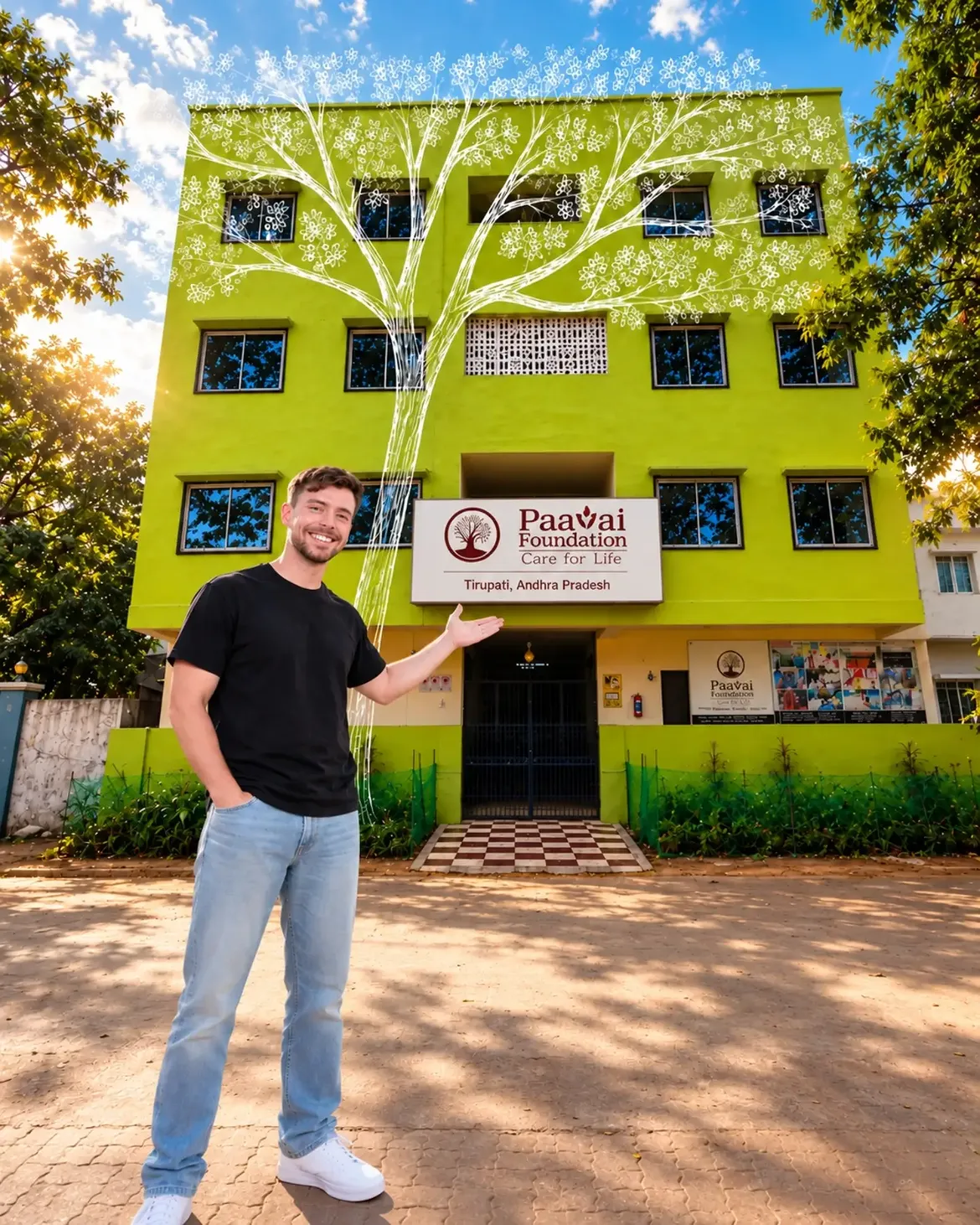
It teaches a child she is a spectacle. Being looked at by strangers, photographed, asked to perform a song, thanked for being grateful this is the daily experience of children in frequently-visited homes, and care-experienced adults are consistent in describing how it felt. The pity was harder to bear than the circumstances.
It disrupts the thing that actually helps. Routine and predictability are among the strongest protective factors for children in care. An unscheduled afternoon of visitors is a disruption dressed as a treat.
And it puts a child's image in the world permanently. A seven-year-old cannot meaningfully consent to a photograph that will be on a stranger's social media that evening and on the internet indefinitely.
The emotional reality underneath all of this what children in care are actually managing day to day is set out in World Mental Health Day 2026: The Emotional Lives of Children Growing Up in Care.
The birthday question
This deserves its own answer, because it is the single most common request Indian children's homes receive and it is almost always made with real affection.
The impulse my child has so much, let her share her birthday with children who have less is a good one. The execution usually is not.
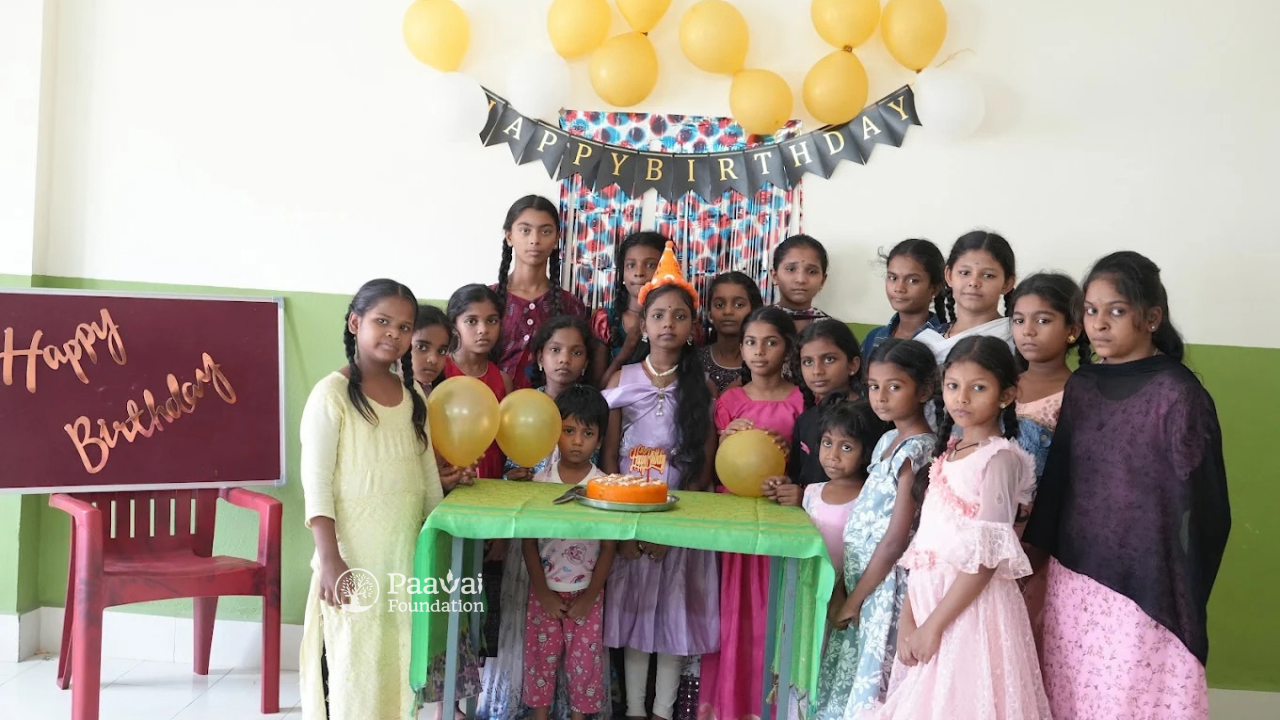
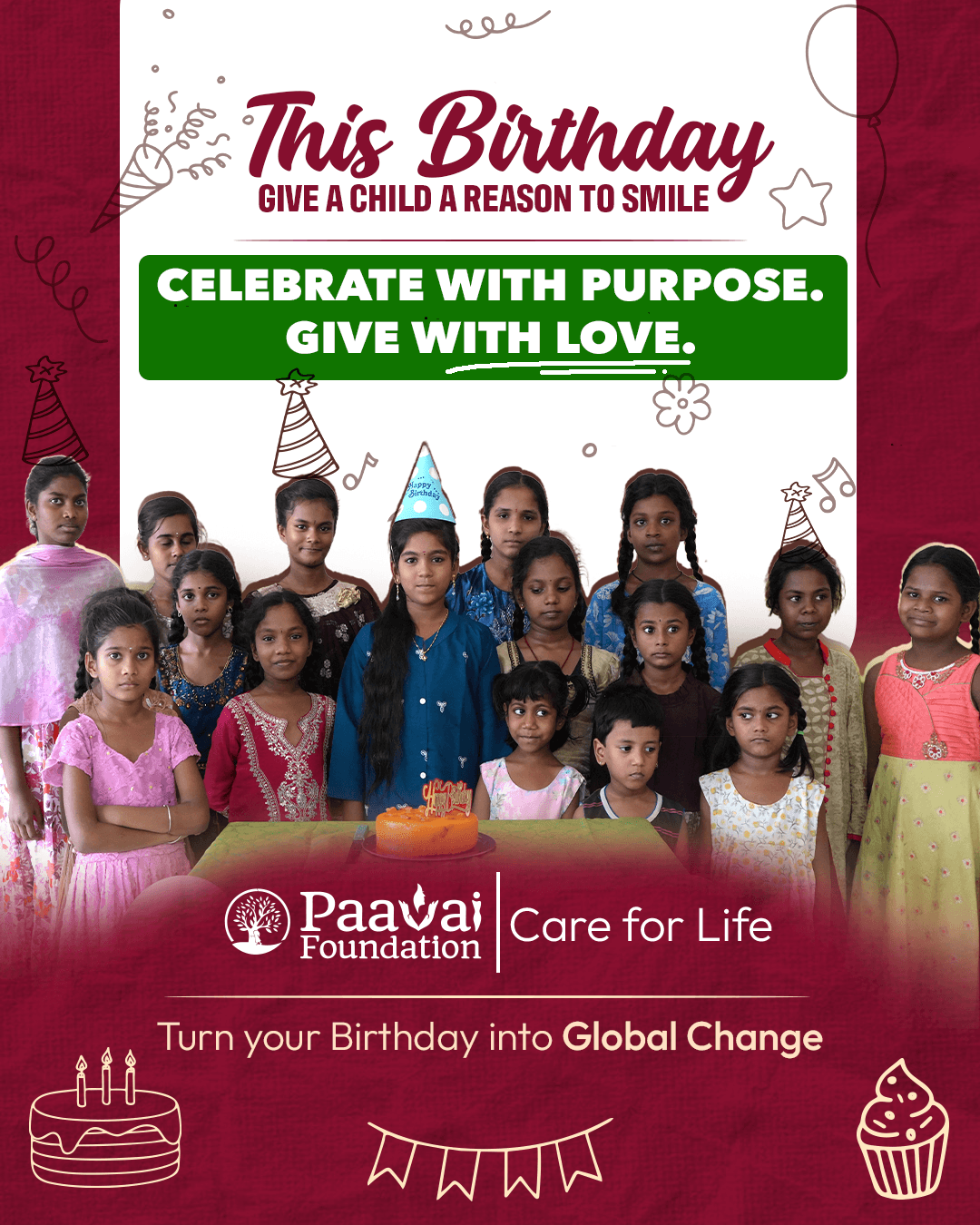
What happens at a birthday celebration in a children's home is that one child is the centre of attention, surrounded by children who are not, receiving gifts in a room where the others receive cake. The resident children are cast as an audience for someone else's occasion and as the beneficiaries of someone else's generosity, in front of them, explicitly.
There is a better version of the same instinct, and it is barely more work:
Ask the institution what it actually needs, and fund that in your child's name
Sponsor something the resident children will use after you have gone a term's materials, a therapy session, a month of a programme
Celebrate at home, and make the contribution part of it
If you want your child to understand giving, let her hand over a contribution to the administrator rather than distribute items to children
Your child learns the same lesson. The children in the home are not made into a prop for it.
What to do instead of visiting
Six things that are more useful than an afternoon.
Give to the institution, not to children. Funds to the organisation, allocated where the need is. Not sweets, not cash, not gifts handed directly to individual children, which creates comparison and conflict within the group.
Give regularly rather than once. A modest monthly contribution is worth considerably more than a larger one-off, because it allows the institution to commit to a child for a full year rather than fund isolated activity. Predictability on your side is what makes continuity possible on theirs.
Fund the unglamorous parts. Donors reliably offer uniforms, notebooks and food. Institutions also need trained staff, transport, therapy, electricity, audit and maintenance. The things nobody offers to pay for are the things that hold everything else together.
Give a skill, repeatedly. If you live in Tirupati and can commit to coming every week for a year teaching, medical, therapy, counselling, accounting, technology that is genuinely valuable, because it is sustained. Screening and training will be required, and you should want them to be.
Support the family, not just the institution. Since most children in institutions have living families, the work that reduces the need for institutional care in the first place — keeping a family together through a crisis, connecting a household to entitlements it qualifies for — is upstream of everything else.
And verify before you give anything. Which brings us to the part most donors skip.
Verifying a children's home in Tirupati
An institution housing children must be registered under the JJ Act. Registration is not optional, and an unregistered facility housing children is operating outside the law regardless of how caring the people running it are.

Before you give:
Ask for registration details. Registered name, registration number, and registration under the JJ Act. Any legitimate institution can provide these.
Check what you can independently. Many organisations are listed on the government's NGO Darpan portal, maintained by NITI Aayog.
Ask about child protection. A written child protection policy, background verification for staff and volunteers, a reporting procedure, training for anyone in contact with children, and a policy on photography and consent. Hesitation here is the answer.
Ask for the annual report and audited accounts. You are not auditing anything. You are checking they exist and broadly match what you have been told.
Ask how long children stay and what happens at eighteen. This tells you whether you are looking at an institution that thinks about outcomes or one that thinks about occupancy.
Be cautious of urgency. High-pressure appeals, extreme imagery, and requests for immediate cash correlate with fundraising sophistication rather than with good care. Be especially careful with unsolicited approaches near temple areas and with anyone collecting cash on behalf of a home.
The full version of this checklist, applicable to any organisation, is in How Do You Choose a Trustworthy NGO in India? Nine Questions to Ask Before You Give. Concerns about a child's safety or about an institution can be raised with the National Commission for Protection of Child Rights, and the child helpline 1098 operates round the clock.
If you are a family considering placing a child
A proportion of people searching for an orphanage in Tirupati are not donors. They are families in difficulty, looking for somewhere a child can be cared for because the household cannot manage.
If that is you, two things are worth knowing.
Children cannot simply be handed over to an institution. Placement of a child in need of care and protection happens through the Child Welfare Committee in the district, which assesses the child's situation and decides. An institution that offers to take a child directly, without that process, is not following the law and that should worry you rather than reassure you, because it suggests nothing else is being followed either.
Institutional care is meant to be a last resort. Policy in India has moved steadily towards keeping children in families wherever possible, with support, sponsorship or kinship arrangements preferred over institutions. Before placement, it is worth asking the District Child Protection Unit what support exists to keep your child at home there may be more than you expect, and far more than anyone has told you about.
What that support actually looks like over time is described in One Year of Change: What Long-Term Support Actually Looks Like for a Child in Care.
Where we fit
Paavai Foundation is an Integrated Child Development Foundation working across South India, with campuses in Trichy, Hyderabad and Tirupati, where it operates an Integrated Special Children Home in Hathiramji Colony.
Our work is organised around a four-stage model CARE, EDUCATE, EMPOWER, LEAD and spans child protection and care, education, health and wellness, nutrition, disability inclusion, youth leadership, elderly care and district-level community development. The integration is the point: a child's situation is rarely a single problem, and a response built around one category addresses a fraction of it.
On the subject of this article, our position is straightforward. We would rather receive a contribution from someone who has verified us than a visit from someone who has not. If you want to support children in Tirupati, we would prefer to discuss what is needed than to arrange an afternoon with the children.
We would also rather you applied the verification checklist above to us than took our description on trust. It is the right checklist to apply to anyone.
Donate now to support child care, education, health, nutrition and disability inclusion work and consider setting it up as a monthly contribution rather than a one-time gift.
The generosity is not the problem
Nothing in this article is an argument against giving, and Tirupati of all places does not need to be lectured about the value of service.
The argument is narrower. The impulse that brings someone to search for an orphanage in Tirupati is sound. The default way that impulse gets expressed an afternoon, a camera, a box of sweets, a photograph — serves the giver far more than it serves the child, and the children have no way of saying so.
Redirect it and almost everything improves. The contribution reaches the institution rather than the individual child. It arrives monthly rather than once.
It funds the things nobody else will fund. It goes to a place you checked rather than one you found. And the children carry on with an ordinary Tuesday, which is what most of them want far more than visitors.
If you are in Tirupati and want to do something for children here, the most useful version of that is almost never a visit.
Call the office. Ask what they need. Send it every month.
FAQs
Can I visit an orphanage in Tirupati?
Often not, and that is appropriate. Child Care Institutions are required to restrict access to children for safeguarding reasons. A well-run home may welcome a conversation with the administrator or a donation while declining contact with children. An institution that allows strangers to meet and photograph children is showing weak child protection rather than openness.
Are children in children's homes orphans?
Mostly not. A substantial proportion have at least one living parent and are in care because of poverty, parental illness, migration, disability in the household, or an order following neglect or abuse. The legal term is children in need of care and protection, housed in Child Care Institutions.
Why are casual visits discouraged?
Repeated short visits by people who do not return reinforce a pattern of loss for children who have usually experienced significant loss already. Visits also disrupt routine, position children as a spectacle, and often involve photographs that a child cannot meaningfully consent to.
Can I celebrate my child's birthday at a children's home?
Many homes decline this, and for good reason: it places one child at the centre of attention in a room of children who are not, as recipients of someone else's occasion. A better version is to ask the institution what it needs and fund that in your child's name.
What should I donate instead of visiting?
Funds to the institution rather than items to individual children, given monthly rather than once, and preferably unrestricted so the organisation can cover staff, transport, therapy and maintenance alongside the visible items.
How do I verify a children's home in Tirupati before donating?
Ask for registration details including registration under the Juvenile Justice Act, check listings on NGO Darpan where available, ask directly about child protection policies and staff screening, request the annual report and audited accounts, and ask what happens to residents at eighteen.
Can I volunteer at a children's home?
Sustained volunteering with a specific skill, committed over months, is genuinely valuable. Expect and welcome background verification and training. One-off group volunteering generally serves the volunteers more than the children.
My family cannot care for a child. How does placement work?
Children are placed through the Child Welfare Committee in the district, which assesses the situation and decides. An institution offering to take a child directly without that process is not following the law. Ask the District Child Protection Unit first what support exists to keep the child at home, since institutional care is intended as a last resort.
Who do I contact if I am concerned about a child or an institution?
The child helpline 1098 operates round the clock. Concerns can also be raised with the National Commission for Protection of Child Rights or the District Child Protection Unit.
Comments
Loading comments...
Leave a comment
Your email address will not be published. Only your name is shown with your comment.