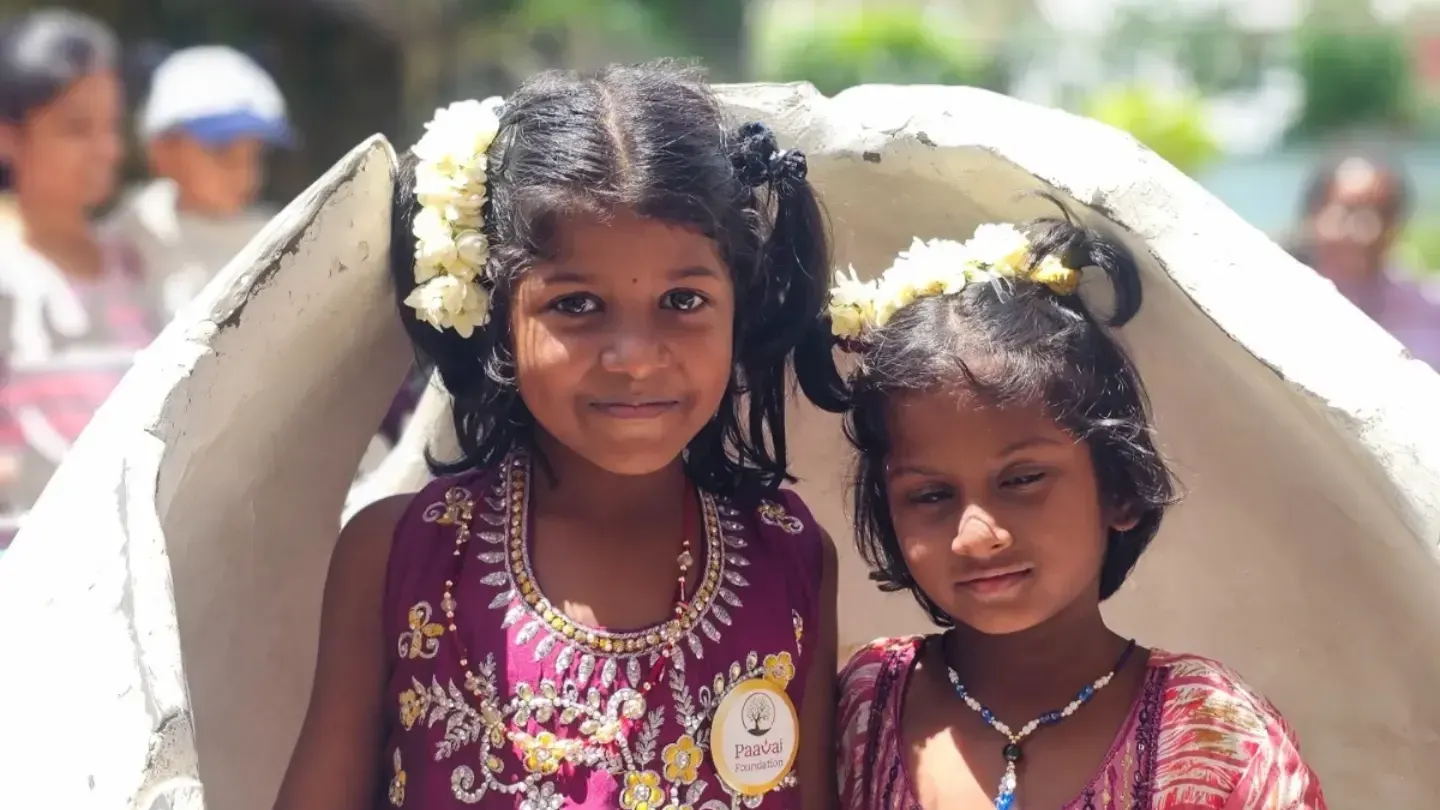
Every annual report wants a before-and-after.
A thin child, then a healthy one. A silent child, then a confident one. A girl who could not read, then a girl reading aloud to her class. It's the most persuasive picture a children's organisation can show, and donors understandably want to see it.
The trouble is that real change seldom fits between two photographs. Some of it happens within a week. Some takes a decade. And some of the most important change never shows up as anything visible at all. It's a crisis that didn't happen, a school year that wasn't lost, a teenager who didn't drop out.
So when a donor asks how long it takes to change a child's life, the honest answer isn't a number. It's a sequence. Different parts of a child's life respond to support at very different speeds. Knowing that sequence is the best protection against two common mistakes: expecting too much too soon, and giving up just before things start to work.
A note before you read on: this article describes general patterns, not guarantees. Every child's history, health and circumstances are different, and so is their pace. Questions about a particular child's health or development belong with a qualified professional.
Why this question gets answered badly
Children's organisations face a real temptation here, and it helps to name it.
Funding cycles are short, so organisations are pushed to show results inside twelve months. Donors respond to visible transformation, so organisations lead with it. Over time the sector has trained its supporters to expect quick, dramatic, photogenic change. That expectation then undermines the slow, steady work that actually changes outcomes.
There are three predictable results. Organisations over-promise. Donors lose interest when the dramatic change doesn't come. And the long middle stretch of a child's development, which is where most of the real work happens, goes unfunded because it has nothing exciting to show.
An honest timeline is partly a correction to that.
The timeline
The first days and weeks: needs, not development
Some things change almost at once, and they matter a great deal.
A child who arrives hungry eats properly from the first day. A child without a safe place to sleep has one. Basic medical needs can be dealt with, school materials provided, and the immediate crisis that brought the child into contact with an organisation brought under control.
This is real change, and nothing below makes it less valuable. But it's important to see what kind of change it is. These are needs being met, not development taking place. A fed child is a child who is no longer going hungry. That is a precondition for growth, not growth itself.
What it is reasonable to expect: food, safety, shelter, basic medical attention and schooling arranged.
What it is too early to expect: trust, confidence, settled behaviour, academic progress.
The first months: the body responds first
The body usually shows the earliest measurable change.
A child who was underweight often begins to gain weight within weeks to a few months of adequate nutrition. Where deficiencies such as anaemia are found and treated, energy and concentration often improve over a period of a few months. Recurring infections may become less frequent as nutrition and hygiene improve.
There is an important limit here, and an honest timeline has to state it. Some effects of early undernutrition aren't fully reversible. Stunting, which is reduced height for age, reflects chronic undernutrition, mostly in the first years of life, and is largely set by around the age of two. Good nutrition later still matters a great deal for health, energy, immunity and learning. But it doesn't erase everything that came before. Why that early window matters so much is set out in Why Nutrition Before Age 12 Shapes a Child's Whole Life.
What it is reasonable to expect: weight gain, better energy, fewer illnesses, a child who is more physically able to attend and take part.
What it is too early to expect: emotional settling. Health often improves before a child feels safe.
Months three to twelve: the hardest stretch to watch
This is the stage donors find most confusing, and the one where support is most often withdrawn.
A child who has lost people, places and routines usually doesn't relax just because things have improved. Many test the new adults, sometimes for a long time, to see whether they will also leave. Behaviour can get worse before it gets better. A child who was quiet and compliant at first may become difficult once she starts to feel safe enough to show what she has been carrying.
To an outside observer this can look like a programme that isn't working. Usually it is a programme starting to work.
Education follows a similar pattern. A child who missed school or fell behind doesn't catch up within a term. Closing gaps in basic reading and arithmetic often takes a full school year or more of steady attendance and support. And for a while the gap can seem to widen, because classmates keep moving ahead.
What it is reasonable to expect: a stable routine, regular school attendance, early signs of trust in particular adults.
What it is too early to expect: a child performing at grade level, or showing the confidence a visitor would recognise.
Years one to three: patterns start to show
Steady support begins to produce change that can be seen from outside somewhere in here, though the exact timing differs widely from child to child.
Attendance becomes routine rather than something that has to be fought for. Basic literacy and numeracy gaps start to close. A child forms reliable relationships with particular adults. She begins to show what she is good at, whether that's a subject, a sport, music, or a responsibility she can be trusted with. Behaviour usually settles as the testing gives way to trust.
This is also when the risk of disruption is highest. A change of staff, a family crisis, a move, or the end of funding at this point can undo much of what has been built. The value of the first two years is often only realised in the third.
What it is reasonable to expect: consistent schooling, closing learning gaps, settled relationships, emerging strengths.
What it is too early to expect: independence, a clear direction for the future, or anything that could be called an outcome.
Years three to ten: the long middle
For a child who stays in a programme through her school years, this is where most of the real work happens. It's also the stage that gets least attention, because nothing dramatic happens in it.
Year after year a child completes classes, gets through transitions, and builds skills, judgement and resilience. The most dangerous points come at the transitions, from primary to secondary school and from Class 10 to Class 11. Children, and especially girls, are most likely to drop out at these moments, usually because of a crisis or a practical obstacle rather than any lack of ability.

Most of what an organisation achieves here is things not happening. A dropout avoided. An illness caught early. An early marriage that never took place. A crisis at home absorbed without the child losing her schooling. None of this makes a striking photograph, and all of it adds up.
Eighteen and beyond: the result arrives late
The question most donors really mean when they ask about change is: what kind of adult does this child become?
That answer arrives a decade or more after support began. It looks like a young person who finished school, has a direction in further study or work, can manage the practical business of adult life, and has relationships to fall back on. Sometimes it looks like a young person who now supports others, which is described in From Beneficiary to Contributor: What Happens When Support Actually Works.
This is the real outcome. It is also the one almost no funding cycle ever measures.
The timeline at a glance
Stage
What can change
What it is too early to expect
Days–weeks
Food, safety, shelter, school enrolment, urgent medical care
Trust, confidence, progress
First months
Weight, energy, fewer illnesses, treated deficiencies
Emotional settling
3–12 months
Routine, attendance, early trust in specific adults
Grade-level learning, visible confidence
1–3 years
Learning gaps closing, settled behaviour, emerging strengths
Independence, a future direction
3–10 years
School completion through transitions, skills, resilience
Measurable adult outcomes
18+
The adult she becomes
—
These bands are approximate. Some children move faster, many move more slowly, and almost none move in a straight line.
What does not follow a timeline
Progress isn't linear. Children go backwards, especially after a disruption such as a family crisis, a change of school, an illness, or a staff member leaving. A setback in year two doesn't cancel year one.
Every child starts from a different place. A child who joins at six with a family that visits and a child who joins at thirteen after years of instability aren't on the same timeline. Comparing them is meaningless.
Children with disabilities measure progress differently. For a child with an intellectual disability, an important milestone may be dressing on her own, saying what she needs, or getting through a change in routine without distress. Those are real achievements on a different scale, and they deserve to be reported as such, not measured against standard academic markers.
Some of the most important change is invisible. A child who feels safe for the first time doesn't look different. A child who no longer expects to be abandoned can't be photographed.
How progress should be reported
If you support a children's organisation, here is what responsible reporting looks like and what should make you cautious.
Good reporting describes stages, not miracles. It tells you what has changed, what hasn't changed yet, and what the organisation is watching for.
Good reporting measures outcomes over time, not just activity. That means not how many children were enrolled, but how many were still in school two years later. Guidance on measurement in children's education is available from bodies such as the Ministry of Education, and international reference points for child growth from the World Health Organization.
Good reporting includes what went badly. An organisation that never reports a setback is either unusually lucky or not measuring carefully.
Good reporting protects children's privacy. Progress can be described without naming children or showing their faces, and responsible organisations do exactly that.
Be cautious of guarantees. No honest organisation can promise that a particular donation will change a particular child's life by a particular date. Claims of that kind aren't confidence. They are a misunderstanding of how development works.
Before supporting any organisation, check its registration independently. Many are listed on the government's NGO Darpan portal.
What this means for how you give
If the most important change takes years, then the most valuable thing a supporter can give is duration.
A donation that arrives once pays for the first stage on the timeline. A contribution that keeps arriving pays for the long middle, which is where the outcome is actually decided. That is why a modest monthly gift kept up for years often does more than a larger one-off gift. The reasoning is set out in Monthly Giving vs One-Time Donation: Which Does More for a Child?. What different amounts realistically make possible is covered in What ₹500, ₹5,000 and ₹50,000 Genuinely Change in a Child's Life.
It also means staying through the stretch that looks like nothing is happening. The months when a child's behaviour gets worse, when the learning gap seems to widen, and when no report has a dramatic before-and-after are exactly the months when withdrawing support costs the most.
Where our work sits
At Paavai Foundation, our work is organised in four stages: CARE, EDUCATE, EMPOWER and LEAD. They follow the same order as the timeline above. Safety, stability and nutrition come first, because nothing else works without them. Education builds on that base over years. Empowerment and leadership come last, because they can't be rushed.
Our work spans child care and protection, education, health, nutrition, disability inclusion, youth leadership, elderly care and community development across South India. It is built around continuity rather than one-off events, which is why the standard we hold ourselves to is Care for Life.
We don't promise that a contribution will produce a particular result by a particular date, and we don't publish transformation stories we can't stand behind. What we can say is that the children we work with need adults who stay through all of it, including the stages that look like nothing is happening.
Support Paavai Foundation's Long-Term Work With Children, ideally as a monthly contribution, so the support lasts as long as the change takes.
The honest answer
So how long does it take to change a child's life?
A day to feed her. A few months for her body to respond. A year or more for her to begin trusting the adults around her. Several years for her learning to steady. A decade before anyone can say what kind of adult she has become.
None of it is guaranteed, and none of it moves in a straight line. But all of it depends on the same thing, which is support that's still there in the third year, the sixth year and the tenth.
That's a slower answer than a before-and-after photograph gives. It's also the true one.
Care for Life. Every Life.
FAQs
How long does it take to change a child's life?
Different things change at different speeds. Basic needs like food, safety and shelter can be met within days. Physical health often improves within a few months. Trust and emotional settling can take a year or more. Learning gaps often take one to several school years to close. The adult a child becomes is usually only clear a decade or more after support begins.
Why does a child's behaviour sometimes get worse after joining a programme?
Children who have been through loss or instability often test new adults to see whether they will also leave. Difficult behaviour can appear once a child feels safe enough to show what she has been carrying. This is often a sign that support is beginning to work, not that it has failed.
Can good nutrition reverse the effects of early malnutrition?
Partly. Weight, energy, immunity and concentration can improve significantly with adequate nutrition and treatment of deficiencies. Stunting, which reflects chronic undernutrition in early childhood, is largely set by around the age of two and isn't fully reversible later.
How should a children's NGO report progress?
By describing stages honestly, measuring outcomes over time rather than counting activities, including setbacks, and protecting children's privacy. Promises that a particular donation will produce a particular result by a particular date should be treated with caution.
Does child sponsorship really have a long-term impact?
Sustained support can, because the most important outcomes, such as completing school, building life skills and becoming a stable adult, develop over years. A single contribution mainly helps with immediate needs. Long-term impact depends on support continuing.
Why is monthly giving recommended for children's programmes?
Because the most important progress happens over years. Predictable monthly support lets an organisation commit to a child through the long middle stage of development, which one-off gifts can't fund reliably.
Do all children progress at the same pace?
No. A child's age on arrival, history, health, family situation and any disability all affect her pace. Comparing one child's progress with another's is rarely meaningful.

Comments
Loading comments...
Leave a comment
Your email address will not be published. Only your name is shown with your comment.