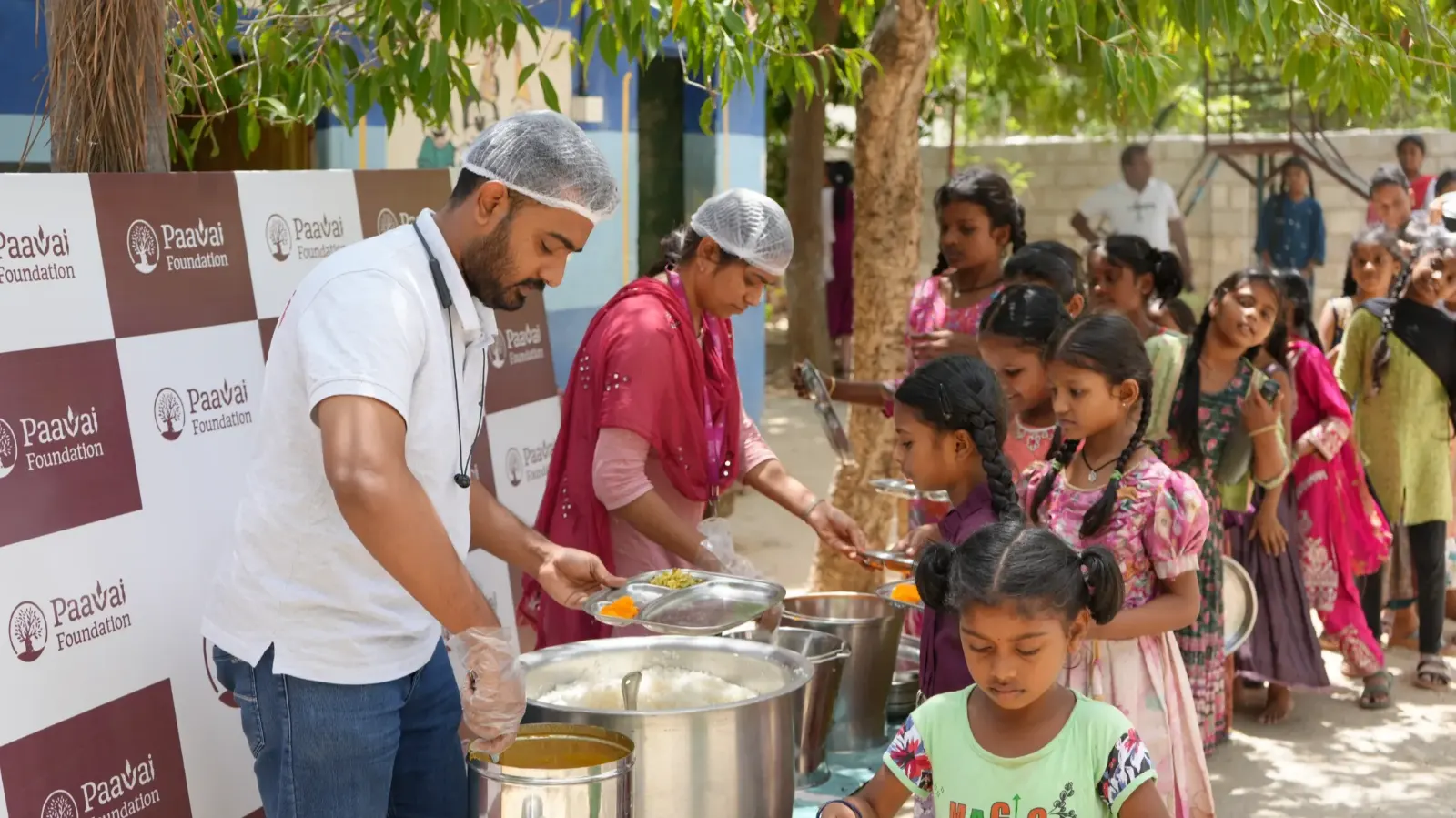
There is a word the development sector uses constantly and almost never retires.
Beneficiary. A person who receives something. It appears in proposals, reports, dashboards and donor updates. It is counted, aggregated, disaggregated by age and gender, and presented as the primary evidence that work is happening. Organisations compete on how many they have.
What the word does not contain is any sense of an ending.
A child enters a programme at seven and is recorded as a beneficiary. She is still a beneficiary at twelve. At seventeen, if she is still on the register, she remains one. And if at twenty-four she is a teacher in the next district, running her own household, helping her younger cousin with school admission paperwork, she has usually vanished from the records entirely — because the sector has a category for people receiving help and no category at all for people who finished.
This is not a vocabulary complaint. It describes a genuine blind spot, and the blind spot distorts how the entire sector measures itself.
The number nobody collects
Ask any organisation how many people it reached last year and you will get an answer within seconds.
Ask how many people no longer need its programmes, and watch what happens.
Almost nobody tracks this. There is no standard metric for it, no line in a funding report, no column in a dashboard. The reasons are structural rather than dishonest.
It takes too long. A child who entered a programme in Class 3 tells you whether it worked when she is twenty-four. No funding cycle, annual report or project evaluation operates on that horizon.
It is expensive and difficult. Following people across a decade, through migration, marriage, name changes and moves, requires effort that no grant covers and no donor asks for.
It reads badly in a proposal. An organisation reporting that two thousand families no longer require its support has, in the logic of the funding market, just described a shrinking problem and a weaker case for next year's money. Growth in beneficiary numbers is rewarded. Exit is not.
So the sector systematically measures its throughput and ignores its outcome. Programmes count the people standing in the queue and never count the people who walked away because they no longer needed to stand in it.
Success looks like absence
Here is the uncomfortable consequence. When development work succeeds completely, it produces nothing to photograph.
A family that no longer needs support is a family you stop visiting. A child who completed school and found work is a child who stopped appearing in your records. A village where the programme concluded is a village where nothing is happening.
The visual evidence of failure — a child who needs a meal, a household in crisis, a classroom without materials — is immediate and compelling. The visual evidence of success is a street where nobody requires anything from you.
This creates a quiet perverse incentive across the whole sector, and it is worth naming plainly: the imagery that raises money depicts need, not resolution. Organisations photograph the moment of giving because that is what moves donors, which means the sector's public face is permanently a face of dependence.
Also Read: Section 80G Explained: How Donations to NGOs Can Help You Save Tax in India
A donor who has given for ten years has mostly been shown ten years of people still needing things.
The most successful programme in a district would be, in fundraising terms, the hardest one to describe.
What the contributor stage actually looks like
When support works, people do not simply stop needing it. A great many of them move into contributing, and it takes more forms than the obvious one.
They staff the sector. The most effective field workers, community coordinators, teachers and counsellors are frequently people who grew up in circumstances resembling those of the families they now work with. They know which household is in trouble before an outsider could, they are trusted faster, and they do not need the first two years that an outsider needs to understand the place.
They become the credible voice. A parent who has navigated a disability certificate application can explain it to a neighbour in ten minutes in a way no pamphlet manages. A family that completed a treatment course can persuade a reluctant patient to continue when a health worker cannot. This is the most undervalued asset in community development, and it costs nothing to mobilise.
They give. Often modestly, often quietly, often to the organisation that supported them. It rarely appears in donor reports because the sums are small and nobody thinks to record where they came from.
They change their households and streets. The least visible and probably the largest effect. A woman who completed schooling educates her daughters differently. A family that accessed one entitlement tells four other families. A young man employed in a town sends money that keeps two children in school.
And they shift what a community believes is possible. This is the part no metric captures. In a village where no girl had completed Class 12, the first one who does changes the calculation every subsequent family makes.
The particular credibility of someone who was there
There is a reason organisations that recruit from the communities they serve tend to outperform those that do not, and it is not sentiment.
Someone who has been on the receiving side knows things that cannot be taught in an induction. They know what it actually costs a daily-wage household to attend a daytime meeting.
They know why a family says yes to a programme and then does not turn up. They know which forms of help feel like help and which feel like inspection. They know the difference between a family that is resistant and a family that is ashamed.
They also keep the organisation honest in a way no external evaluation does. A staff member who was once a programme participant is unlikely to tolerate a design that treats people as cases, because she remembers being treated as one.
The hiring argument is straightforward enough that the real question is why it is not standard practice. Usually because recruitment favours formal qualifications over situated knowledge, and because an organisation that has not tracked what happened to its participants has no idea who to approach.
Where this argument goes wrong
Everything above has a failure mode, and it needs stating before it does damage.
Not everyone becomes a contributor, and requiring it is a trap.
A person with profound intellectual disabilities may need support for an entire lifetime. An elderly person with dementia will not transition out of care. A chronically ill adult may receive and never reciprocate in any measurable way. A child may be supported through school and simply go on to live an ordinary life that involves no community work at all.
None of these represent a failure of the support, and framing the beneficiary-to-contributor arc as the definition of success quietly makes dignity conditional on productivity. That is a serious error, and a sector that embraces this narrative too enthusiastically will start treating lifelong-support populations as the ones where the money did not work.
The honest position is narrower and more defensible. Some people, given adequate support, move from receiving to contributing, and the sector does a poor job of noticing when they do.

That is worth correcting. It does not mean contribution is the measure of a worthwhile life, and it does not mean support is an investment expecting a return.
Dignity is unconditional. Contribution, where it happens, is a consequence rather than a requirement.
What organisations would have to change
Four things, none of them expensive and none of them common.
Track exits. Record not only who entered but who completed, and define what completion means for each programme before anyone enters it. An organisation that cannot say what a successful conclusion looks like is running an activity, not a programme.
Build an alumni relationship. Former participants are currently treated as closed files. They are the most informed critics, the most credible advocates and the most likely future staff an organisation has, and almost no Indian non-profit maintains contact with them systematically.
Recruit from the people you served. Make it a stated hiring preference rather than an occasional coincidence, and build the pathway — training, mentoring, progression — that turns it into something other than tokenism.
Report differently. Include the exit number alongside the reach number, even when it reads worse. A report stating that eleven hundred families were supported and two hundred and forty no longer require support is telling a funder something far more useful than one claiming eleven hundred lives touched.
The obstacle to all four is the funding market rather than the organisations. Until funders ask for exit data, most organisations will not produce it, because producing it costs money nobody has allocated and risks weakening next year's case. A funder who asked a single additional question — how many people no longer need you? — would change organisational behaviour faster than any amount of sector exhortation.
Where our work sits
At Paavai Foundation, this progression is not an afterthought appended to programme design. It is the structure of the programme design.
Our work is organised around a four-stage model: CARE, EDUCATE, EMPOWER, LEAD. The sequence is deliberate. Care establishes safety and stability, because nothing else functions without it. Education builds capability. Empowerment builds agency. And the fourth stage exists precisely because the first three are not the destination.
That fourth stage is expressed through Paavai Nayak, our youth leadership initiative, built on the proposition that young people who have been supported are the people best placed to lead — through life skills, leadership development and participation in nation-building. The logic is that a programme which ends at empowerment has stopped one stage early.
The same principle, applied at the other end of life, produces Paavai Anbucholai, where elders are positioned as mentors, storytellers and custodians of values within our child and girl development work rather than as a separate population receiving assistance. Intergenerational care is not a programme feature there. It is a refusal to categorise older people as recipients, and the reasoning is set out at length in Anbucholai Elderly Care: Honoring Elders as Mentors, Preserving Dignity Across Generations.
Our wider work spans child protection and care, education, health and wellness, nutrition, disability inclusion, youth leadership, elderly care and district-level community development across districts in Tamil Nadu, with presence extending into Telangana and Andhra Pradesh, held together by the Paavai Community Connect 360 framework.
We should be honest about one thing. The argument in this article sets a standard we have not fully met either. We do not currently publish exit data, and tracking participants across a decade is as difficult for us as for anyone else. Writing this is partly an argument to the sector and partly a commitment about what we intend to measure. The broader case for judging development work by what lasts rather than what is distributed is set out in Beyond Charity: How NGOs Create Lasting Change in Rural Communities.
Donate now to support work designed to end rather than continue.
The programme that should want to close
Most institutions are built to persist. Schools, hospitals, companies, governments — all of them measure success partly by their own continuation.
Development organisations are the strange case, because the logical conclusion of doing the work perfectly is that the work stops being needed. An organisation that genuinely succeeded in a district would, in that district, make itself redundant.
Very few behave as though that is the aim. The incentives run the other way: towards growth, towards larger beneficiary counts, towards next year's larger budget. And so a sector full of people who went into it to make themselves unnecessary spends its time demonstrating how necessary it remains.
The correction is not to stop measuring reach. It is to measure the other thing as well, and to treat it as the more important number.
Somewhere in Tamil Nadu there is a woman in her twenties who was supported through school by somebody, who now holds a job, runs a household and recently helped a neighbour fill out a form she herself once could not read. She is not in anyone's annual report. No photograph of her exists in any fundraising material. No organisation claims her.
She is the point. She has simply stopped being counted, because the sector only counts the people still waiting.
Care for Life.
FAQs
What does "beneficiary to contributor" mean?
It describes the progression in which a person who received support later contributes — by working in the sector, advocating credibly within their community, giving, changing their own household's trajectory, or simply shifting what a community believes is possible. The sector lacks a standard way of recording this transition.
Why don't NGOs track what happens to people after a programme ends?
Three reasons: it requires following people over a decade, well beyond any funding cycle; it is expensive and nobody funds it; and reporting that people no longer need support can weaken an organisation's case for further funding, since the market rewards growth in reach rather than evidence of exit.
Isn't it a good thing when beneficiary numbers grow?
Not necessarily. Growth in reach measures throughput, not outcome. An organisation serving more people each year may be expanding, or may be failing to move anyone out of need. Reach without exit data tells you very little.
Should every supported person be expected to give back?
No, and this is an important limit on the argument. Some people require lifelong support — a person with profound intellectual disabilities, an elderly person with dementia, a chronically ill adult. Making dignity conditional on later productivity is a serious error. Contribution, where it occurs, is a consequence of good support, not a requirement of it.
Why do organisations hire from the communities they serve?
Because situated knowledge cannot be taught in an induction. Someone who grew up in similar circumstances knows which household is in trouble, why a family agreed to a programme and then did not attend, and the difference between resistance and shame. They are also trusted faster and keep the organisation honest.
What should funders ask that they currently don't?
One additional question would change organisational behaviour considerably: how many people no longer need you? Until funders request exit data, most organisations will not collect it, because collecting it costs money nobody has allocated.
What is Paavai Foundation's four-stage model?
CARE, EDUCATE, EMPOWER and LEAD. Care establishes safety and stability, education builds capability, empowerment builds agency, and the fourth stage exists because the first three are not the destination. Paavai Nayak, the youth leadership initiative, expresses that final stage.
How does intergenerational care relate to this idea?
It applies the same principle at the other end of life. Positioning elders as mentors and custodians of values within child development work, rather than as a separate group receiving assistance, refuses the categorisation of older people as recipients.

Comments
Loading comments...
Leave a comment
Your email address will not be published. Only your name is shown with your comment.