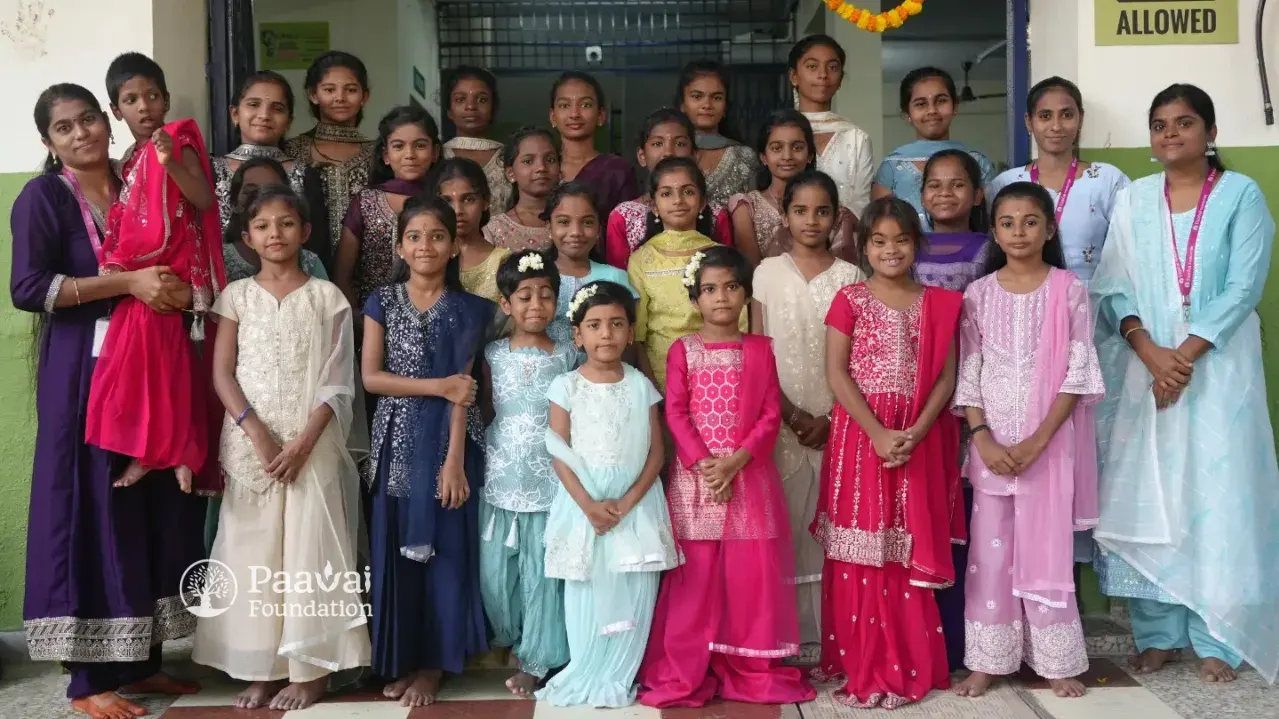
There's a particular kind of excitement that fills a home on Diwali morning. It starts before sunrise, with whispers about new clothes and questions about when the lamps will be lit. By evening, it has grown into something bigger: a doorway framed in marigolds, a room full of bright colours, and a group of children standing shoulder to shoulder, smiling like the day belongs entirely to them.
That's exactly what Diwali looked like at Paavai Foundation in Tirupati this year. The children lit diyas, shared smiles and made memories together, celebrating the spirit of the festival through love, togetherness and happiness.
It was a joyful day. It was also a reminder of something important. For children growing up in care, festivals aren't just occasions. They're one of the clearest ways a child learns that she has a home, a family of people around her, and a place in the traditions of the world she's growing up in.
A Doorway Dressed for Diwali
The pictures from the celebration tell their own story.
Strings of orange and yellow marigolds hang across the entrance, the way they do in homes across India during the festival. Children stand together in their festive best: shimmering lehengas in pink and red, soft pastel salwar suits, white and cream outfits with delicate embroidery, flowers tucked into braided hair.
Some stand tall and proud. A few of the youngest lean in close to the girls beside them. Caregivers stand among them, part of the picture rather than outside it.
What stands out most isn't the decorations or the clothes, lovely as they are. It's the closeness. Nobody is standing apart. The photograph looks like what it is: a family gathered for a festival.
That sense of being together is the heart of what Diwali means, and it's the heart of what a good children's home tries to create every day of the year.
Why Festivals Matter So Much for Children in Care
For most children, festivals arrive wrapped in family traditions. Grandmothers making sweets, cousins visiting, the same songs and rituals year after year. These memories quietly tell a child: you belong to something larger than yourself.
Children who've experienced separation from their families can miss out on that feeling. That's why celebrating festivals with warmth and care is such an important part of life in a children's home.
Belonging
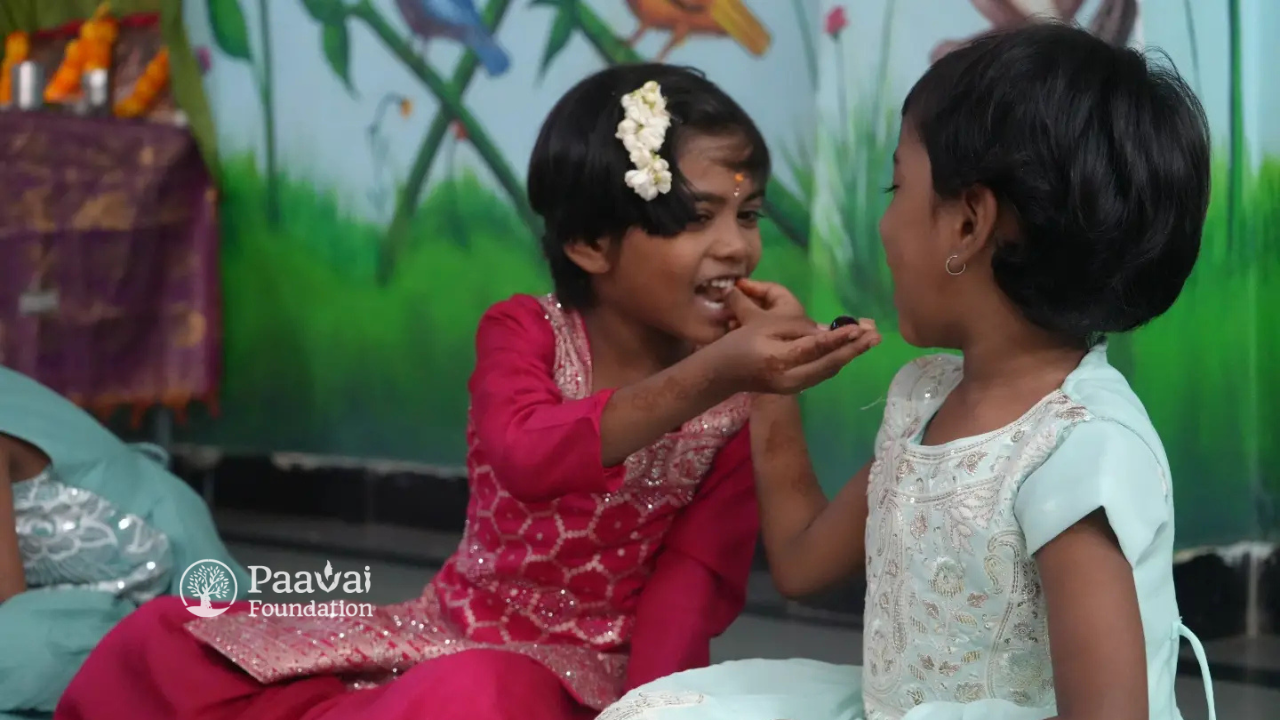
When a child dresses up, lights a lamp and celebrates alongside the people she lives with, she experiences herself as part of a family. That feeling of belonging is one of the most powerful foundations for emotional well-being.
Continuity
Festivals come back every year. For children who may have experienced instability, that predictability is reassuring. Diwali this year becomes a memory, and next year it becomes a tradition. Over time, those traditions become the comforting markers of a stable childhood.
Identity and culture
Festivals connect children to their culture, language and heritage. Taking part in Diwali, Pongal, Sankranti, Christmas, Eid and other celebrations helps children understand the rich, diverse world they belong to, and helps them grow up with pride in it.
The UN Convention on the Rights of the Child recognises this too. Article 31 affirms every child's right to rest, leisure, play and to participate freely in cultural life and the arts. A festival celebrated joyfully isn't a luxury. It's part of a full childhood.
Happy memories
Childhood memories shape how adults remember their early years. Every child deserves a collection of happy ones: the year she wore her first lehenga, the year she lit the biggest diya, the year everyone laughed until their cheeks hurt. Those memories become part of who she is.
The Meaning of Diwali, the Way Children Understand It
Diwali celebrates the victory of light over darkness and good over evil. For adults, it carries many layers of meaning: stories from epics and traditions, prayers for prosperity, the joy of reunion.
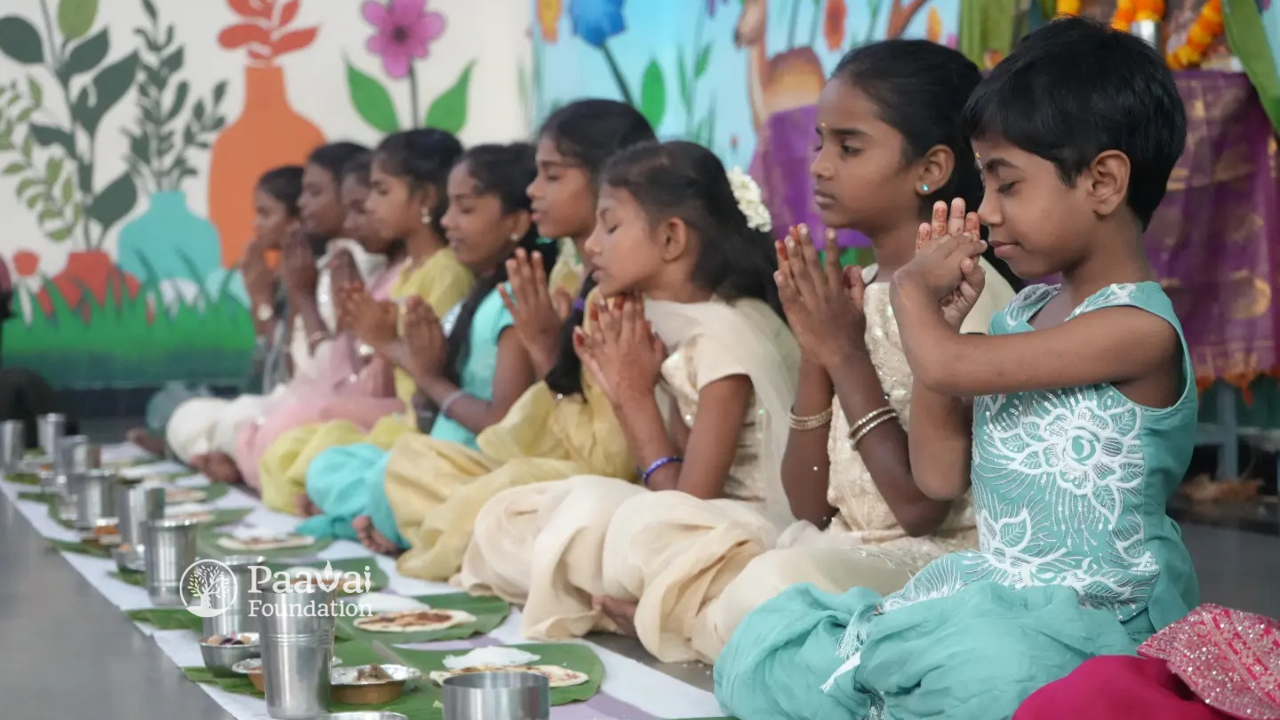
For children, the meaning is beautifully simple. Lights make everything brighter. Being together makes everything happier. Sharing makes everything better.
These are good lessons for any childhood. A child who learns that light can push back darkness, that kindness wins, and that joy grows when it's shared, has learned something that will serve her for life.
Lighting Diyas: Small Flames, Big Lessons
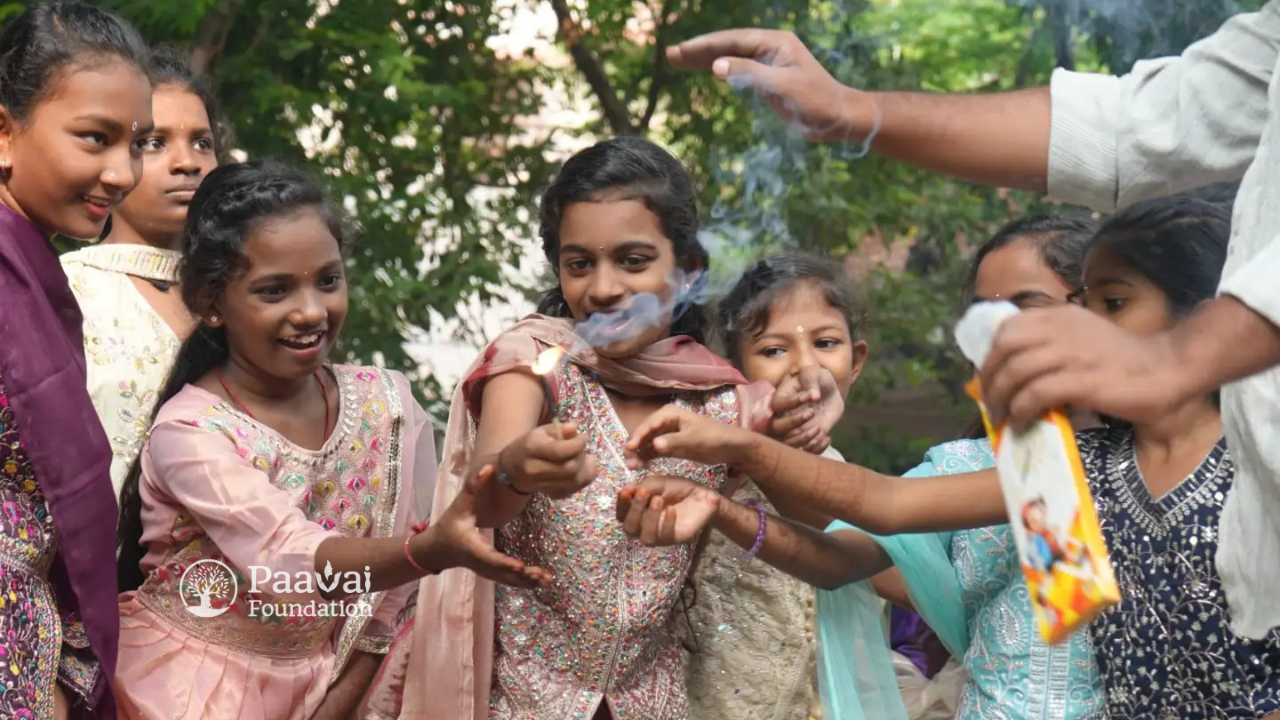
There's something magical about a child lighting a diya. The careful concentration. The tiny flicker as the wick catches. The proud look up to see if anyone noticed.
Lighting lamps is one of the oldest Diwali traditions, and it carries quiet lessons of its own.
Patience. A diya has to be lit gently. Rushing puts it out.
Responsibility. Fire needs care. Children learn to handle the lamp safely, under the watchful eye of caregivers, and to respect it.
Sharing light. One lamp can light another without losing its own flame. It's one of the loveliest images of generosity there is, and children understand it instantly.
Pride in contribution. When a row of diyas glows along a doorway, every child can point to the one she lit. Her small flame is part of something beautiful.
Safety comes first in every celebration involving children. Lamps are lit under supervision, and festivities are planned so that children can enjoy them fully and safely. Families everywhere can find useful guidance on safe festive celebrations from the National Disaster Management Authority.
Dressing Up: Feeling Special Is Part of Feeling Valued
Look at the children in their festive clothes and you'll see something more than fabric and embroidery. You'll see children who feel special.
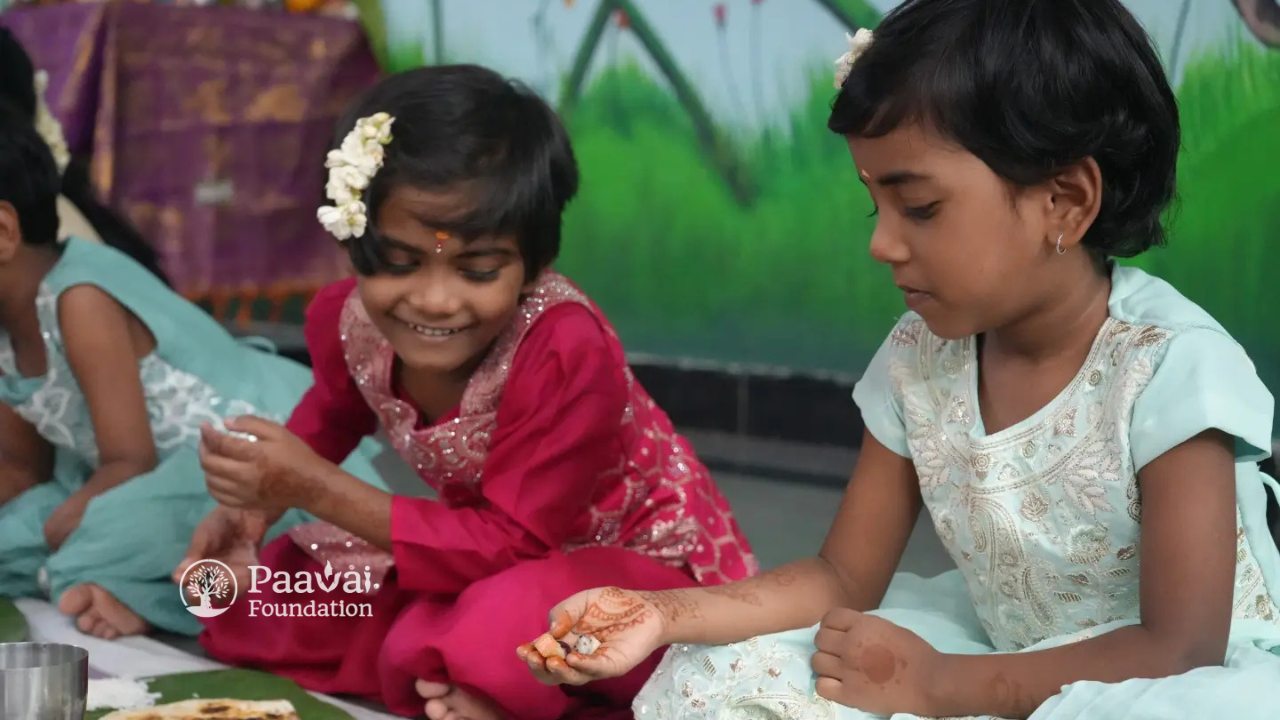
New clothes on Diwali are a tradition in families across India. For a child, wearing a beautiful outfit on a festival day says: today is important, and so are you. It's a small thing that carries a big message about self-worth.
Children in care deserve those same moments of feeling special. Choosing a colour, twirling in a new lehenga, having flowers placed in their hair, showing friends their outfit: these are ordinary childhood joys, and that's exactly why they matter. Every child should get to feel celebrated.
The Caregivers Behind the Celebration
In the photographs, the caregivers stand among the children: one holding a little one in her arms, others standing at the edges of the group in their festive clothes, ID lanyards around their necks, as much a part of the celebration as anyone.
Festivals in a children's home don't happen by themselves. Someone plans the decorations. Someone helps every child get ready. Someone makes sure the youngest children are comfortable, the lamps are lit safely, and nobody feels left out. Someone stays calm when there's a missing hair clip or a dupatta that won't stay in place.

These caregivers are the quiet heart of every celebration. They're also the consistent, trusted adults that children in care need most, not just on festival days but every single day. Their presence in the festival photograph isn't incidental. It's the whole point. Children thrive when they're surrounded by adults who show up, year after year, for the ordinary days and the special ones.
To see what those ordinary days look like, read A Day at Paavai Foundation.
A Celebration Where Every Child Belongs
The Tirupati campus is Paavai Foundation's Integrated Special Children Home, and inclusion is central to how it works. A celebration there is a celebration for every child, whatever their age, ability or needs.
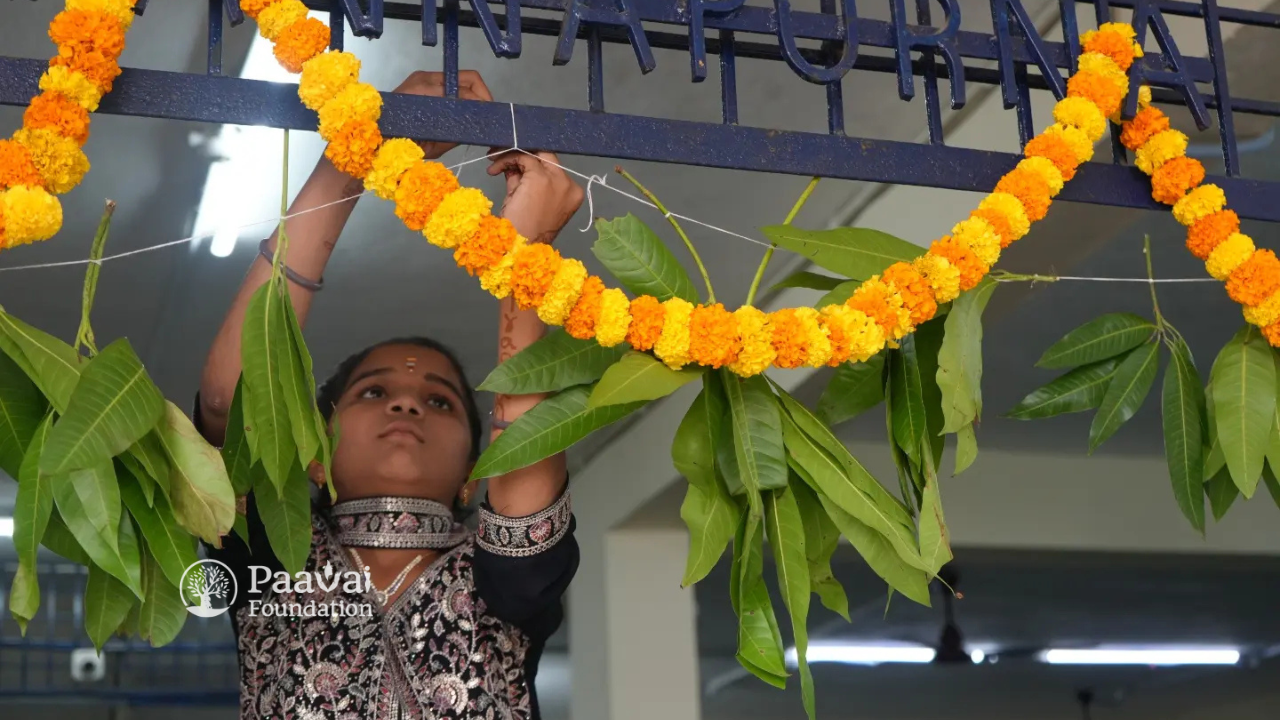
Inclusive celebrations are planned so that everyone can take part in their own way. A younger child might be held close during the festivities. A child who finds crowds overwhelming might enjoy the lights from a quieter spot with a caregiver beside her. Every child gets to dress up, every child is part of the group, and every child's joy counts.
That reflects the wider approach of Paavai ID Care, which supports children with intellectual disabilities through care that's respectful, consistent and human-centred. Inclusion isn't a special event. It's simply how every day, festival days included, is meant to work.
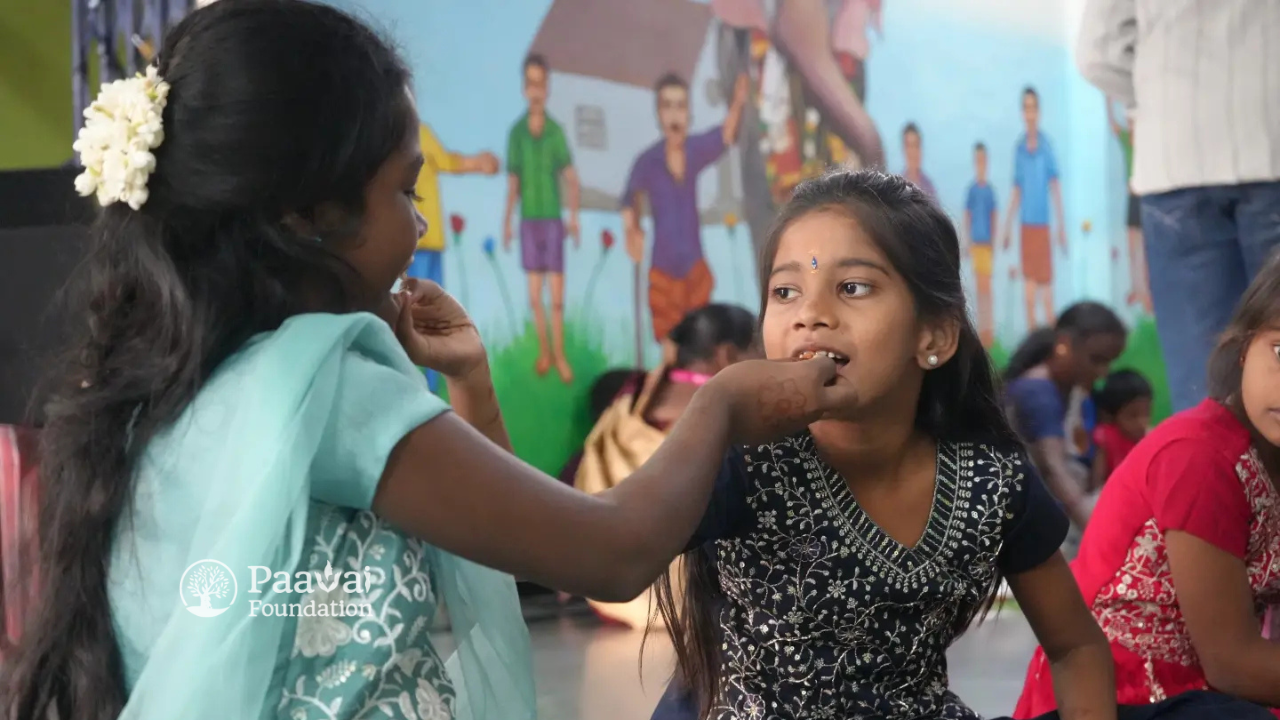
You can learn more about the campus at Paavai Campus Tirupati, and about how children's homes provide stability in Children's Home in Tirupati: Who Cares for Children When Families Cannot?
Celebrations Built on Routine and Care
One small detail in the photograph is easy to miss. Beside the doorway is a sign: "Outside food not allowed."
It's a small rule, but it says something about how children are cared for. Food that comes into a children's home should be safe, hygienic and suited to children's health needs, especially when some children have specific dietary or medical requirements. Rules like this protect children quietly, on festival days and every other day.
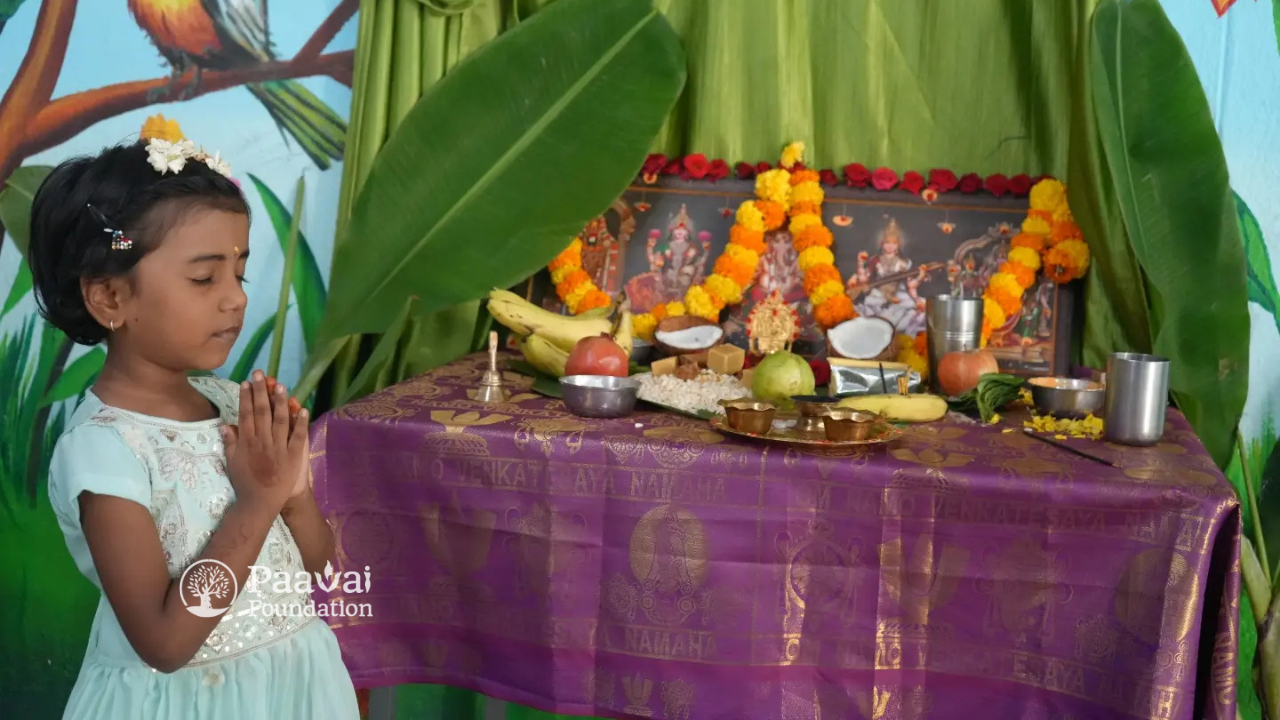
Good celebrations in a children's home work the same way. They're joyful and generous, but they're built on the same foundations of safety, routine and care that shape everyday life. Children still get their rest. Meals are planned carefully. Safety comes first around lamps. Celebrations fit around children's needs, rather than the other way around.
This is what Paavai Abhayam is designed to provide: a safe, stable environment where children are protected, supported and nurtured with dignity. A festival is one of the happiest expressions of that stability. And Paavai Shishumithra includes creative and cultural development as part of a child's growth, which is exactly what a well-celebrated festival offers.
What Children Carry Forward
A single Diwali evening lasts only a few hours. What children take from it lasts much longer.
They carry the feeling of belonging: of standing in a group photograph surrounded by people who are glad they're there.
They carry traditions they can one day pass on: how to light a diya, why marigolds go on the doorway, what Diwali means.
They carry confidence: the memory of feeling beautiful, special and celebrated.
They carry the lesson of the lamp: that light can be shared without being lost.
Many years from now, when these children are grown, with homes, work and perhaps families of their own, they'll light diyas again. And somewhere in that moment there may be a memory of a marigold-framed doorway in Tirupati, friends standing close, and a day when everything felt bright.
That's the long-term work of a children's home: not just meeting children's needs today, but helping them build lives full of good memories and the confidence to create their own. For more on that long view, read From Beneficiary to Contributor: What Happens When Support Actually Works.
How You Can Share the Light
Diwali is a festival of sharing, and there are meaningful ways to extend its light to children all year round.
Celebrate a special day with the children. Through Celebrate With Us, you can sponsor a meal to mark a birthday, anniversary, festival or memory of a loved one. It's a lovely way to make your own celebration part of theirs.
Support Diwali with Paavai. Paavai Foundation's Diwali with Paavai campaign is a way to share festive joy with children in care.
Give regularly. Festivals are special, but children need care on every ordinary day too. Donating for children monthly helps sustain education, health, nutrition and the consistent caregiving that makes every celebration possible. Monthly Giving vs One-Time Donation: Which Does More for a Child? explains why steady support matters.
Learn more about the work. Discover Paavai Foundation's approach to care, education and inclusion across Tamil Nadu, Andhra Pradesh and Telangana.
A Festival of Light, a Home Full of Warmth
The marigolds will fade. The diyas have burned down. The festive clothes are folded away for the next special occasion.
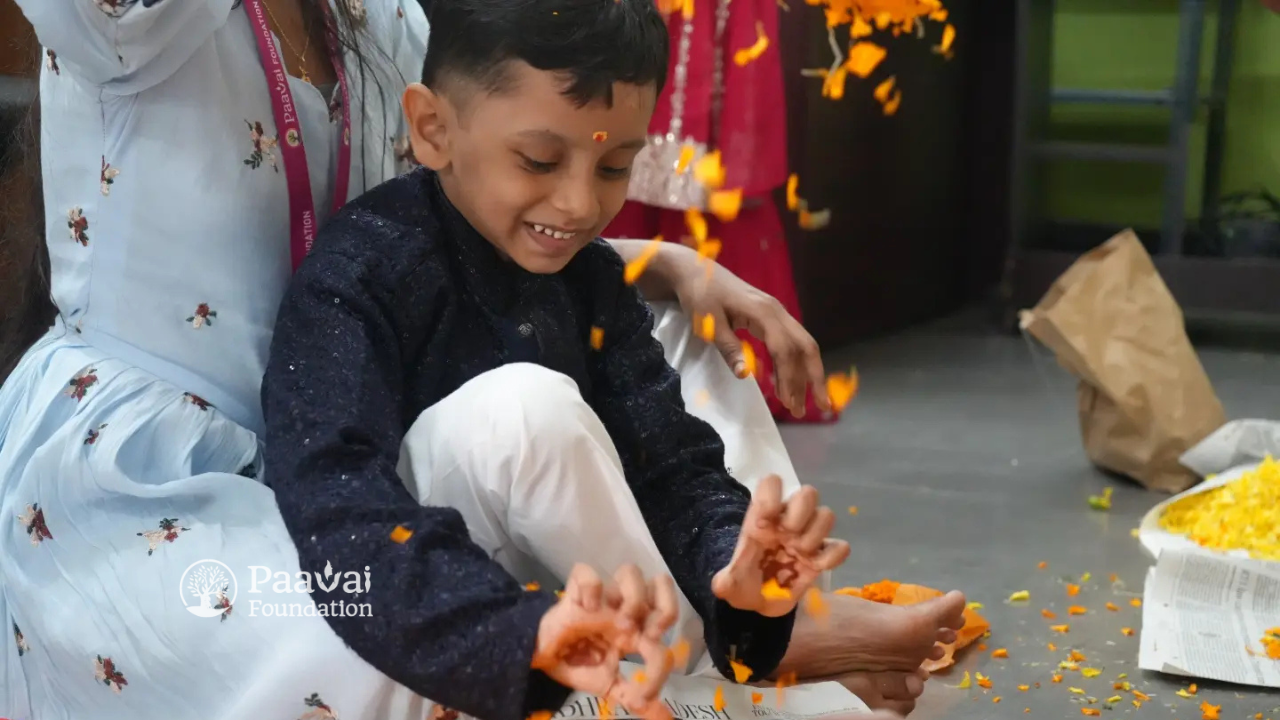
What stays is the feeling: a home full of laughter, children standing close together, caregivers smiling alongside them, and a day that belonged entirely to them.
That's what Diwali means at its best. Light over darkness. Togetherness over loneliness. Joy that grows when it's shared.
From all of us at Paavai Foundation, may that light continue to brighten every heart.
FAQs
How did Paavai Foundation celebrate Diwali in Tirupati?
Children at Paavai Foundation's Tirupati campus celebrated Diwali by lighting diyas, dressing in festive clothes and celebrating together with their caregivers, in a home decorated with marigold garlands.
Why are festivals important for children in care?
Festivals give children a sense of belonging, continuity and cultural identity. They create happy memories and help children feel part of a family and a wider community.
Do children in children's homes celebrate festivals?
Yes. Well-run children's homes celebrate festivals so that children experience the same traditions and joy as other children. Celebrations are planned around children's safety, routines and needs.
How can I celebrate a festival or special occasion with children at Paavai Foundation?
Through the Celebrate With Us programme, you can sponsor a meal to mark a birthday, anniversary, festival or memorial. You can also support the Diwali with Paavai campaign.
Can I donate for children during Diwali?
Yes. You can donate online through Paavai Foundation's website. Regular monthly giving also helps sustain children's care, education and health throughout the year.
Is the Tirupati campus inclusive of children with special needs?
Yes. Paavai Foundation's Tirupati campus is its Integrated Special Children Home, where celebrations are planned so that every child can take part.
What is the meaning of Diwali for children?
For children, Diwali celebrates light over darkness and good over evil. It's also about togetherness, sharing and kindness.
Comments
Loading comments...
Leave a comment
Your email address will not be published. Only your name is shown with your comment.