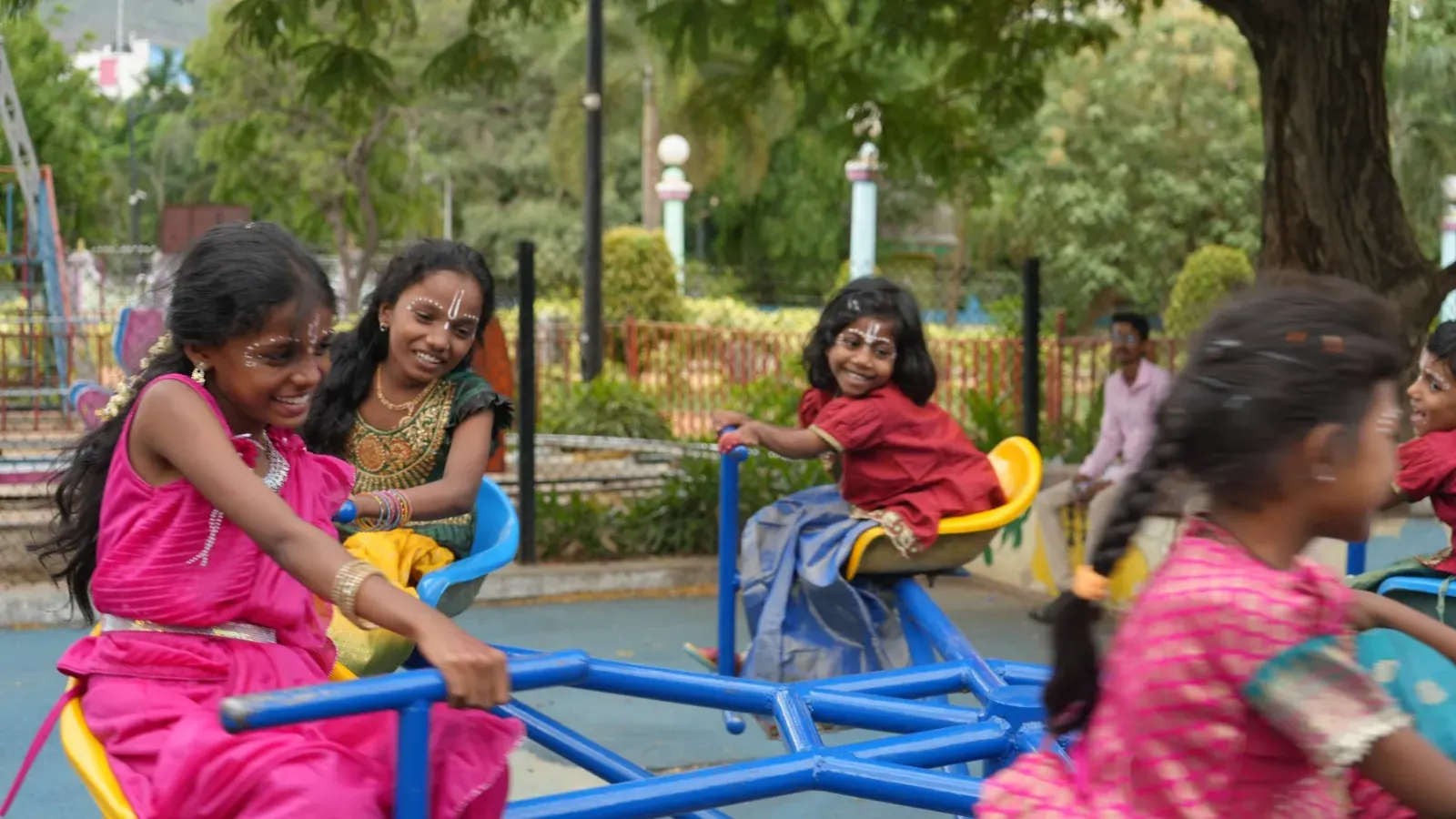
A child needs more than a roof.
They need someone to notice when they are unwell.
Someone to make sure they eat.
Someone to ask how school went.
Someone to know when they are unusually quiet.
Someone to help them sleep without fear.
And, perhaps most importantly, someone who believes that their circumstances today should not decide the rest of their life.
For some children, family circumstances can make these basic forms of care difficult or impossible to sustain. A child may be without stable parental care, may have experienced abandonment or neglect, may need protection from an unsafe environment, or may require specialised support because of disability or other vulnerabilities.
In such situations, the question is not simply where the child will stay.
The deeper question is:
Who will care for the child while the systems around them work toward a safer and more stable future?
That is where child-protection systems, families, government agencies, Child Welfare Committees, Child Care Institutions, social workers and responsible nonprofit organisations can become important.
For people searching for a children's home in Tirupati, understanding this wider ecosystem matters.
Because a children's home should never be thought of as simply a building where children sleep.
It should be a place where care, protection, education, health, dignity and rehabilitation come together.
A children's home is not simply a place to stay
The phrase “children's home” can sound straightforward.
But under India's child-protection framework, institutional care is part of a much larger system.
The Ministry of Women and Child Development explains that Mission Vatsalya supports Child Care Institutions under the Juvenile Justice (Care and Protection of Children) Act, 2015. These institutions are intended to provide residential care and comprehensive support to children in need of care and protection, while working toward their development and eventual social reintegration.
That changes the way we should think about residential child care.
Food and accommodation are essential.
But they are only the beginning.
A child may also need:
Safety and protection
Regular healthcare
Nutrition
Education
Emotional support
Counselling
Life skills
Recreational opportunities
Social development
Family assessment and support
Rehabilitation and reintegration planning
The objective is not to make institutional care a permanent substitute for family life whenever another safe option exists.
In fact, Mission Vatsalya places emphasis on family-based non-institutional care such as sponsorship, foster care, adoption and after-care, with institutionalisation treated as a measure of last resort.
That principle is important.
The best residential care is not simply about keeping a child inside an institution. It is about protecting the child while working toward the best possible long-term outcome.
Why a child may need care outside the family
Families can experience circumstances that affect their ability to provide stable care.
These circumstances can be complex.
A child may face abandonment, neglect, exploitation, family separation, unsafe living conditions or other situations that place their safety and development at risk.
Also Read: How Local Communities Can Create Lasting Social Impact
There are also children whose needs require specialised support that their family may not currently be able to provide.
It is important not to assume that every child living away from their biological family has been “given up” by their parents.
Child protection is more complicated than that.
Sometimes a family needs support.
Sometimes a child needs temporary protection.
Sometimes authorities need to determine whether restoration to the family is safe and appropriate.
Sometimes another form of family-based care may be considered.
And sometimes residential care becomes necessary.
Under the Juvenile Justice Act, the Child Welfare Committee has authority to make decisions for children in need of care and protection, including orders relating to restoration to parents or guardians, placement in a Children's Home or fit facility, foster care, sponsorship and other rehabilitation measures.
That means the child's situation should be assessed individually.
What happens inside a good child care environment?
Imagine a child arriving after a period of instability.
The first need may be something very basic:
A safe place to sleep.
But once that immediate need is met, other questions begin.
Is the child healthy?
Are they attending school?
Do they have learning gaps?
Are they carrying fear or emotional distress?
Do they have a disability or developmental need?
Do they have contact with family?
What do they enjoy?
What are they good at?
What kind of support will help them become more independent?
This is why good residential child care has to be more than a shelter.
The Government of India's Mission Vatsalya framework describes institutional care as comprehensive care intended to support children's all-round development and eventual social reintegration.
The difference between housing a child and caring for a child is enormous.
One provides a place.
The other builds a support system.
Education cannot stop because a child's family situation has changed
A child's circumstances may change suddenly.
Their education should not have to stop with them.
When a child enters residential care, continuing education becomes one of the most important forms of stability.
School can provide routine.
It can provide friendships.
It can provide access to teachers and learning.
It can give children something to work toward.
And perhaps most importantly, education can help a child imagine a future beyond the circumstances that brought them into care.
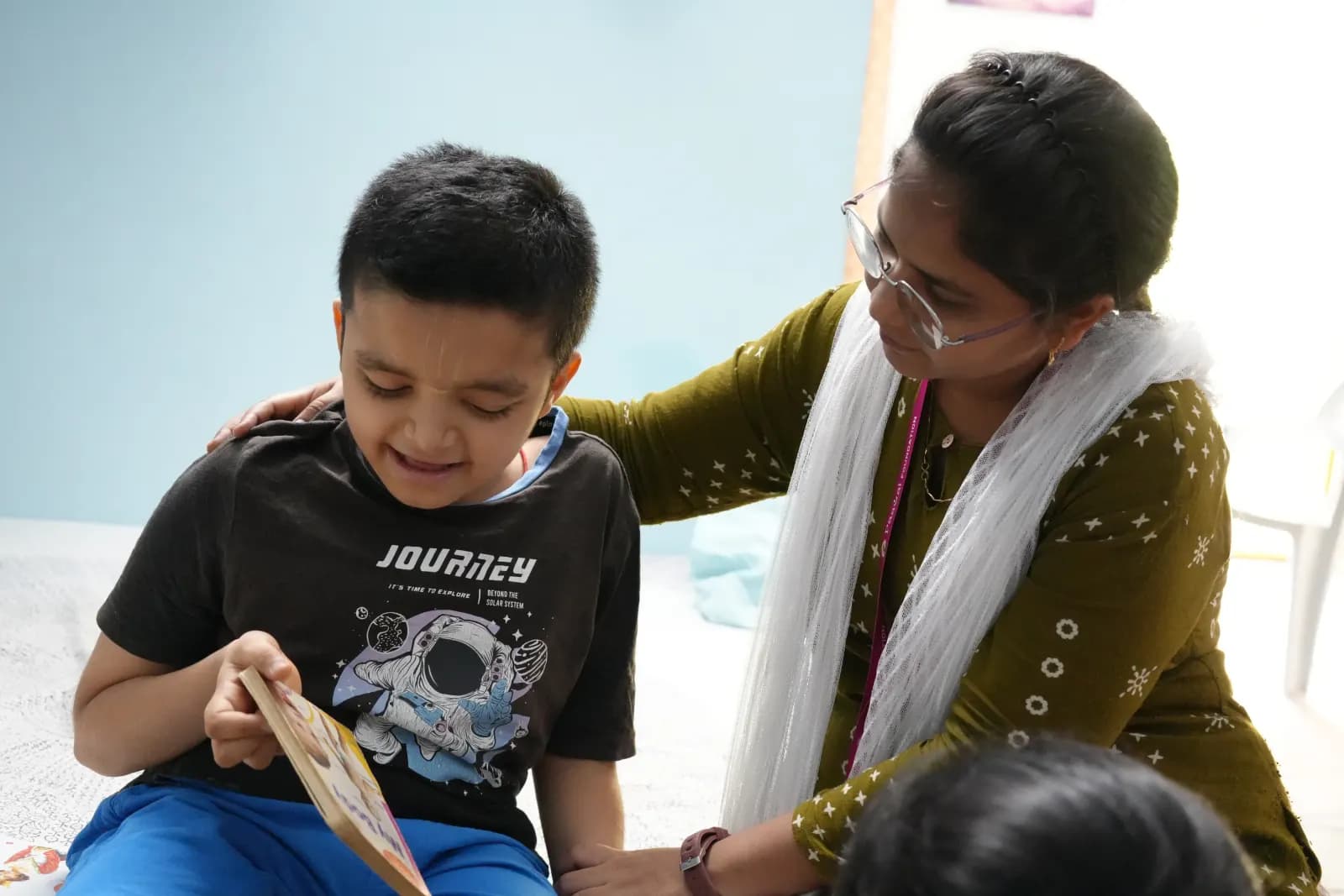
Paavai Foundation's broader approach to child development connects care with education, healthcare, protection and long-term development. Its Paavai Gurukul programme focuses on continuous formal education, academic support, mentoring, digital learning and confidence-building. Paavai India Blogs
This is why a child care home in Tirupati should not be evaluated only by the quality of its accommodation.
Ask what happens to the child's education.
Who follows up on school attendance?
Who supports learning difficulties?
Who helps the child prepare for the next stage?
Who notices when a child is falling behind?
Those questions reveal much more about the quality of care.
Health is part of residential child care too
Children cannot learn well when they are repeatedly unwell.
They cannot build confidence when untreated health problems keep interrupting daily life.
They cannot participate fully when nutrition is inadequate.
For this reason, residential child care needs systems for healthcare and wellness.
These can include appropriate health monitoring, access to medical attention, nutrition, hygiene and attention to emotional well-being.
Paavai Foundation programme material describes Paavai Arogya as an integrated health approach covering preventive healthcare, health monitoring, medical care, mental well-being, therapy and rehabilitation. Paavai India Blogs
The principle is simple:
Care for a child has to include the whole child.
Not just their accommodation.
Not just their education.
Not just their food.
Their physical and emotional well-being matter together.
Protection must come before everything else
A residential setting brings an additional responsibility.
Children living away from their families may be particularly dependent on the adults and systems around them.
That makes safeguarding essential.
Staff recruitment and screening matter.
Clear codes of conduct matter.
Supervision matters.
Reporting procedures matter.
Children need to know whom they can approach when something feels wrong.
Organisations working with children should also have appropriate systems for identifying, responding to and reporting protection concerns.
Paavai Foundation's existing guidance on child safety and protection emphasises that protection is not simply about responding to incidents. It involves building systems that allow children to be seen, supported and connected with appropriate child-protection mechanisms.
The same principle is reflected in India's legal framework.
The Ministry of Women and Child Development describes Child Care Institutions under Mission Vatsalya as part of a statutory child-protection system rather than standalone shelters. Child Welfare Committees and District Child Protection Units are part of that wider structure.
A child's safety should therefore never depend only on good intentions.
It needs systems.
What does Tirupati's child-protection system look like?
Tirupati has an established government child-welfare structure.
The Tirupati District administration's Women and Child Welfare Department states that its work includes child development, protection, nutrition, early childhood services and access to institutional and legislative support.
The district also has a District Child Protection Unit (DCPU) responsible for coordinating child-protection services, supporting Child Welfare Committees and monitoring Child Care Institutions, among other functions.
The district administration also currently lists Child Helpline 1098 among its helpline services.
This matters because a person looking for a children's shelter in Tirupati should understand that child protection is not supposed to operate as an informal network of private homes.
There are government structures, legal procedures and statutory bodies involved.
If a child is in immediate danger or appears to be without appropriate care, the appropriate child-protection authorities should be contacted rather than attempting to arrange an informal placement independently.
Not every child needs institutional care
This is an important part of the conversation.
When people hear “children's home,” they may immediately think that a vulnerable child should be moved into residential care.
But the modern child-protection approach is more nuanced.
If a child can safely remain with their family with the right support, strengthening that family may be preferable.
If foster care is appropriate, it may provide a family environment.
If sponsorship can address a family's economic or developmental difficulties, that may prevent unnecessary separation.
If adoption is legally appropriate for an eligible child, it follows a different process.
And when residential care is necessary, it should be provided through an appropriate, regulated system.
Mission Vatsalya specifically promotes sponsorship, foster care, adoption and after-care as forms of family-based or non-institutional care, while recognising institutional care for children who require it.
So the goal should not be:
“How many children can we place in a home?”
A better question is:
“What kind of care is safest and most appropriate for this particular child?”
Where NGOs fit into the picture
An NGO for children in Tirupati can contribute to this ecosystem in different ways.
Some organisations focus on education.
Some work with vulnerable families.
Some provide healthcare.
Some work on child protection.
Some support children with disabilities.
Some operate residential or specialised care programmes where permitted and appropriate.
The strongest organisations tend to recognise that these issues overlap.
A child struggling in school may also be dealing with poor nutrition.
A child facing disability may need both education and therapy.
A child without stable family support may need protection, education and emotional care at the same time.

This is why integrated child development matters.
Paavai Foundation describes its model as connecting care, education, empowerment and leadership, with child protection and stability forming the foundation of the journey. Paavai India Blogs
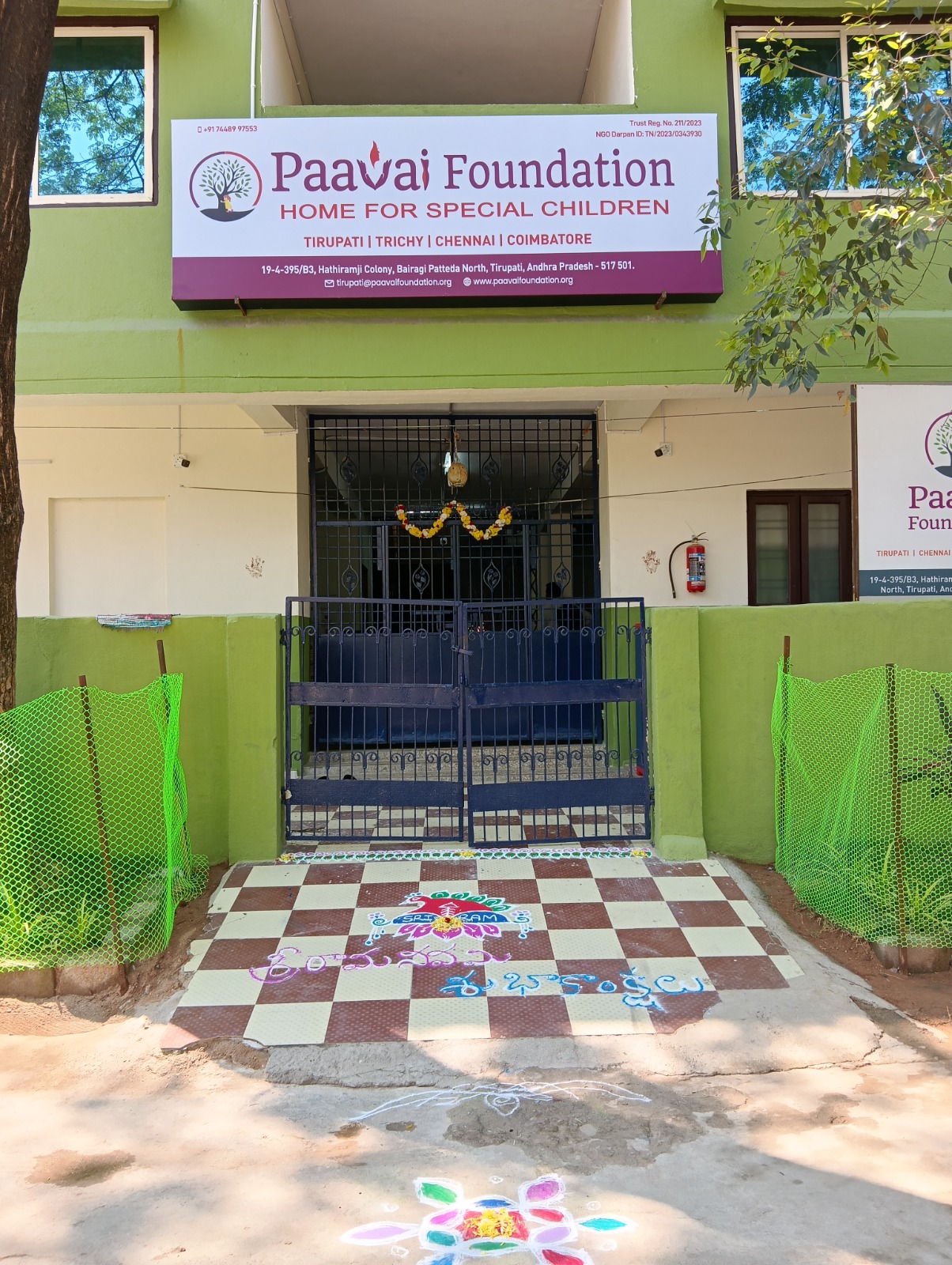
Its published information also states that the Foundation's work in Tirupati includes an Integrated Special Children Home. A recent Paavai article identifies centres including an Integrated Special Children Home in Tirupati, alongside other residential child-care centres in Tamil Nadu and Telangana.
That distinction is important: the source specifically identifies an Integrated Special Children Home in Tirupati. We should not automatically describe every Paavai child-care programme as a legally designated “Children's Home” without confirming its registration or statutory classification.
What makes a children's home genuinely child-centred?
If you are researching a children's home in Tirupati, the name of the organisation should be only the beginning of your evaluation.
Look deeper.
1. Is the child safe?
Ask about safeguarding policies, staff screening, supervision and reporting mechanisms.
2. Is the organisation legally appropriate?
For institutions caring for children in need of care and protection, registration and compliance under the Juvenile Justice framework matter. The Ministry of Women and Child Development states that registration of Child Care Institutions is mandatory under Section 41 of the JJ Act.
3. Does the child receive education?
Residential care without meaningful educational support can leave children vulnerable in another way.
4. Is healthcare available?
Look beyond emergency treatment. Ask about regular health monitoring, nutrition, hygiene and mental well-being.
5. Does the organisation protect dignity?
Children should not be reduced to their difficult circumstances.
They have personalities, interests, abilities and aspirations.
6. Is family connection considered?
Where safe and appropriate, family restoration and reintegration should remain part of the wider child-protection conversation.
7. Is there a future beyond childhood?
The support system should help children build confidence, skills and greater independence as they grow.
These questions are useful whether you are a donor, volunteer, community member or someone trying to understand how child welfare works.
A home should feel like care, not an institution
The physical environment matters.
Government guidance for Child Care Institutions has historically emphasised adequate accommodation, classrooms, healthcare spaces, recreation, counselling, sanitation and play areas.
Current Mission Vatsalya guidance similarly describes CCIs as environments intended to provide comprehensive care and support rather than simply lodging. But infrastructure is only one part of the environment.
A child can have a clean room and still feel alone.
A child can receive three meals a day and still lack emotional security.
A child can attend school and still feel that nobody believes in them.
Good child care therefore depends on relationships as much as facilities.
A caregiver who notices a child's mood.
A teacher who understands their learning needs.
A counsellor who listens.
A social worker who follows the case.
A doctor who takes recurring symptoms seriously.
A mentor who encourages talent.
These relationships can help turn a residential setting into a place where a child begins to feel secure.
The role of ordinary people is bigger than they think
You do not have to work for an NGO to support child welfare.
Communities can contribute in many ways.
A person can volunteer with appropriate skills.
A teacher can provide educational support through a structured programme.
A healthcare professional can contribute expertise through an authorised initiative.
A company can support a child-development programme through a responsible CSR partnership.
A donor can support education, nutrition, healthcare or child protection.
A community member can learn how to respond appropriately when they encounter a child-protection concern.
Paavai Foundation's guide on ways to make a difference in a child's life similarly emphasises that meaningful support can take many forms, including education, volunteering, professional skills, child protection and community participation.
The important point is to contribute responsibly.
Children should never become objects of charity or public storytelling.
Their privacy and dignity have to remain central.
What should you ask before supporting a child-care organisation?
If you are considering supporting a child welfare organisation in Tirupati, ask questions before making a decision.
Where does the organisation work? What exactly does the programme provide? Who are the children it supports? Is the programme registered or authorised where required?
Also Read: Leading Child NGOs in South India
These questions are not signs of distrust.
They are signs of responsible giving.
A credible organisation should be willing to explain its work clearly.
What Paavai Foundation Tirupati work means in this context
At Paavai Foundation, our work with children with intellectual disabilities takes place in exactly the districts where the data is thinnest.
These are places where a specialist assessment can mean a day's travel and a day's lost wages, and where the children least likely to appear in a national dataset actually live.
Paavai ID Care, our dedicated initiative for children with intellectual disabilities, is built around lifelong rather than episodic support: safe and supportive living environments, special education and assisted learning, therapy, rehabilitation and functional support, continuous medical monitoring, emotional and psychological well-being, and the everyday life skills that build assisted independence.
We do not publish beneficiary figures we cannot substantiate, and we would rather describe our work accurately than quantify it impressively.
What we can say is that the argument of this article matches what the work looks like on the ground. Children who have never been assessed. Families who did not know a certificate existed, let alone what it unlocks. Entitlements written into national law and never claimed by anyone in the village. The practical shape of that reality is set out in Understanding the Needs of Children with Disabilities: A Guide to Care, Inclusion and Support.
A child's needs do not stop at the door of a residential home.
If a child needs specialised care, that care may have to connect with education.
If the child needs education, health may affect their ability to learn.
If the child needs protection, emotional support may be equally important.
And as children grow, they need opportunities to develop confidence, skills and independence.
This is the broader idea behind integrated child development.
When families cannot provide everything, society cannot simply look away
The phrase “when families cannot” should not make us think only about failure.
Families can face circumstances that are bigger than their immediate ability to manage.
Poverty.
Illness.
Disability.
Abandonment.
Loss.
Violence.
Separation.
Social vulnerability.
The answer cannot always be to blame the family.
Sometimes the answer is to strengthen the support around the family.
And when a child genuinely needs protection away from their family environment, the responsibility becomes even greater.
That child has already experienced a disruption.
The care system should not become another source of instability.
It should become a bridge.
From fear to safety.
From disruption to routine.
From missed education to learning.
From isolation to relationships.
From dependence to growing independence.
A children's home should be measured by what happens next
The easiest thing to measure is how many beds a facility has.
The more meaningful questions are harder.
Did the child become safer?
Did they return to education?
Did their health improve?
Did they gain confidence?
Did they develop skills?
Did they reconnect safely with family where appropriate?
Did they find a suitable long-term care pathway?
Did they grow into a young person with greater independence?
That is where child welfare in Tirupati becomes more than a search term.
It becomes a question about systems and people.
The purpose of care is not simply to protect a child from today's difficulty.
It is to create enough stability for tomorrow to become possible.
Every child deserves someone who stays
A child should not have to understand the complexity of the adult world to deserve care.
They should not have to explain why their family circumstances changed.
They should not have to prove that they are worth protecting.
When a family cannot provide everything a child needs, the responsibility does not disappear.
It moves outward.
To child-protection systems.
To communities.
To trained caregivers.
To schools.
To healthcare professionals.
To responsible organisations.
To all of us.
Tirupati already has a formal child-protection ecosystem involving government departments, District Child Protection structures, Child Welfare Committees, Child Care Institutions and Mission Vatsalya-supported services.
But systems become meaningful only when children experience them as care.
For someone searching for a children's home in Tirupati, that is perhaps the most important thing to remember.
Do not ask only:
“Where does the child stay?”
Ask:
“Who knows the child?”
“Who protects them?”
“Who helps them learn?”
“Who notices when they are struggling?”
“Who prepares them for the future?”
Because a home is not defined only by walls.
For a child who has lost stability, a home begins when they feel safe enough to believe that someone will still be there tomorrow.
And the day after that.
And the day after that.
That is what meaningful child care should make possible.
FAQs
What is a children's home in Tirupati?
A Children's Home is a type of Child Care Institution under India's child-protection framework for children in need of care and protection. It provides residential care and support as part of a broader rehabilitation and child-protection system. Mission Vatsalya supports such institutions under the Juvenile Justice framework.
Who can be placed in a Children's Home?
Children in need of care and protection may be placed in appropriate institutional care through the statutory child-protection process. The Child Welfare Committee can make orders relating to restoration, Children's Homes, foster care, sponsorship and other rehabilitation measures depending on the child's circumstances.
Is institutional care the only option for vulnerable children?
No. India's current child-protection framework also supports family-based and non-institutional approaches such as sponsorship, foster care, adoption and after-care. Mission Vatsalya promotes family-based care with institutionalisation treated as a measure of last resort.
What should I check before supporting a child care home?
Look at the organisation's legal status, applicable registration, child-safeguarding systems, education and healthcare arrangements, financial transparency, staff practices, privacy protections and approach to the child's long-term development.
What is Child Helpline 1098?
Child Helpline 1098 is operated under Mission Vatsalya and is integrated with the emergency response system. It provides a route for children in crisis to access emergency and longer-term care and rehabilitation services.
Does Paavai Foundation work with children in Tirupati?
Paavai Foundation's published material describes an expanding presence in Andhra Pradesh and identifies an Integrated Special Children Home in Tirupati as one of its residential centres. Its wider child-development work includes care, education, healthcare and disability inclusion.
Comments
Loading comments...
Leave a comment
Your email address will not be published. Only your name is shown with your comment.