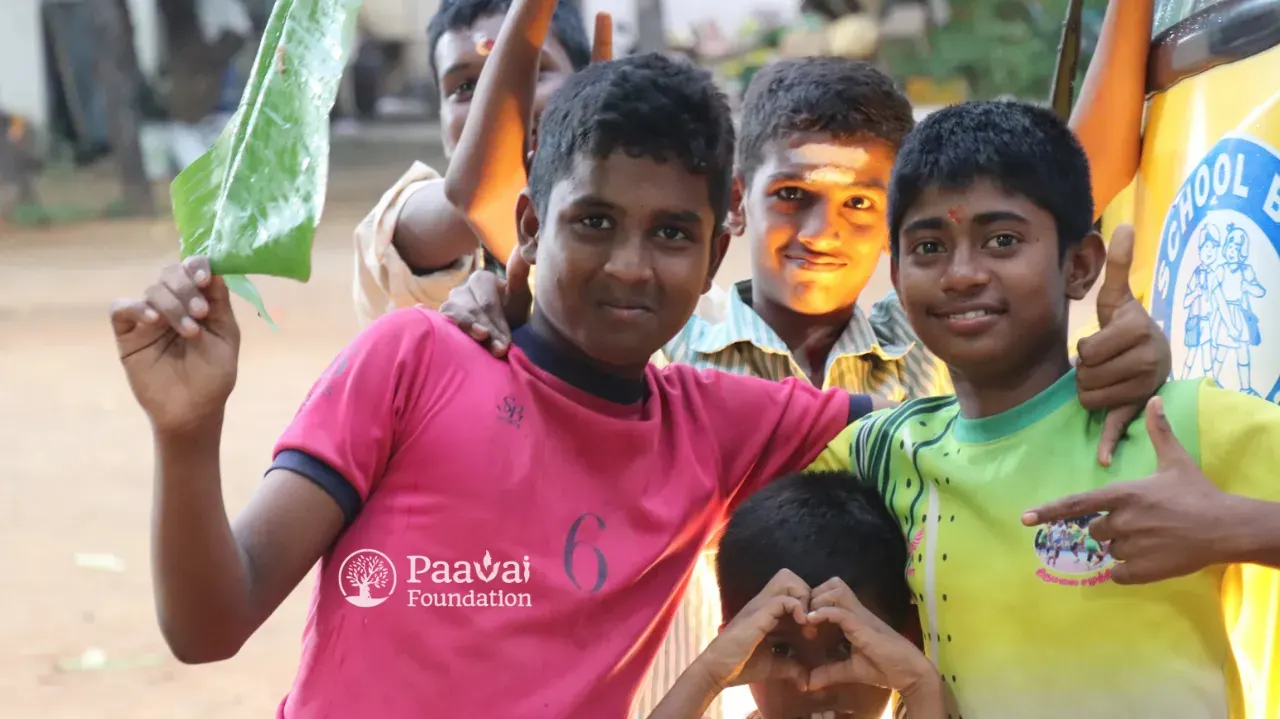
In any given week, a children's home in Trichy gets the same kind of message from three different people.
The first wants to come and see the home. The second has a skill to offer and some free Saturdays. The third doesn't have much time but would like to give regularly. Each is sincere, and each tends to assume their way of helping is the most personal and so the most meaningful.
That assumption deserves a closer look, because it is usually made from the giver's side. Seen from the child's side, the three options look quite different. The most personal option is not always the most useful, and the least visible one sometimes matters most.
This guide sets out what each option involves, what it asks of you, and what it means for the children. Most people searching for an NGO for children in Trichy have a reasonably clear sense of what they can offer. The harder question is which form of help fits it.
Start with what children need from outsiders
Before comparing the options, it helps to be clear about what any outside adult can actually add to the life of a child in care.
Children in residential care have usually already lost people, places and routines. What protects them most is consistency: the same adults, a predictable day, and relationships that don't end without warning. They also need privacy. Their stories, faces and circumstances are their own. And they need their routine protected, because a settled day is part of what makes a home feel safe.
So each form of help can be judged by the same simple test: does it add to these things or take away from them?
A stranger who visits once, is warm for two hours and never comes back takes something away, however kind the intention. A volunteer who comes every week for a year adds something. A donor the children never meet adds something too, because steady funding is what keeps the same staff in place.
Option one: visiting
Who a visit is for
A visit makes sense when you're considering a serious relationship with an organisation. You might be a prospective donor who wants to see where the money goes, a company assessing a CSR partner, someone weighing up regular volunteering, or a professional offering a skill.
It doesn't make sense as an outing, a birthday celebration, or an afternoon spent "doing something good" while passing through Trichy. Visits like that are organised for the visitor's benefit, and children experience them as being looked at.
What to expect
Arrange it in advance, never on the day. Expect to meet the administrator or programme lead, not the children. You may see the facility at a time when children are at school. Expect to be asked who you are and why you're interested, and to be screened before any contact with children.
Any of that can feel disappointing if you hoped to spend time with the children. In fact it's the clearest sign that the home takes child protection seriously. A home that gives unrestricted access to children on a first visit is telling you something you should take seriously.
What a visit is good for
Asking questions you can't ask on a website. How long has the longest-serving care worker been there? What does a child's day look like between breakfast and lunch? What do you need that nobody offers to fund? What went badly last year? The answers will tell you more about the home than anything you'd see walking around.
Option two: volunteering
The kind of volunteering that helps
Volunteering is valuable when it is sustained, skilled and structured. It's far less useful when it is one-off, general and unplanned.
The most useful volunteers tend to offer one of these:
A professional skill, regularly. Teaching, tutoring, counselling, medical support, speech or occupational therapy, sport, music, art, computer skills. One hour a week for a year is worth more than a full day once.
Practical support for activities that don't involve direct contact with children. Event logistics, food distribution at community programmes, help at health camps, administrative work.
Remote, digital skills. Writing, photography of events and facilities, video editing, design, social media and translation. This option is badly underrated. It uses real professional skills, it can be done from anywhere, and it puts no demand at all on children's routines or privacy.
What good volunteering asks of you
Commitment. Children in care don't need more adults who come and go. If a role involves contact with children, commit for months rather than days. If you can't, choose a role that doesn't involve children directly.
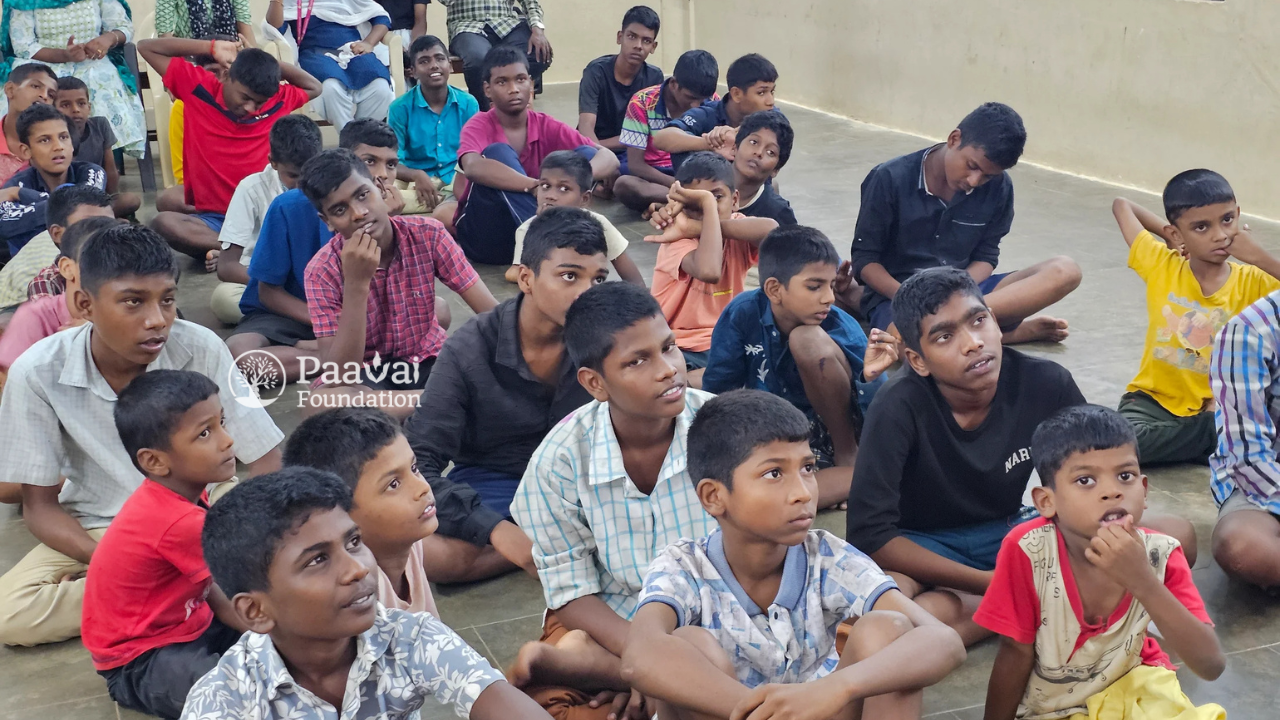
Screening. Expect, and welcome, identity checks, background verification and an induction for any role near children. That isn't suspicion. It's the protection you'd want for any child you care about.
Boundaries. Follow the home's conduct guidelines. Don't give individual children gifts, money or personal contact details. Don't take photographs or videos of children without explicit permission. And don't promote any political or religious view during activities.
Patience. A child may test a new volunteer for weeks before trusting them. That's normal, and it's the reason consistency matters so much.
How volunteering works at Paavai
Our volunteer programme groups roles into four kinds:
Skill volunteering: teaching and academic support, counselling, yoga, sports and well-being, computer and digital skills, art, dance and music.
Support volunteering: food distribution, help at medical camps, event coordination and logistics. These are often short-term and depend on need.
Digital volunteering: photography, video, writing, social media and content.
Time volunteering: helping at events and with routine activities.
Volunteers register with their name, contact details and area of interest, and then join a district group where opportunities are shared. Any role that involves contact with children is arranged with the Foundation and follows its safety and conduct guidelines, including its rule that no photographs or videos are taken without explicit permission. If you hope to work with children directly, say so when you register and plan for a sustained commitment.
Option three: sponsoring and giving
Why the least visible option often does the most
Donors who never set foot in the home are easy to underestimate. They're also what keeps it running.
Most of what it costs to care for a child is a recurring cost: staff salaries, food, schooling, transport, health care, electricity and maintenance. These costs arrive every month. A home that can rely on regular income can keep its staff, and keeping its staff is what gives children the consistent adults they need most.
That's why regular giving is usually the most useful form of support for people without the time or skills to volunteer. A modest monthly amount that continues for years lets a home commit to a child through the long stretch of her schooling. The reasoning is set out in Monthly Giving vs One-Time Donation: Which Does More for a Child?.
Sponsoring a child's education, or the whole home
Many people search for ways to sponsor a child's education in India and imagine supporting one named child. Some organisations run programmes like that. It's worth knowing the trade-offs, though.
Supporting one child can create unfairness within a group of children who live together. It raises privacy questions when progress reports about a particular child go to a donor. And it ties the child's support to a single donor's continued interest.
Contributions to the home as a whole avoid all three problems. They support every child's education, nutrition and care, they let staff direct money where it's needed most, and they don't depend on one person's situation staying the same.
Sponsoring a meal for an occasion
For people who want to mark a birthday, an anniversary or a memorial day, sponsoring a meal is a practical option.

The meal is cooked in the home's own kitchen and served by its staff at the usual time, so children enjoy a special meal without any disruption or performance. At Paavai this is offered through Celebrate With Us, where breakfast, lunch or dinner can be sponsored as a regular or special meal.
Before you give
Check registration independently. Many organisations are listed on the government's NGO Darpan portal. If you want to claim a deduction, ask for the organisation's 80G details and keep every receipt.
Which one fits you
If you have a professional skill and can commit regularly, volunteer. Be honest with yourself about how long you can keep it up.
If you have a skill but irregular time, choose digital or support volunteering that doesn't depend on building relationships with children.
If you have little time, or live outside Trichy, give regularly. It's the form of support most likely to still be helping in five years.
If you're considering a significant donation or a CSR partnership, arrange a visit first and ask hard questions.
If you want to mark an occasion, sponsor a meal and don't hold a celebration at the home.
Many supporters combine these. They might start with a visit, set up a monthly contribution, and later offer a skill. These options aren't in competition. They're simply different ways of contributing.
Choosing an NGO for children in Trichy
Whichever option you choose, check the organisation first. A credible NGO for children in Trichy should be able to tell you:
its registration details, including registration under the Juvenile Justice framework if it runs a children's home
whether it holds 80G registration
its child protection policy, staff screening procedure and rules on photography
how long children usually stay and what happens when they turn eighteen
what it measures and what hasn't worked
Information on the statutory framework for children in care is published by the Ministry of Women and Child Development. Concerns about any child's safety can be raised through the child helpline 1098, which operates around the clock, or with the National Commission for Protection of Child Rights.
Where our work sits
Paavai Foundation runs an Integrated Children Home in Tiruchirappalli. It brings together a children's home for girls, a children's home for boys and Anbucholai, a centre for senior citizens, on one campus. Children and elders are encouraged to spend time together, which gives children relationships with adults that aren't defined by a staff role. Life inside the girls' home is described in Inside the Girls' Home: Growing Up With Confidence and Courage.
The Foundation's wider work covers child care and protection, education, health, nutrition, disability inclusion, youth leadership, elderly care and community development across South India, organised in four stages: CARE, EDUCATE, EMPOWER and LEAD.
Whichever way you choose to be involved, we would rather you check us using the questions above than take our word for it.
Donate now to support children's care, education and well-being in Trichy and across South India, ideally as a monthly contribution.
Being part of a child's life
The phrase "being part of a child's life" suggests something personal: a face the child recognises, a name she remembers.
For a very small number of supporters, it is exactly that. These are the volunteers who come every week for years and become one of the steady adults a child relies on.
For most people it means something less visible and just as real. It's the donor whose monthly contribution keeps a care worker in her job for a sixth year. It's the photographer who documents a programme without showing a single child's face. It's the company that funds three years of schooling rather than one celebration.
Children rarely know who those people are. They do feel the difference those people make.
Pick the option that fits the time, skills and resources you actually have. Then keep going.
FAQs
What is the best way to support an NGO for children in Trichy?
It depends on what you can offer. Regular giving suits people with limited time or who live elsewhere. Sustained skill-based volunteering suits people who can commit regularly. A visit makes sense when you're considering a significant donation or partnership.
Can I visit a children's home in Trichy?
Prospective donors, partners and serious volunteers can usually arrange a visit in advance, often meeting the administrator rather than the children. Casual visits to spend time with children are generally declined, and that reflects good child protection.
What volunteer opportunities are there in Trichy?
Typical roles include teaching and tutoring, counselling, sport, arts and digital skills, help with events and community programmes, and remote digital work such as writing, photography and design. Roles involving children need a sustained commitment and screening.
Do I need to commit long-term to volunteer with children?
For roles involving direct contact with children, yes. Children in care benefit from consistent adults, and short-term involvement can add to a pattern of people leaving. If you can only commit briefly, choose a role that doesn't involve children directly.
Can I sponsor a specific child's education?
Some organisations offer this, but contributions to a home as a whole are often more effective. They support every child, avoid unfairness within the group, protect children's privacy, and don't depend on a single donor.
How do I donate to children in Trichy?
Check the organisation's registration first, then give through its official donation channels. Monthly contributions are usually the most useful. Keep receipts if you plan to claim a deduction under Section 80G.
Can I celebrate my birthday at a children's home in Trichy?
Responsible homes generally decline this. Sponsoring a meal for the date, cooked and served by the home's own staff, is a better alternative.
What should I check before getting involved with a children's NGO?
Registration, 80G status, its child protection policy and screening procedure, its rules on photography, how it measures progress, and what happens when children turn eighteen.

Comments
Loading comments...
Leave a comment
Your email address will not be published. Only your name is shown with your comment.