
The drive back from Srirangam is quiet. The child in the back seat has been awake since four, has walked a great deal, has been lifted up to see over crowds, and is now asleep with a packet of prasadam in her lap.
Somewhere on the road home, a parent will ask the question most of us ask: did you like it?
The answer will be about the elephant, or the man selling glass bangles, or the enormous tower, or how hot it was. And then the subject will change, and a morning that could have become something will become a nice outing that happened in October.
This is not a failure of the child. Children do not naturally convert experience into meaning that is a skill, and it is learned from adults who model it.
What follows is a practical approach to doing that, using the Sri Ranganathaswamy Temple at Srirangam as a setting, in a way that works whether your family is devout, nominally observant, or simply there because the architecture is extraordinary.
Why this place works for this lesson
Srirangam is unusual in a way that happens to be useful.
The temple complex is a series of seven concentric enclosures, the prakarams, with towering gopurams marking the entrances. A visitor does not arrive at the temple. A visitor walks inward, through layer after layer, from the busy outermost enclosures where people live and trade, towards the quiet centre.
A child feels this physically. The noise drops. The crowd thinks. The light changes. By the time you reach the centre, you have passed through something.
That structure is a gift to anyone trying to teach gratitude, because gratitude works the same way. It moves outward rather than inward, but along the same kind of layers: the people closest to a child, then the slightly further ones, then the ones she has never met and never thinks about.
Most gratitude activities for children fail because they ask for a list. Say three things you are thankful for. The child produces an answer that satisfies the adult and changes nothing, because the exercise is abstract and the list is always the same.
Walking through seven walls is not abstract. You can point at things.
A note: this article treats a temple visit as a setting for reflection on gratitude, kindness and respect. The approach described works equally at a church, a mosque, a gurudwara, a historic site or any place where many hands have built something over a long time. Nothing here requires a child to hold any particular belief.
Before you go: set one question
The single most useful preparation takes thirty seconds in the car.
Give the child one thing to look for, and tell her you will ask about it afterwards. Not a list one.
Depending on age, something like: See if you can spot someone whose job it is to look after this place. Or: Count how many different kinds of work you see people doing today. Or, for an older child: This temple has been here for a very long time. See if you can find something that someone clearly repaired.
The question does two things. It converts a child from a passenger into an observer. And it gives you something concrete to talk about afterwards that is not did you like it.
While you are there: notice people, not only things
Children in large, impressive places look at the big objects: the tower, the carvings, the hall of a thousand pillars. Adults can gently redirect some of that attention towards people, because people are where the gratitude lesson lives.
Things worth pointing out, in passing rather than as a lecture:
Someone is sweeping. At any hour, in any large temple, someone is cleaning a floor that thousands of feet will dirty again within the hour. They will do it tomorrow too. Nobody thanks them.
Someone cooked. The prasadam in your child's hand was made by people she will never see, in quantities she cannot imagine, starting before she woke up.
Someone carved this. The stone work she is looking at was done by hand, by a person with a name, who died centuries ago and never knew she would stand here.
Someone is still repairing it. A building this old does not survive by itself. Somebody is replacing, restoring, maintaining continuously, invisibly, for generations.
And someone is helping. Volunteers directing queues, people guiding the elderly, strangers making space for a small child to see.
None of this needs a sermon attached. Look, that uncle has been sweeping since we came in is sufficient. Children draw conclusions from what adults choose to point at.
The conversation afterwards
This is where the visit becomes something, and it works best within a few hours, not days later.
Avoid the closed questions. Did you like it? Was it nice? produce yes and nothing.

Ask what they noticed, not what they felt. Noticing is easier than feeling for most children, and feelings follow observation rather than preceding it.
Reflection questions that tend to work, adjusted for age:
Who do you think was there before we arrived this morning?
How many people do you think it takes to keep that place running in one day?
Somebody built that tower without machines. How long do you think it took?
If everyone stopped looking after it, what would happen?
Who looked after you today? (The answer should eventually include the parent, the driver, the person who made breakfast, and the stranger who moved aside.)
Then the question that moves it home: who looks after you every day that you never thank?
Expect the first answers to be family. Keep going. Teachers. The person who cleans the school. Whoever cooks the midday meal. A bus driver. A neighbour who watches the gate. A doctor she saw once. The point is to extend the circle outward, exactly as she walked through the prakarams, until it includes people she has never thought about.
Turning it into practice, not a moment
A single good conversation produces a warm evening and little else. What changes a child is repetition, and teaching gratitude to children works the same way as teaching anything: small, frequent, low-effort, and modelled by adults.
Seven things that work, in rough order of ease.
One specific thank-you a day. Not "thank you" in general. One person, named, for one thing. Thank you to Kumar anna for keeping the water tank filled. Specificity is what distinguishes gratitude from politeness.
The outward circle, weekly. Once a week, name one person outside the family who made something in your day possible. It gets harder as the obvious ones are used up, which is exactly the point.
Let the child do the thanking. Adults thank the shopkeeper, the auto driver, the teacher. Hand that over to the child. Being the one who says it is different from watching it said.
A gratitude jar, if your family will sustain it. A slip of paper, one line, dropped in. Read them together at the end of the month. The reading-aloud is the part that works; the collecting is just logistics.
Thank the invisible. Periodically, deliberately thank someone whose work is normally unseen the sanitation worker, the night watchman, the person who cleans the school toilet. This is the hardest and most valuable version.
Model it in front of them. A child who hears a parent say I'm glad that man helped us learns more than a child who is instructed to be grateful.
And connect it to doing, not just saying. Gratitude that stops at feeling is a mood. Gratitude that becomes an action helping, sharing, contributing is a value.
What to avoid
Four things that are well intentioned and counterproductive.
Do not teach gratitude by comparison. Be thankful, some children have nothing. This is the most common approach and the worst one. It teaches a child that her good fortune is measured against someone else's suffering, it turns other children into instruments for her moral education, and it produces guilt rather than gratitude which are not the same feeling and do not lead to the same behaviour.
Do not use children in difficult circumstances as a lesson. Taking a child to look at children in a care facility so that she appreciates her own life is not a gratitude activity. It is an afternoon in which one child is a visitor and the others are a display. If your family wants to contribute to children who need support, contribute but do it because it helps them, not because it teaches your child something.
Do not demand gratitude. After everything we do for you produces compliance and resentment, never the thing you wanted.
And do not make it a performance. A child who has learned to produce gratitude on cue for adults has learned a social skill, which is fine, but it is not what you were aiming at.
What this is actually building
Gratitude is usually discussed as good manners. It is better understood as a developmental skill with measurable consequences.
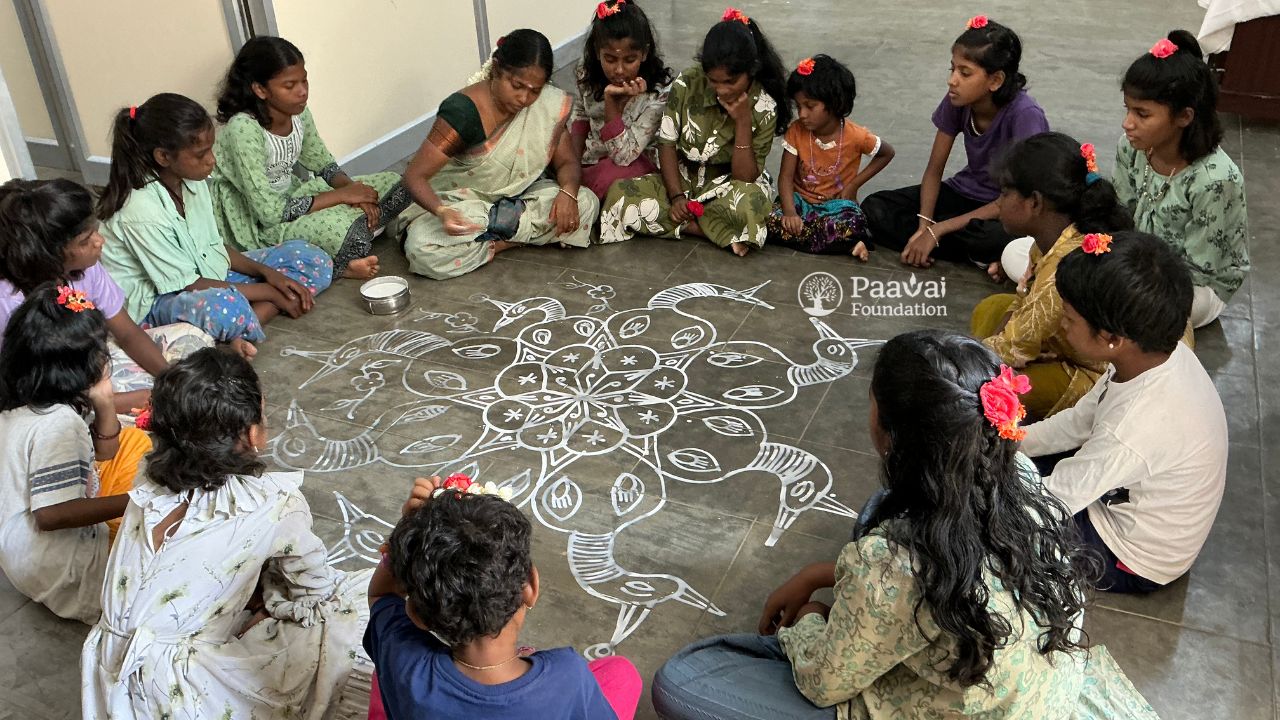
A child who can identify the people her life depends on is developing perspective-taking, the ability to recognise that other people have inner lives, effort and difficulty of their own.
That capacity underpins empathy, cooperation, and most of what makes someone pleasant to live and work alongside.
She is also learning that she is held. A child who understands that teachers, neighbours, workers and strangers all contribute to her ordinary day has a different relationship to the world than one who experiences her circumstances as simply the way things are. The first child is more secure, not less.
And she is building the foundation for contribution. A person who can see the web that supports them is far more likely to become part of it for someone else.
Values education for children is frequently taught as a list of virtues to memorise. It works considerably better as a set of noticing habits, practised in ordinary circumstances until they become automatic.
The temple visit is not the lesson. It is a vivid, memorable, physically structured occasion on which the lesson is easier to start.
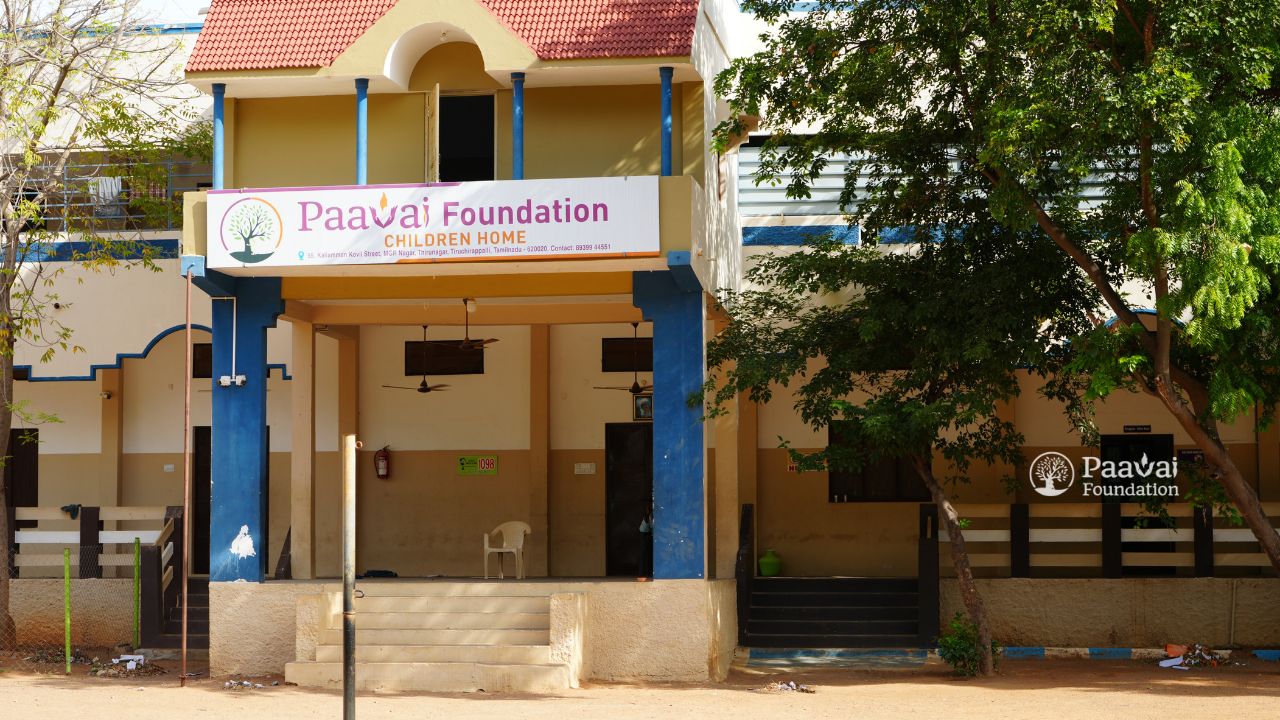
And if your family is in Srirangam, the lesson can go one step further. Our Paavai Foundation campus in Tiruchirappalli is a short drive from the temple. It is home to children and to the elders of Anbucholai, our centre for senior citizens, who live together like one extended family.
You are welcome to come by after darshan, sit with the grandparents, hear a story or two, and spend some unhurried time with us. Come as guests rather than visitors on an outing.
The best visits are the ones where your family joins the circle for an afternoon instead of watching it. Plan your visit here
Where our work sits
At Paavai Foundation, values are treated as something formed through experience rather than delivered through instruction.
Paavai Shishumithra, our child development initiative, is built on that principle nurturing children into confident, disciplined and responsible individuals through practice rather than precept.
The same thinking runs through Paavai Gurukul, our education work, which treats confidence and character as part of learning rather than as something that happens afterwards.
One design choice is worth drawing out, because it connects directly to this article. Within our work, elders are positioned as mentors and storytellers alongside children rather than as a separate group receiving care.
Intergenerational contact teaches a child, without anyone announcing it, that she belongs to something longer than her own life, which is the same lesson a seven-hundred-year-old temple teaches in stone.
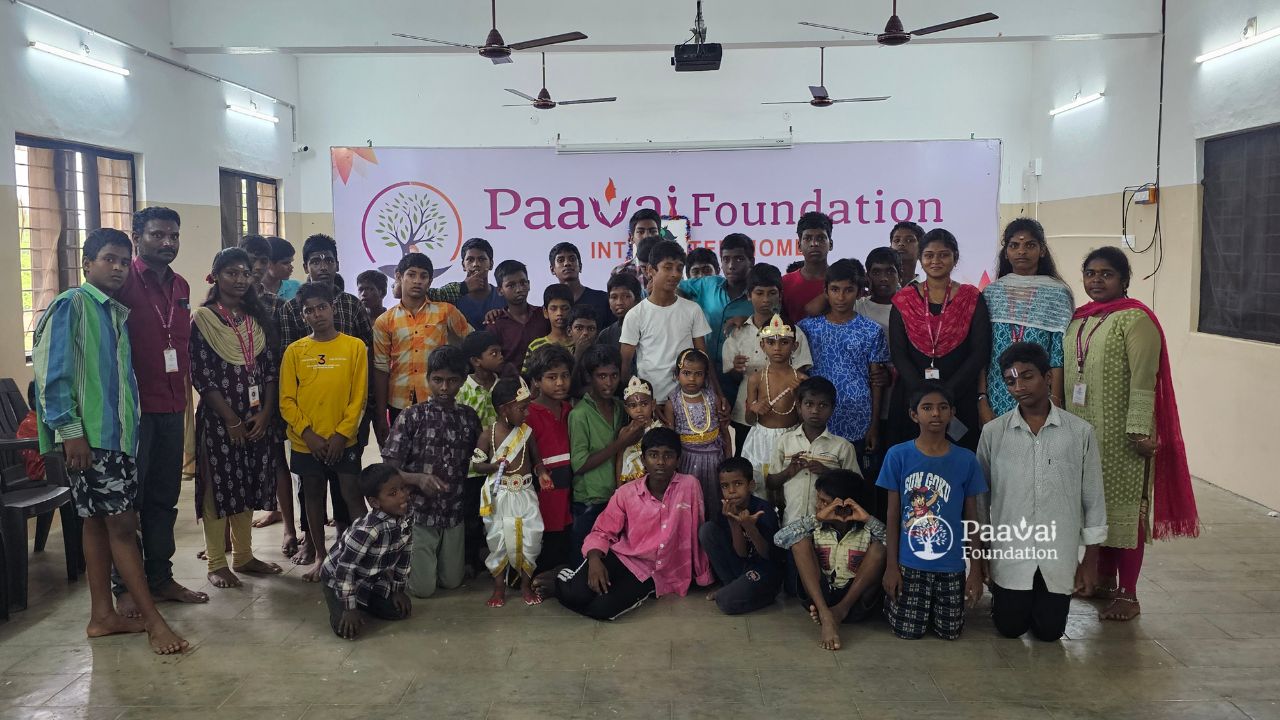
You can see this for yourself at our Integrated Home in Trichy, just a short drive from Srirangam. There, the children grow up with the elders of Anbucholai as their “grandparents.” The elders find companionship and purpose, and the children learn patience and a sense of heritage. If the temple showed your child something old and enduring, an hour with our elders shows her the same thing in a living form.
Our wider work across districts in Tamil Nadu, Telangana and Andhra Pradesh is held together by the Paavai Community Connect 360 framework, and what sustained support actually looks like for children who need it is described in Better Care and Brighter Futures for Children in Chennai.
Support Paavai Foundation in helping children learn values through meaningful experiences through a contribution to our child development and education work.
Seven walls, in both directions
Walking into Srirangam, you pass through seven enclosures to reach the centre. Walking out, you pass through them again in reverse, and the world gets louder with each one.
That is the shape of the thing you are trying to teach.
A child begins at the centre of her own life, which is where every child begins and should. What you are doing, slowly, over years, is helping her walk outward past her parents, past her grandparents and teachers, past the neighbours and the shopkeeper and the sweeper and the cook, out to the people she has never met who made the road, the water supply, the school building, the vaccine.
She will not get there in one conversation in a car. Nobody does.
But the question you ask on the way home is where it starts, and who looked after you today is a considerably better question than did you like it.
Ask it this evening. Ask it again next month.
Care for Life.
FAQs
How do I teach gratitude to a young child without lecturing?
Through noticing rather than instruction. Point out the people whose work makes something possible, let the child do the thanking herself, and model it yourself. Children learn far more from what adults choose to notice than from what adults tell them to feel.
What is a good age to start?
Around three or four, children can name people who helped them. By six or seven they can understand that people they have never met contribute to their day. Adjust the abstraction, not the principle.
What should I ask a child after a temple visit?
Did you like it? Ask what they noticed: who was there before you arrived, how many people it takes to run the place in a day, who looked after you today. Then extend it to who looks after them every day without being thanked.
Does this work if we are not religious?
Yes. The approach uses the setting rather than the belief. The same conversation works at a historic site, a museum, a church, a mosque or a gurudwara, or anywhere many people have built and maintained something over a long time.
Why shouldn't I tell my child that others have less?
Because it teaches gratitude as comparison and produces guilt rather than appreciation. It also positions other children as instruments for your child's moral education. Gratitude built on noticing contribution is more durable than gratitude built on relative advantage.
Is visiting a children's home a good gratitude lesson?
No. Visits of that kind generally serve the visitors rather than the resident children, who experience them as being looked at. If your family wants to support children who need help, contribute directly and regularly to an organisation you have verified.
What are simple gratitude activities for children at home?
One specific thank-you daily, naming a person outside the family weekly, a gratitude jar read aloud monthly, letting the child be the one who thanks people, and periodically thanking someone whose work is normally invisible.
How long before this makes a difference?
Gratitude is a habit, not a realisation. Expect months rather than days, and expect the adults' consistency to matter more than the child's enthusiasm.

Comments
Loading comments...
Leave a comment
Your email address will not be published. Only your name is shown with your comment.