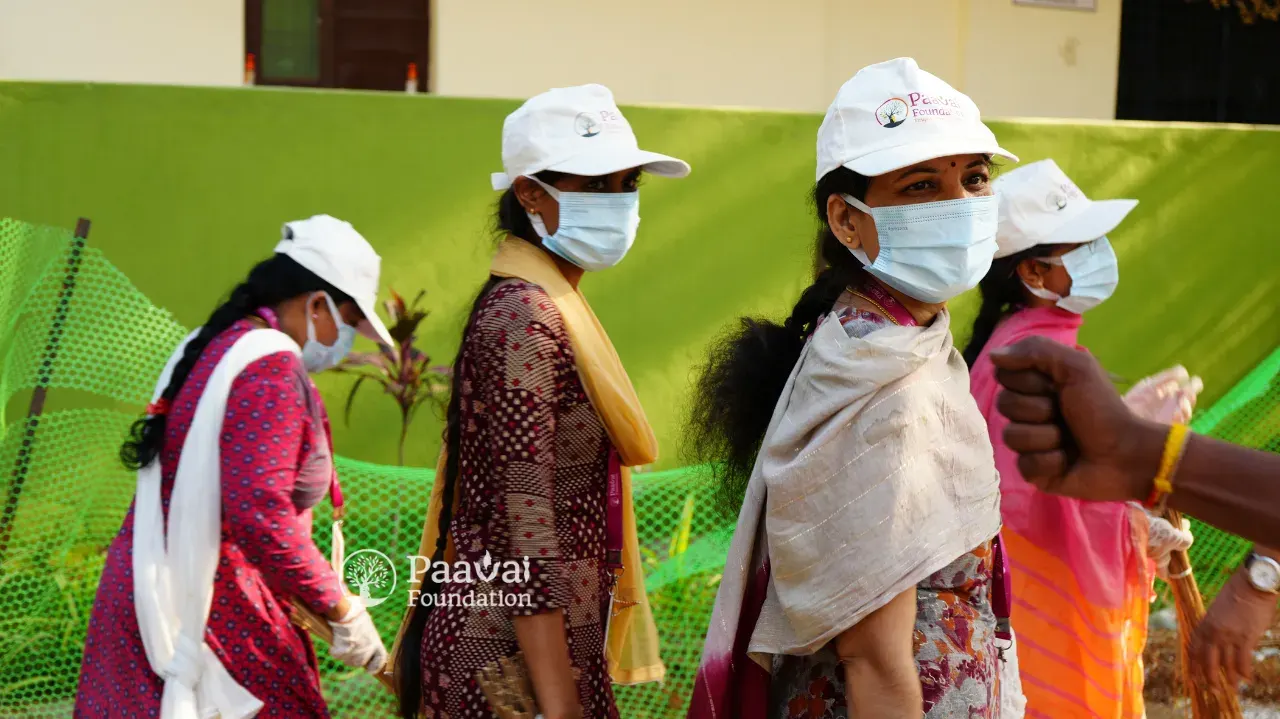
Somewhere in your city, a small children's NGO is struggling with its accounts. The person who handles them is also the programme coordinator, the fundraiser and the person who drives children to the hospital. The annual filing deadline is getting closer, and nobody on the team has trained in finance.
A few streets away, a chartered accountant is setting up a donation to that same organisation. The donation is welcome. But what the NGO needs most this month isn't money. It's three evenings of that accountant's time.
This happens across the non-profit sector all the time. Organisations doing important work are short of professional skills they can't afford to buy, while the professionals who have those skills assume the most useful thing they can offer is a cheque.
Skill-based volunteering closes that gap. It means giving what you're trained to do, not just what you can afford to give. For many professionals, it's the most valuable contribution they'll ever make to a cause they care about.
What skill-based volunteering actually is
Skill-based volunteering means offering your professional expertise to a non-profit organisation, usually for free and usually for a defined piece of work.
It differs from general volunteering in an important way. General volunteering often involves tasks anyone willing could do: helping at an event, distributing food, sorting donations. That work matters. Skill-based volunteering, by contrast, puts to work the specific knowledge and experience you've built over a career, such as accounting, law, medicine, design, technology, teaching, or counselling.
You'll also see a few related terms:
Pro bono work usually means professional services, often legal or consulting, given free or at a reduced cost. It's a form of skill-based volunteering.
Professional volunteering and skills-based volunteering are generally used to mean the same thing.
Employee volunteering or corporate volunteering means skill-based or general volunteering organised by a company for its staff.
Virtual or remote volunteering means skill-based work done online, without being physically present.
All of them rest on the same idea: your expertise has value, and that value can be given.
Why your skills can be worth more than your money
There are three reasons skill-based volunteering often does more good than a donation of the same value.
NGOs can't afford what you charge
Most small and medium non-profits run on tight budgets, and nearly all of that money goes to direct programmes: food, staff, education, healthcare. A professional audit, a proper website, a legal review of a lease, or a strategic plan can cost more than an organisation can justify spending on itself.
So these things often simply don't get done. A volunteer who provides them isn't just saving the NGO money. They're making possible something that wouldn't otherwise happen at all.
Good capacity outlasts the volunteer
A donation is spent. A well-built system keeps working.
An accountant who sets up a clean bookkeeping process, a designer who creates a simple template the team can reuse, a lawyer who drafts a clear volunteer agreement, an HR professional who writes a staff handbook: each of these goes on helping long after the volunteer has finished. The organisation is stronger, and it stays stronger.
You bring something money can't easily buy
Many professionals bring judgement as well as skill: knowing what matters, what can wait, and what will cause problems later. A small organisation getting that advice from someone with real experience can avoid mistakes that would have cost far more than any fee.
None of this means donations don't matter. They do, and many professionals do both. But if you have a skill an organisation needs, offering it is often the most effective thing you can do.
What NGOs actually need, by profession
Almost every profession has something to offer. Here's what child-welfare and community organisations most often need, and whether the work usually involves direct contact with children.
Profession
What NGOs often need
Direct contact with children?
Chartered accountants, finance
Bookkeeping systems, budgeting, compliance and filing guidance, financial reporting for donors
No
Lawyers
Contract and lease reviews, policy drafting, compliance advice, help with families' legal entitlements
Rarely
IT and software
Website maintenance, databases, donor management systems, cybersecurity, digital training
Usually no
Marketing, design, writing
Brand guidelines, reports, social media, fundraising materials, photography of events and facilities
No
HR professionals
Recruitment processes, staff policies, training plans, performance systems
No
Doctors, nurses, dentists
Health check-ups, screening camps, health education
Yes, with safeguards
Therapists (physio, occupational, speech)
Assessment, therapy sessions, training caregivers
Yes, with safeguards
Teachers, special educators
Tutoring, remedial classes, teacher training, learning materials
Yes, with safeguards
Counsellors, psychologists
Emotional support, staff well-being, training on trauma-informed care
Yes, with safeguards
Engineers, architects
Accessibility audits, building safety, water and sanitation advice
Rarely
Coaches, artists, musicians
Sport, art, music, dance, yoga
Yes, with safeguards
One point is worth stressing. Many of the most valuable volunteer contributions involve no contact with children at all. A well-run finance system, a working website, a clear HR policy and a good annual report all strengthen an organisation without disturbing any child's day. If you work in one of these fields, you can make a big difference entirely behind the scenes.
Two kinds of skill-based volunteering
Behind-the-scenes support
This is work that strengthens the organisation: finance, legal, technology, communications, HR, strategy. It's usually project-based, often remote, and has a clear deliverable such as a policy, a system, a report or a website.
This is often the best place to start, especially if your time is limited or unpredictable.
Direct service
This is work with children or communities: teaching, therapy, medical care, counselling, coaching, arts. It can be deeply rewarding, and it carries more responsibility.
Children in care, especially those who've experienced loss or instability, need consistent adults. A volunteer who comes for a few weeks and then disappears can add to a pattern of people leaving. So direct-service volunteering with children works best when you can commit regularly for months, not days, and when the organisation has proper safeguards in place.
Volunteering from anywhere
Remote volunteering has opened skill-based work to people who could never otherwise contribute. A designer in Bengaluru can help an NGO in Trichy. A retired finance professional in Chennai can review accounts from home. A software developer can maintain a website in the evenings.
Work that suits remote volunteering includes:
design, writing and editing
website and IT support
bookkeeping and financial reviews
social media and content
research and report writing
translation
online tutoring or mentoring, where safeguarding allows
For busy professionals, online volunteering in India is often the most realistic way to give regularly.
What makes skill-based volunteering work
The best skill-based volunteering is planned like a professional project. A few principles separate contributions that help from those that become a burden.
Listen before you advise
Many NGOs operate in conditions very different from a corporate office: limited staff, uncertain funding, rural locations, families in crisis. A solution that works in a company may not work here. Spend time understanding how the organisation actually runs before suggesting changes.
Agree on scope, time and deliverable
Be clear about what you'll do, by when, and what the finished result will be. "I'll set up a monthly budgeting template and train two staff to use it, over six weeks" is far more useful than "I'll help with finance."
Build what they can maintain
A system the organisation can't run after you leave is a burden, not a gift. Keep tools simple, use software they can afford, and train the people who'll keep it going.
Document and hand over
Write down what you built and how it works. Make sure at least one staff member can run it without you.
Finish what you start
A half-finished website or an abandoned strategy can leave an organisation worse off than before. If your circumstances change, say so early and help plan a handover.
Mistakes to avoid
Even well-meaning professionals sometimes make these.
Over-promising. Offering more than you can deliver alongside a demanding job. Start smaller than you think you can manage.
Imposing corporate solutions. Expensive software, complex processes or jargon the team can't use.
Treating it as a portfolio project. Using children's photographs or stories in your own portfolio, social media or presentations without the organisation's explicit permission. This can cause real harm to children's privacy and dignity.
Ignoring confidentiality. Many professionals will see sensitive information: children's records, family circumstances, medical details, donor data. Treat it with the same confidentiality you would at work, or more.
Disappearing. Especially in direct-service roles, leaving without notice affects children who may have begun to rely on you.
Safeguarding and professional conduct
If your volunteering involves children, expect and welcome these safeguards:
identity verification and a background check
an induction on the organisation's child protection policy
clear rules about photography, personal contact and gifts
supervision, especially in early sessions
a code of conduct
These steps aren't a sign the organisation doesn't trust you. They show it takes children's safety seriously, which is exactly what you should want from any organisation you work with.

If an organisation lets professionals work with children without any of these checks, treat that as a warning sign.
Before committing to any organisation, check its registration. Many NGOs can be verified on the government's NGO Darpan portal.
For companies: employee volunteering that works
Many companies now encourage staff to volunteer, often alongside their CSR programmes. Done well, employee volunteering strengthens the NGO, builds skills and engagement among employees, and deepens the company's relationship with the communities it supports.
A few principles make it effective:
Start from the NGO's needs, not the company's preferred activity. A one-day event designed for photographs often burdens an organisation more than it helps.
Match skills to needs. Finance teams support financial systems, IT teams support technology, HR teams support people processes.
Commit over time. A skilled volunteer team working with one organisation for a year achieves far more than a series of one-off visits.
Combine time with funding. Volunteering is most effective alongside financial support, not as a replacement for it.
Respect children's privacy. Agree in advance on photography and how the company will talk about its involvement.
Companies planning CSR activity can find the regulatory framework and disclosures on the National CSR Portal. How companies can combine funding and engagement is set out in How Companies Can Support NGOs in India and Access Tax Benefits.
For students and early-career professionals
Skill-based volunteering is also a strong way to build experience early in a career. Students in design, social work, psychology, education, computer science, commerce, medicine and law can all contribute, under appropriate supervision, while learning how organisations really work.
Many organisations provide certificates or letters of recommendation for sustained volunteering. Government platforms such as MY Bharat, run under the Ministry of Youth Affairs and Sports, also connect young people with volunteering opportunities.
For retired professionals
Some of the most valuable volunteers are people who've recently retired. They bring decades of experience, they often have more flexible time, and they can commit for longer periods.
A retired teacher can mentor young teachers. A retired banker can strengthen financial controls. A retired doctor can support health camps. A retired administrator can help an organisation set up proper systems. For many, it's also a meaningful way to stay connected and useful.
How to get started
List what you can offer. Your professional skills, and any personal ones such as languages, music or sport.
Be honest about your time. A few hours a month you'll actually sustain is worth more than an ambitious plan you'll abandon.
Choose behind-the-scenes or direct service. If you're unsure, start behind the scenes.
Find an organisation and check it. Verify its registration and ask about its child protection policy.
Have a scoping conversation. Ask what they need most, not what you'd most like to do.
Agree the details. Scope, timeline, deliverable, point of contact, confidentiality, and any screening required.
Deliver, document and review. Finish what you start, hand it over properly, and ask for feedback.
A wider guide to the different ways of supporting a children's NGO, including donating and volunteering, is available in How to Support a Child NGO in India: A Complete Guide to Giving and Volunteering.
Volunteering with Paavai Foundation
Paavai Foundation is an Integrated Child Development Foundation working across South India, with children's homes in Trichy, Hyderabad and Tirupati and community programmes across districts in Tamil Nadu, Telangana and Andhra Pradesh. Its work spans child care and protection, education, health, nutrition, disability inclusion, elderly care and community development.
The Foundation welcomes professionals in several kinds of role:
Skill volunteers: teaching and academic support, counselling, yoga, sports and well-being, computer and digital skills, art, dance and music
Support volunteers: food distribution, help at medical camps, event coordination and logistics
Digital volunteers: photography, video, writing, social media and content, much of which can be done remotely
Volunteers register their interest and skills, and are then connected with opportunities in their district.
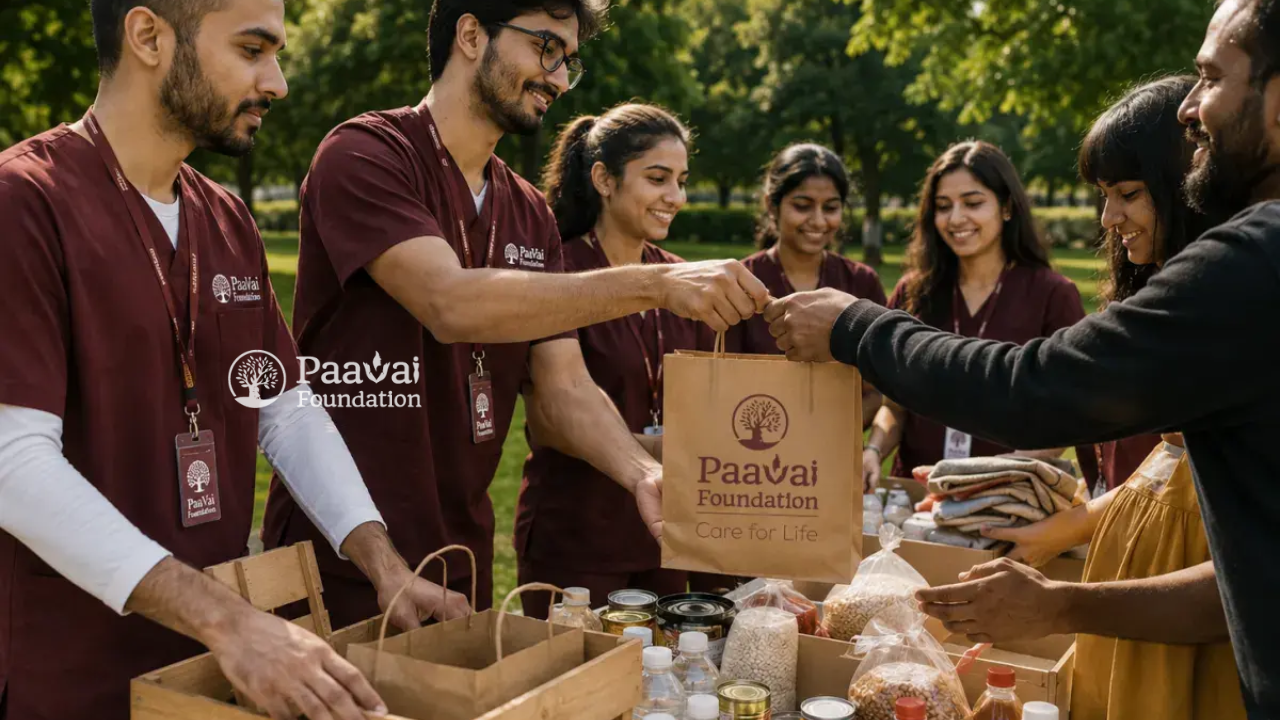
Roles involving contact with children are arranged with the Foundation and follow its safety and conduct guidelines, including its rule that no photographs or videos are taken without explicit permission. Student volunteers supporting long-term initiatives can receive certificates.
Special education is one area where trained professionals make an especially lasting difference. Why those educators matter so much is explored in Teachers' Day 2026: The Special Educators Who Teach Children the World Overlooks.
Become a Volunteer With Paavai Foundation: tell us your skills and how much time you can give, and we'll help find the right fit.
Your expertise is part of your generosity
Most professionals spend years building a skill. They train, practise, make mistakes, and slowly become good at something other people rely on.
That skill is one of the most valuable things you have. It's also one of the easiest things to forget you can give.
A donation will always be welcome. But an evening spent setting up an NGO's accounts, a weekend designing its annual report, a month of Saturdays tutoring children who've fallen behind, or a year of regular therapy sessions can change what an organisation is able to do. And sometimes it can change what a child is able to do.
You can give more than money. You can give what you're good at.
Care for Life.
FAQs
What is skill-based volunteering?
Skill-based volunteering means offering your professional expertise, such as accounting, law, medicine, teaching, design or technology, to a non-profit organisation, usually free and for a defined piece of work.
How is skill-based volunteering different from pro bono work?
Pro bono work usually refers to professional services, often legal or consulting, given free or at reduced cost. It's one form of skill-based volunteering, which covers any profession.
Can I volunteer if I work full time?
Yes. Many professionals volunteer a few hours a month, on weekends or remotely. Behind-the-scenes and online roles are especially suited to people with full-time jobs.
Can I volunteer online in India?
Yes. Design, writing, IT support, bookkeeping, social media, research and translation can usually be done remotely. Online tutoring or mentoring may also be possible where the organisation's safeguarding allows.
Do I need a background check to volunteer with children?
You should expect one. Responsible organisations verify the identity and background of anyone working with children, and provide an induction on their child protection policy.
What skills do NGOs need most?
Commonly: finance and accounting, legal advice, IT and digital support, communications and design, HR, healthcare, therapy, teaching, special education and counselling.
Can my company organise employee volunteering with an NGO?
Yes. The most effective programmes match employees' skills to the NGO's real needs, commit over a longer period, combine volunteering with funding, and respect children's privacy.
Can retired professionals volunteer?
Yes, and they're often among the most valuable volunteers, bringing deep experience and flexible time.
Do volunteers receive certificates?
Many organisations provide certificates or letters for sustained volunteering. At Paavai Foundation, student volunteers supporting long-term initiatives can receive certificates.
How do I volunteer with Paavai Foundation?
Register your interest and skills through the Foundation's volunteer page. You'll then be connected with opportunities in your district.

Comments
Loading comments...
Leave a comment
Your email address will not be published. Only your name is shown with your comment.