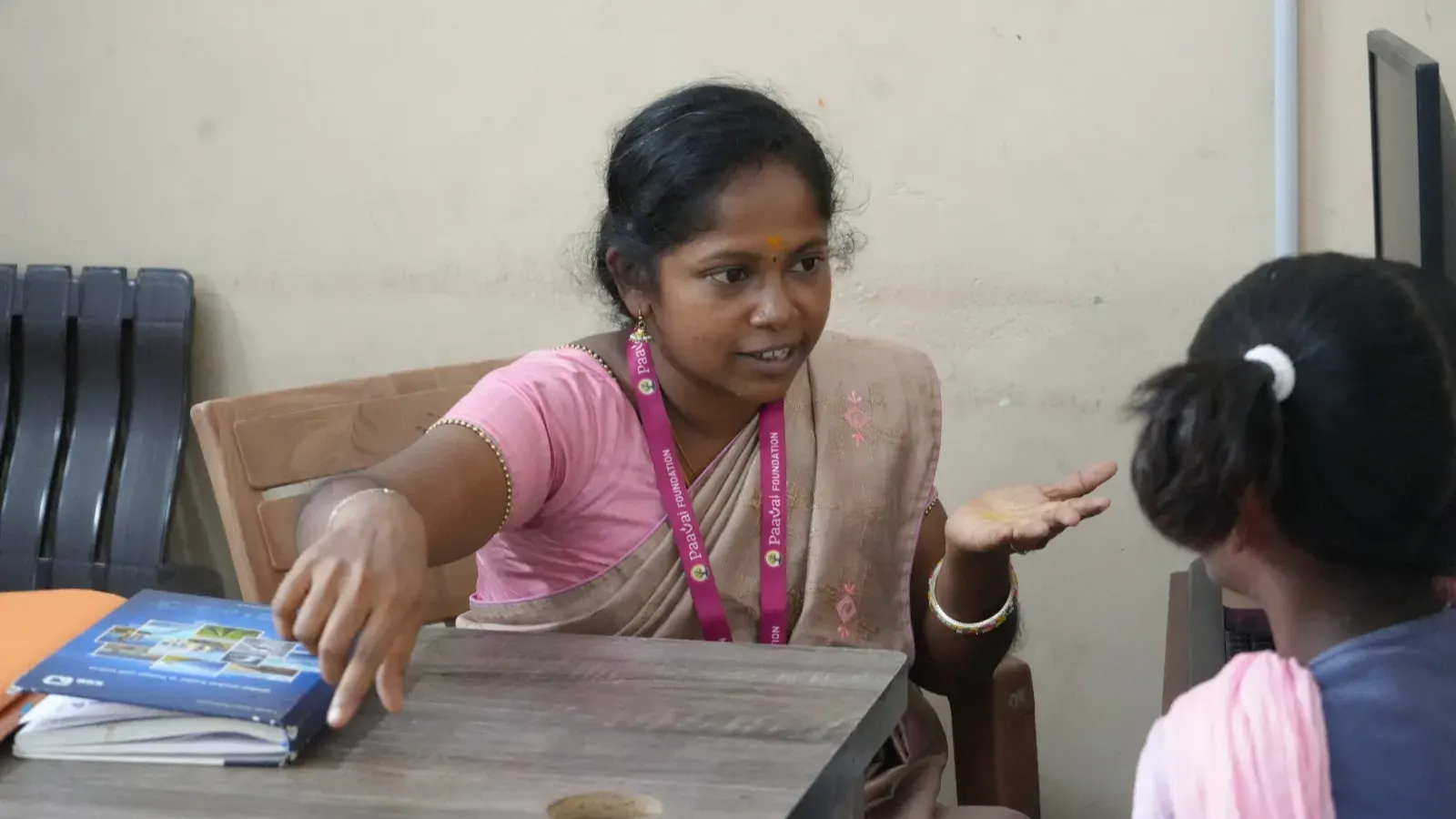
Teachers' Day is often a celebration of classrooms, lessons, achievements and the educators who help children discover their potential. But some teachers work in spaces where progress cannot always be measured by marks, grades or examination results.
They teach a child to communicate.
They help a child become more independent.
They celebrate a new word, a new skill or a small step that others may not notice.
They create confidence where there was once hesitation.
These are special educators professionals who play a vital role in supporting children with intellectual disabilities and other diverse learning needs.
On Teachers' Day 2026, it is important to recognize these educators and the children whose journeys they help shape.
Because every child deserves to learn and every form of progress deserves to be valued.
What Is Special Education?
Special education is an approach to learning designed to respond to the individual needs, abilities and developmental requirements of children who may need additional support.
Unlike a one-size-fits-all classroom approach, special education can involve personalized learning strategies, assisted learning, communication support, therapy, functional skills and other forms of developmental support.
The purpose is not simply to help a child complete an academic curriculum.
It is to help the child learn, communicate, participate, develop confidence and become as independent as possible.
For some children, progress may mean learning a new academic concept.
For another child, it may mean communicating a need.
For another, it may mean learning a daily living skill independently.
Every achievement matters.
Why Special Educators Matter
A special educator does much more than teach lessons.
They observe.
They understand.
They adapt.
They encourage.
They repeat.
They celebrate.
And they keep believing.
Children with intellectual disabilities can have different ways of learning and communicating. A special educator works to understand those differences and create learning experiences that are meaningful for the individual child.
This may involve breaking a task into smaller steps, using visual learning methods, reinforcing communication, developing functional skills or adapting activities according to the child's abilities.

The teacher's role therefore extends beyond academic instruction.
It becomes a journey of care, patience, learning and empowerment.
Teaching What the World May Overlook
Some achievements are easy to recognize.
A high examination score.
A school prize.
A competition victory.
But childhood is filled with many other achievements that may never appear on a report card.
A child learning to dress independently.
A child learning to communicate.
A child participating in a group activity.
A child developing the confidence to interact with others.
A child completing a task without assistance.
A child discovering a new ability.
For children with intellectual disabilities, these moments can represent meaningful steps towards greater independence and participation.
Special educators are often the people who notice these moments first.
They understand that progress does not always look the same for every child.
Special Education Is About Potential, Not Limitations
One of the most important responsibilities of special education is to look beyond limitations.
A diagnosis or disability does not define the entirety of a child's identity.
Every child has abilities, interests, preferences and potential.
The role of educators, caregivers, families and communities is to create environments where those abilities can emerge.
This requires patience and individualized support.
It also requires changing the way society thinks about disability.
Instead of asking:
“What can this child not do?”
we should increasingly ask:
“What support can help this child participate, learn and thrive?”
That change in perspective is at the heart of inclusion.
The Different Dimensions of Special Education
Special education can extend across several areas of development.
Communication
Helping children express their needs, thoughts, feelings and preferences can strengthen both confidence and independence.
Learning
Children may benefit from individualized academic and assisted-learning approaches suited to their abilities.
Social Development
Structured activities can create opportunities to interact, communicate, cooperate and participate.
Functional Skills
Learning everyday skills can help children become more independent in daily life.
Emotional Well-Being
Children need environments where they feel accepted, respected and supported.
Physical and Therapeutic Support
For some children, therapy and rehabilitation can complement educational interventions and support functional development.
Together, these areas create a more holistic approach to child development.
The Importance of Inclusive Education
Inclusion means creating opportunities for children with disabilities to participate meaningfully in education and society.
An inclusive environment does not mean expecting every child to learn in exactly the same way.
It means recognizing differences and providing appropriate support.
Inclusive education can help children develop:
Confidence
Communication
Social skills
Independence
A sense of belonging
Respect for diversity
Participation in community life
It also benefits society by encouraging children to grow up understanding that differences are a natural part of humanity.
Families Are Partners in the Learning Journey
A special educator cannot work alone.
Families play an important role in reinforcing learning and development beyond the classroom.
Simple everyday activities can become learning opportunities:
Talking with a child.
Encouraging communication.
Practising daily routines.
Reading together.
Playing.
Celebrating effort.
Supporting independence.
Maintaining consistency.
When educators and families work together, children can experience greater continuity between educational settings and everyday life.
Most importantly, families can help children understand that their abilities are valued.
Creating a Culture of Dignity
Children with disabilities should never be defined only by the support they need.
They are children first.
They deserve friendship.
They deserve education.
They deserve play.
They deserve safety.
They deserve healthcare.
They deserve opportunities.
And above all, they deserve dignity.
This is why special education should always be connected with a broader approach to care and inclusion.
Education becomes more meaningful when a child feels safe.
Learning becomes stronger when a child feels respected.
Independence becomes possible when a child is given opportunities to try.
Paavai Foundation Commitment to Inclusive Child Development
At Paavai Foundation, inclusive child development forms an important part of its broader Cradle-to-Career-to-Community approach.
The Foundation believes that every child should have the opportunity to grow with care, education, health, confidence and dignity.
Its programme ecosystem brings together child care, education, healthcare, empowerment, leadership and community development.
One of its dedicated initiatives is:
Paavai ID Care – Care, Dignity & Lifelong Support
Paavai ID Care focuses on supporting children with intellectual disabilities through a structured, lifelong care ecosystem.
The initiative is designed around the individual needs and well-being of children, with a focus on:
Safe and supportive living environments
Special education and assisted learning
Therapy and rehabilitation
Functional support
Medical care and continuous health monitoring
Emotional and psychological well-being
Basic life skills
Assisted independence
The approach is human-centred and rooted in patience, dignity and compassion.
For Paavai Foundation, inclusion is not simply about providing a service.
It is about creating an environment where every child is valued for who they are.
Paavai ID Care ensures that every child with intellectual disabilities lives with care, comfort, and lifelong dignity.
The Role of Special Educators at Paavai ID Care
Within an inclusive care ecosystem, special educators play an important role in helping children learn according to their individual abilities and needs.
Their work can extend beyond conventional classroom teaching.
They may support children in developing:
Communication
Learning abilities
Functional skills
Social participation
Confidence
Independence
The greatest impact may sometimes be found in the smallest moments.
A new skill learned.
A task completed independently.
A new form of communication.
A moment of confidence.
A willingness to participate.
These moments remind us that education is not always about reaching the same destination.
Sometimes, it is about helping every child move one meaningful step forward.
Teachers Who Measure Progress Differently
For many teachers, progress is visible through examinations, grades and academic milestones.
For special educators, progress can take many different forms.
A child who once struggled to communicate may begin expressing themselves.
A child who depended on assistance may begin completing a daily task independently.
A child who avoided participation may begin joining an activity.
A child who lacked confidence may begin interacting with others.
These achievements may not make headlines. But, they can transform a child's everyday life. That is the quiet power of special education.
Teachers' Day 2026: A Salute to Special Educators
Teachers' Day is an opportunity to thank educators for the knowledge they share and the lives they influence.

But this year, let us also remember the special educators who work patiently with children whose progress may follow a different path.
They teach without comparison.
They encourage without giving up.
They adapt without losing sight of the child's potential.
And they celebrate progress that others may overlook.
Their classroom may not always look like a traditional classroom.
Their lessons may not always appear in textbooks.
Their achievements may not always come with certificates.
But their impact can stay with a child for a lifetime.
How Society Can Support Children with Disabilities
Creating an inclusive society is not the responsibility of special educators alone.
Families, schools, communities, organizations and individuals all have a role to play.
We can:
Promote inclusive education
Encourage respectful language around disability
Create accessible environments
Support children and their families
Recognize different forms of achievement
Encourage participation in community life
Support organizations working for children with disabilities
Promote dignity and equal opportunity
Most importantly, we can learn to see ability before limitation.
Every Child Deserves a Teacher Who Believes
A teacher can change how a child sees learning.
A special educator can sometimes change how a child sees themselves.
When a child is told, “You can try,” it creates possibility.
When a child hears, “Take your time,” it creates patience.
When a child hears, “You did it,” it creates confidence.
And when a teacher continues to believe in a child, even when progress is slow, it creates something incredibly powerful:
Hope.
Conclusion
Teachers' Day 2026 is not only a celebration of those who teach lessons.
It is a celebration of those who help children discover what they can become.
Special educators remind us that education cannot be measured only through marks, grades or conventional milestones.
Sometimes education is a new word.
Sometimes it is a new skill.
Sometimes it is independence.
Sometimes it is confidence.
And sometimes, it is simply the courage to try again.
Every child deserves that opportunity.
Every child deserves to be seen.
Every child deserves to learn.
And every child deserves to grow with dignity.
At Paavai Foundation, this belief lies at the heart of its commitment to inclusive child development.
Because every child has a place in the world.
And every child deserves the opportunity to thrive.
Integrated Child Development Foundation
Care for Life.
FAQs
What is the role of a special educator?
A special educator supports children with diverse learning and developmental needs through individualized teaching, assisted learning, communication support, functional skills development and other appropriate educational approaches.
Why is special education important for children with intellectual disabilities?
Special education can help children develop learning, communication, social, functional and independence skills according to their individual abilities and needs.
What is inclusive education?
Inclusive education aims to ensure that children with disabilities can meaningfully participate in learning and educational environments with appropriate support.
How can families support a child with intellectual disabilities?
Families can support children by encouraging communication, practising daily living skills, maintaining consistent routines, celebrating progress and working closely with educators and other support professionals.
What is Paavai ID Care?
Paavai ID Care is Paavai Foundation's dedicated initiative supporting children with intellectual disabilities through special education, assisted learning, therapy, rehabilitation, healthcare, emotional support, life skills and assisted independence.
How can I support children with disabilities?
You can support inclusive child development by promoting acceptance, volunteering, supporting educational initiatives, contributing resources or partnering with organizations working for children with disabilities.