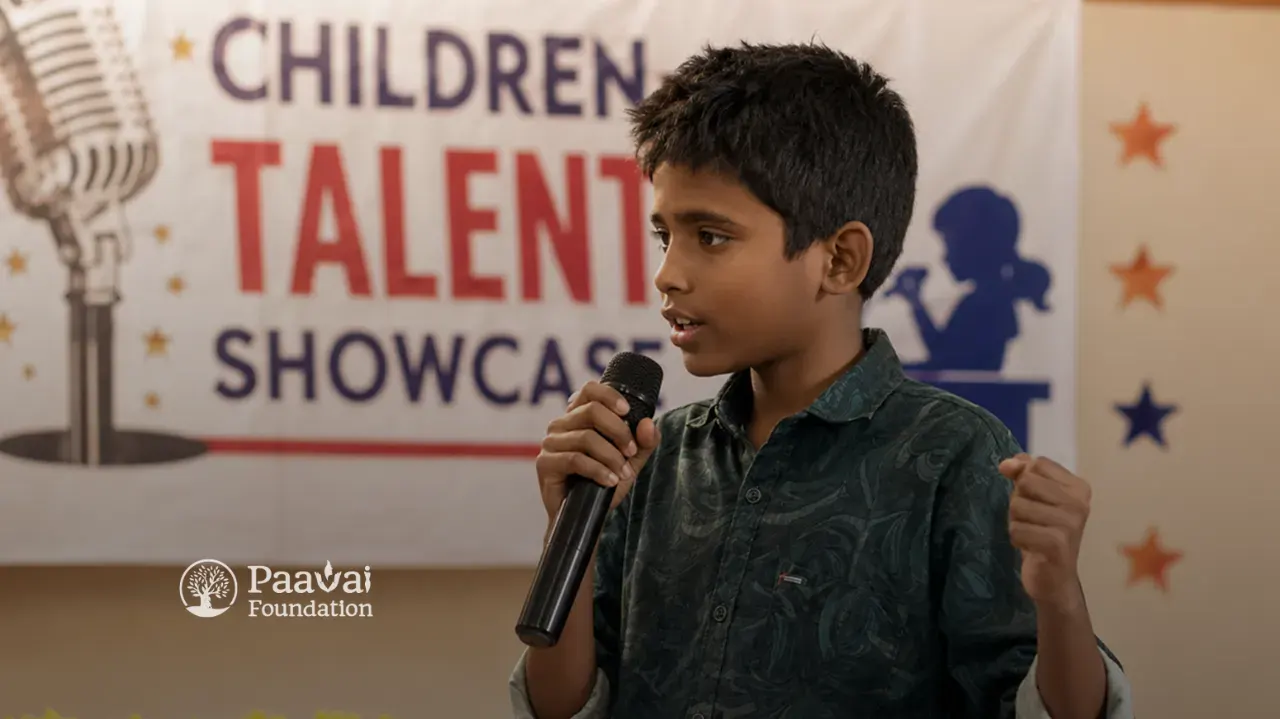
Ask any teacher in a government school what the hardest thing about the first period is, and many will give you the same answer. It isn't the syllabus or the noise. It's the child sitting near the window who came to school without breakfast.
That child isn't lazy and isn't slow. They're hungry. And a hungry child can't hold on to a maths lesson, however patiently it's explained.
This is why more and more donors are looking for an NGO in India that supports both the food and the education of children. They've understood something simple: a meal without schooling leaves a child fed but without a future, and schooling without a meal leaves a child in class but unable to learn. Children need both, every day, for years.
This article explains why food and education work best together, what a good education and nutrition programme looks like, how to tell whether an NGO genuinely covers both, and how your donation can support a child's plate and a child's notebook at the same time.
Why Food and Education Belong Together
Think about a normal school day from a child's point of view. They wake up, eat (or don't), walk to school, sit through five or six hours of lessons, play, come home, do homework and sleep. Every part of that day needs energy. Concentration needs energy. Memory needs energy. Even sitting still needs energy.
When a child is undernourished, the effects show up quietly in the classroom. They get tired quickly. They find it hard to focus. They fall ill more often and miss school. Each missed week makes it harder to catch up, and a child who keeps falling behind is far more likely to drop out altogether.
The opposite is also true. A child who eats well has the energy to learn, the health to attend regularly and the strength to play, make friends and enjoy school. Good nutrition doesn't just keep a child healthy. It keeps a child learning.
India recognised this connection long ago. The government's school meal programme, now called PM POSHAN and earlier known as the Mid-Day Meal Scheme, provides a hot cooked meal to children in government and government-aided schools. It was designed with both goals in mind: to improve children's nutrition and to encourage them to come to school and stay there. The national POSHAN Abhiyaan mission takes the same idea further, focusing on nutrition for children, adolescent girls and mothers.
These programmes do enormous good. NGOs that support both food and education add something extra. They can follow individual children closely, fill gaps that large schemes can't reach, and look after a child's needs beyond school hours, in the mornings, evenings, weekends and holidays.
What Happens When Only One Is Covered
Many well-meaning efforts end up covering just one side of a child's needs.
A food distribution drive might feed hundreds of children on a single day. That's a kind and generous act, and it matters to every child who receives a meal. But the next morning, those children are hungry again, and nothing has changed about their schooling.
On the other side, a donation of school bags or textbooks gives children the tools to learn. But if the child carrying that bag hasn't eaten, the books stay closed in their mind even when they're open on the desk.
The real change happens when both needs are met together and consistently. A child who eats three balanced meals a day and attends school without interruption has a completely different year from a child who gets one or the other. Over several years, that difference becomes the difference between dropping out and finishing school, between struggling and thriving.
We've written more about why the early years matter so much in Why Nutrition Before Age 12 Shapes a Child's Whole Life.
What a Good Education and Nutrition Programme Looks Like
If you're looking for an NGO in India supporting food and education of children, it helps to know what a strong programme actually involves. It isn't just "we give meals and we run classes". The best programmes connect the two in thoughtful ways.
Regular, balanced meals. Not just filling food, but meals planned with children's growth in mind: grains, pulses, vegetables, and fruit, eggs or milk where possible. And not just once in a while, but every day.
Continuous schooling. Children should be enrolled in school and supported to attend regularly. The aim is to make sure a child keeps learning year after year, without long breaks.
Help beyond the classroom. Many children need extra support with homework, reading or maths. Good programmes offer tutoring, study time and mentoring alongside school.
Health care alongside food. Regular health check-ups, attention to anaemia and illness, and timely medical care mean that the benefits of good food aren't undone by poor health.
Someone watching the whole child. This is the most important part. In a good programme, the people who serve a child's meals and the people who track their schooling are talking to each other. If a child stops eating well or starts falling behind in class, someone notices early.
Planning for the long term. A child's needs don't end after one term. Strong programmes plan for years, not months.
How to Tell If an NGO Truly Covers Both
Many organisations say they work on food and education. A few simple questions help you understand how they do it.
Ask how often children receive meals, and what a typical day's menu looks like. Ask whether children attend formal school, and what support they receive outside school hours. Ask how they keep track of children's health and learning over time. Ask whether the same children are supported year after year, or whether help is given on a one-off basis.
Then look at the basics of trust. Is the organisation properly registered? You can check on NITI Aayog's NGO Darpan portal. Does it publish annual reports? Does it give proper receipts, and does it have 80G registration if you want a tax benefit? Is it open about how donations are used?
A good organisation will be happy to answer all of this. For a fuller list of questions, read How Do You Choose a Trustworthy NGO in India? Nine Questions to Ask Before You Give.
How Paavai Foundation Brings Food and Education Together
At Paavai Foundation, food and education were never two separate projects. They're two parts of the same promise we make to every child: Care for Life.
We are an Integrated Child Development Foundation working across Tamil Nadu, Andhra Pradesh and Telangana.

Our approach follows a child through four stages: Care, Educate, Empower and Lead. Nutrition sits right at the start of that journey, in the Care stage, alongside safety, shelter, health care and emotional security. Education follows naturally, because a child who is safe and well-fed is ready to learn.
Meals and care in our children's homes
In our children's homes in Trichy, Tirupati and Hyderabad, children live with us, so we look after their whole day. That includes their meals, every day of the year, not just on school days.
Paavai Abhayam makes sure every child has a safe and stable home where their basic needs are met and their education continues without interruption. Paavai Shishumithra supports boys and girls with balanced nutrition, health care, physical fitness and education as part of growing up well.
Learning that doesn't stop
Education at Paavai is guided by Paavai Gurukul. Its goal is simple: every child in our care, especially every girl, should receive education that is continuous, of good quality and ready for the future.
Children attend formal school, and Paavai Gurukul adds what many children need beyond the classroom: academic support, mentoring, exposure to digital learning, inclusive education for children with different needs, and steady encouragement to build their confidence. The aim is that every child learns continuously, confidently and with purpose.
Health that holds it all together
Paavai Arogya looks after children's health through preventive care, regular monitoring, timely medical treatment, emotional well-being and daily wellness habits. Good food and good health care work hand in hand. A child who is eating well but keeps falling ill still misses school. Arogya helps make sure that doesn't happen.
Nutrition beyond our homes
Our concern for nutrition reaches beyond the children who live with us. Through Paavai Community Connect 360, food and nutrition security is one of our core focus areas in the communities we work with. And through Nutri Heal, we support people with tuberculosis with nutrition and care, because recovery depends on good food too. You can read about it in Nutri Heal: Supporting TB Patients Through Nutrition, Care and Community Support.
A day where both fit together
For the children in our care, food and learning aren't separate events. Breakfast comes before school. Lunch and snacks give energy for the afternoon. Study time comes after school, followed by dinner and rest. It's a steady rhythm in which eating well and learning well support each other every day. You can get a feel for that rhythm in A Day at Paavai Foundation.
Where One Donation Covers Both
This is the part that matters most to many donors.
When you give to an organisation that runs separate food and education projects, you often have to choose which one your money goes to. When you give to an integrated organisation, that choice disappears. Because we care for the whole child, a general donation to Paavai Foundation supports the whole of a child's life with us: the meals they eat, the school they attend, the extra learning support they receive, the health care that keeps them well, and the caregivers who look after them every day.
In other words, you don't have to decide between feeding a child and educating a child. Your donation does both, because in a child's real life they can't be separated.
If you'd like to understand what different amounts can make possible, What ₹500, ₹5,000 and ₹50,000 Genuinely Change in a Child's Life explains it in simple terms.
Sponsor a Meal for a Special Day
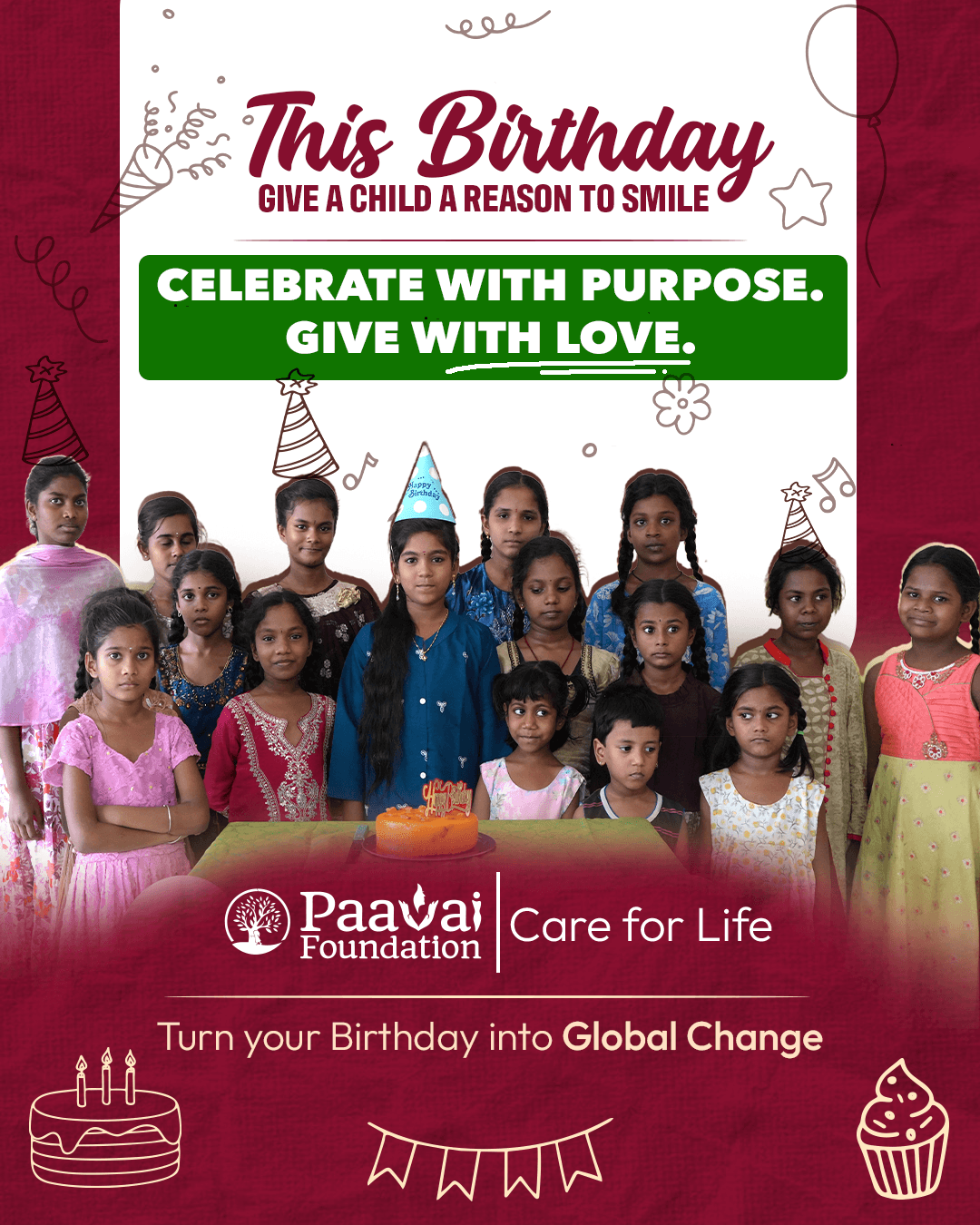
Some people like to give in a way that's tied to a moment: a birthday, an anniversary, a festival, or the memory of someone they love. For them, sponsoring a meal is a beautiful option.
Through Celebrate With Us, you can sponsor a breakfast, lunch or dinner for the children in one of our homes, with special menus available for occasions. It's a simple way to share your celebration, and a reminder that food is often where care begins.
A sponsored meal is a lovely gift. If you'd like your support to reach both food and education throughout the year, a regular donation is the best way to do it.
Giving Once or Giving Every Month
Children eat every day and learn every day. Their needs don't follow a festival calendar.
A one-time donation helps, and every gift is welcome. But regular monthly giving lets us plan ahead with confidence: buying food in advance, keeping study support running through the year and making sure no child's schooling is interrupted because funds ran short in a difficult month. Many of our supporters start with a single gift and later choose to give monthly once they see how steady support works. Monthly Giving vs One-Time Donation: Which Does More for a Child? explains the difference.
How We Compare
Before you give to any organisation, including us, it's worth checking a few things. Here's where you can check Paavai Foundation.
Registration and certificates: see our certificates and legal compliance pages.
Annual reports: read about our work, year by year, in our annual reports.
How donations are used: our transparency page explains how contributions support our programmes.
Questions: if anything isn't clear, contact us. We're always happy to explain.
We'd encourage you to compare us with any other organisation you're considering, using the same questions. The right choice is the one you feel confident about.
Feed a Child. Teach a Child. Do Both With One Gift.
A full plate and an open book. Together, they give a child the energy to learn today and the chance of a better tomorrow.
When you support Paavai Foundation, you don't have to choose between the two. Your gift helps a child eat well, stay healthy, attend school and receive the support they need to keep learning, year after year.
Donate Now to support a child's food and education together.
FAQs
Which NGOs in India support both food and education of children?
Many NGOs in India work on children's nutrition, education or both. Integrated child development organisations, such as Paavai Foundation, support both together by caring for a child's meals, schooling, learning support and health as one connected programme.
Why are food and education linked for children?
Children need energy to concentrate, remember and attend school regularly. Undernourished children tire easily, fall ill more often and miss school, which makes them more likely to fall behind or drop out.
Can one donation support both food and education?
Yes, when you give to an integrated organisation. At Paavai Foundation, a general donation supports a child's whole life in care, including meals, schooling, learning support and health care.
How can I sponsor a meal for children?
Through Paavai Foundation's Celebrate With Us programme, you can sponsor a breakfast, lunch or dinner for children in one of its homes, often to mark a birthday, anniversary, festival or memorial.
What is an education and nutrition programme?
It's a programme that provides children with regular, balanced meals alongside continuous schooling and learning support, usually with health care and close monitoring of each child's progress.
What is PM POSHAN?
PM POSHAN, formerly the Mid-Day Meal Scheme, is the Government of India's programme providing hot cooked meals to children in government and government-aided schools.
How do I check whether an NGO is genuine?
Check its registration on the NGO Darpan portal, ask for its 80G and 12A certificates, read its annual reports and ask how donations are used.
Is my donation to Paavai Foundation tax deductible?
Eligible donations to organisations with valid 80G registration may qualify for a tax deduction. Please check our certificates page and ask for a receipt.
Comments
Loading comments...
Leave a comment
Your email address will not be published. Only your name is shown with your comment.