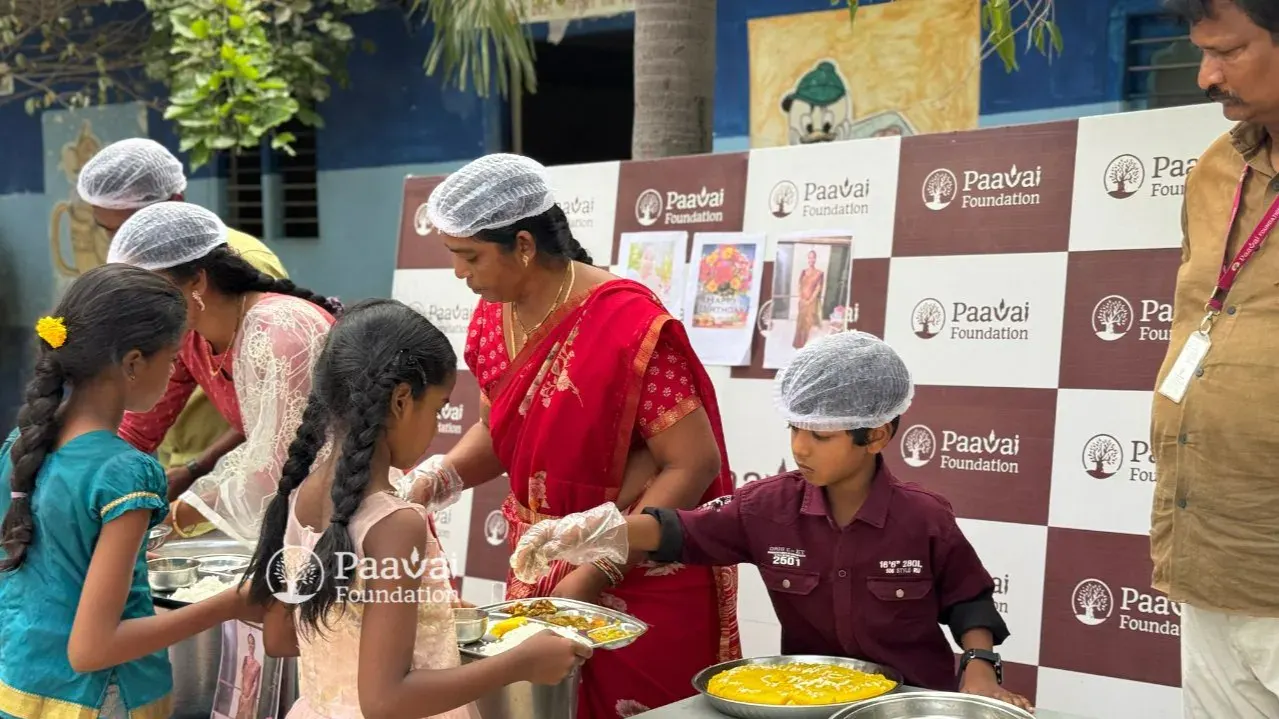
Most birthday giving is designed from the giver's side of the table.
The question people usually ask is what will make the day feel special for them. Which home to choose, what to bring, whether the children could sing, whether there will be photographs to share that evening. It is a natural way to think about it, because the birthday is yours.
But a meal has two sides. On the other side is a child eating lunch on what is, for her, an ordinary Tuesday, and the more useful question is what makes that meal good from where she is sitting.
The answer turns out to be simpler than most donors expect, and it changes almost every decision about how to give.
The meal is for her, not about you
A child in a children's home eats perhaps a thousand meals a year in the same dining hall. A sponsored birthday meal is one of them.
What makes it meaningful for her is not that a stranger is celebrating. It is that the food is good, there is enough of it, there is something special on the plate, and nothing about the meal asks anything of her in return. No performance, no thanking a visitor, no being photographed with a cake that belongs to someone else's occasion.
That last point matters more than it sounds. Children in care are frequently cast as the audience for other people's generosity, and they notice. A meal served by familiar staff in their own dining hall, at their usual time, with something extra on the plate, is received as a good day.
The same food delivered by a visiting family with a banner and a camera is received as an event in which the children are the display.
The most meaningful food donation for children is often the one the giver never sees being eaten.
Why sponsoring beats bringing food
The instinct many families have is to cook at home or order from a restaurant and take it to a children's home. It feels more personal. It is usually the less suitable option, for reasons that have nothing to do with the giver's sincerity.
Food safety. Cooked food transported across a city, held for hours and served to fifty children is a genuine risk, particularly in heat. A home's own kitchen controls hygiene, timing and storage.
Food business operators are subject to food safety standards set by the Food Safety and Standards Authority of India, and an institution feeding children on a large scale cannot casually serve unknown food from outside.
Dietary needs. Some children have allergies, medical conditions or prescribed diets. Some are recovering from illness. Staff know this; a visiting family does not.
Routine. An unscheduled delivery disrupts meal timing for every child in the building, and for younger children routine is a large part of what makes a home feel safe.
Fairness. A meal that arrives for one group and not another, or that some children receive and others miss, creates exactly the comparison a good home works to avoid.
Sponsoring the meal through the organisation solves all four. The kitchen that cooks every other day of the year cooks this one too, to the same standard, for every child.
What goes on the plate
A birthday meal is a treat, and it should feel like one. It should also be a good meal.
The nutritional needs of growing children are covered in more detail in Why Nutrition Before Age 12 Shapes a Child's Whole Life, but the short version is that the special part of the meal works best as an addition rather than a replacement. Rice, a proper dal or protein, vegetables, curd or an egg, with a festive dish and a sweet alongside, is both a celebration and a nourishing lunch.
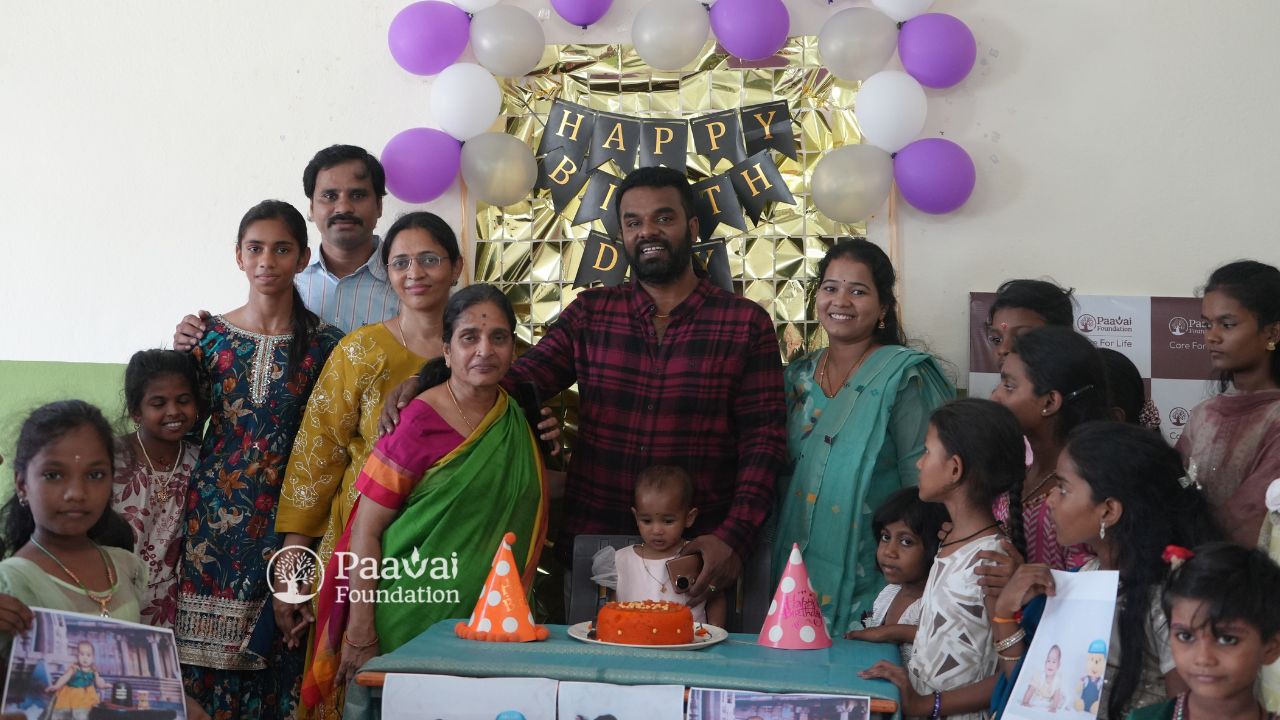
Three practical points:
Let the kitchen decide the menu. Staff know what children eat well, what they leave, and what suits the season.
A sweet is welcome; a sugar-only meal is not. Cake and soft drinks alone are not a meal, and a child filled with them misses the food she needed.
Lunch is usually the largest meal of the day, which is why it tends to cost more to sponsor than breakfast or dinner.
Choose the date with care
Donations to children's homes cluster heavily around festivals, school holidays and the end of the financial year. A home may receive several special meals in a single week of Diwali and very few in a wet week of July.
If your date is flexible, a quieter part of the calendar is where a special meal makes the clearest difference. If your date is fixed, because it is a birthday or an anniversary of someone's passing, that is fine; simply book early so the kitchen can plan.
Occasions other than birthdays work equally well: wedding anniversaries, a child's first birthday, an exam result, a work milestone, or a memorial day for a parent or grandparent. Many families find the last of these especially fitting, because a meal shared in someone's name continues the generosity they were known for.
How a birthday food donation works
The practical sequence with most organisations, including ours, is short.
Choose the occasion and the date. Book a week or more ahead where you can.
Choose the meal. Breakfast, lunch or dinner, and whether it is a regular meal or a special one with festive dishes.
Sponsor it through the organisation. Payment goes to the institution, not to individuals, and you receive a receipt. Where the organisation holds valid registration under Section 80G, the contribution may qualify for a deduction, subject to conditions; keep the receipt.
Let the home do the rest. The meal is cooked in its kitchen and served at the usual time by the staff who serve every other meal.
That is all. No travel, no packaging, no disruption, and no child asked to perform gratitude for a stranger.
Before you sponsor anywhere
Any organisation receiving money to feed children should be able to answer a few basic questions, and a meal sponsorship is a good moment to ask them.
Is it registered, and is it registered under the Juvenile Justice framework if it houses children? Many organisations can be checked on the government's NGO Darpan portal. Does it hold 80G registration, if you intend to claim a deduction? Does it have a written child protection policy, including on photography? And does it serve the sponsored meal to every child, rather than only to those who happen to be available?
Information on the statutory framework for children in care is published by the Ministry of Women and Child Development.
One meal, or many
A sponsored meal is a good thing on its own. It is worth knowing what it is and what it is not.
It is a day when every child in the home eats something special, cooked well, at no cost to the home's regular budget. It is not, by itself, what keeps a child in school, in good health or in the care of adults who know her well. Those depend on the ordinary, unglamorous costs that arrive every month: staff, transport, education, health monitoring, and the other 364 days of meals.
Many families who begin with a birthday meal go on to give in other ways, and the two complement each other well. The difference between a one-off gift and a recurring contribution is set out in Monthly Giving vs One-Time Donation: Which Does More for a Child?, and what different amounts genuinely change in What ₹500, ₹5,000 and ₹50,000 Genuinely Change in a Child's Life.
Celebrate With Us
Paavai Foundation runs Celebrate With Us, a giving initiative that lets individuals, families, institutions and companies sponsor a meal for children in its care to mark a special occasion: birthdays, anniversaries, achievements, a child's birth, corporate milestones or a memorial day.
The meal is cooked in the home's own kitchen and served by its staff. Sponsors choose a breakfast, lunch or dinner, either as a regular meal or as a special meal with festive dishes.
The Foundation's work spans child care and protection, education, health, nutrition, disability inclusion and community development across South India, with children's homes in Trichy, Hyderabad and Tirupati.
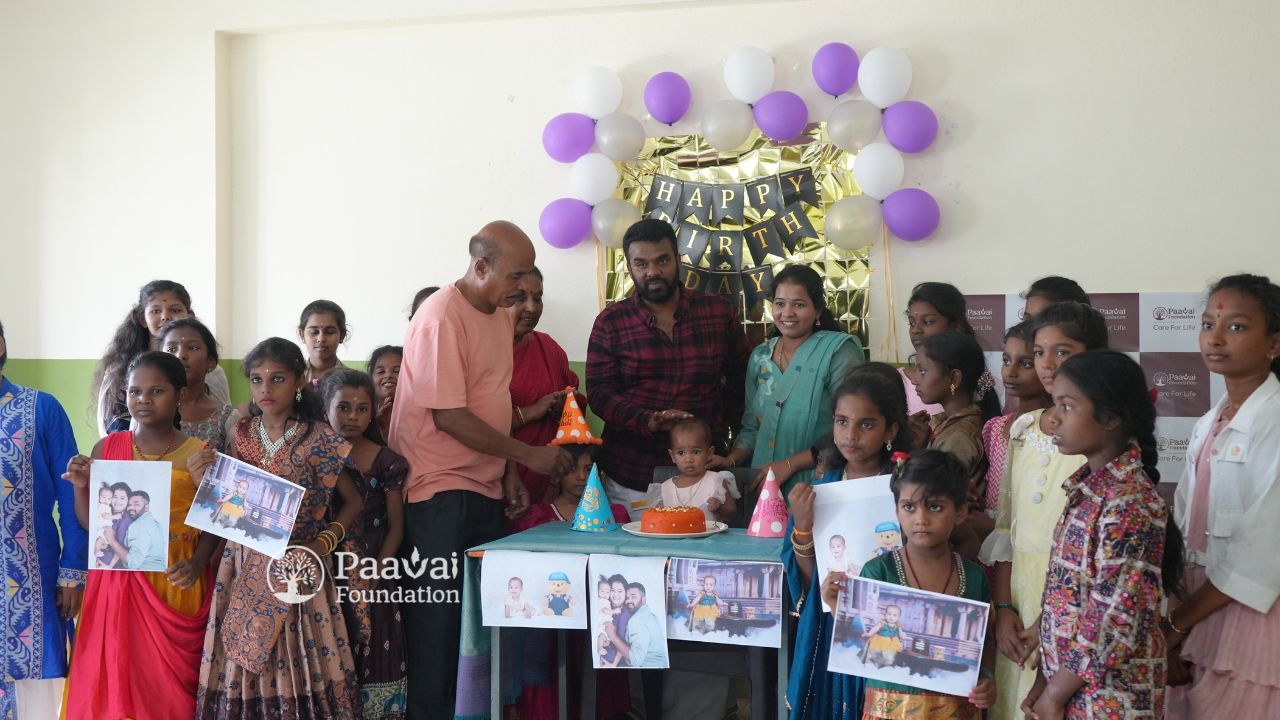
A sponsored meal sits within that larger, everyday work rather than standing apart from it.
Celebrate With Us – Make Your Birthday Meaningful
What she remembers
A child will not remember whose birthday it was. She is unlikely to know.
What she may remember is that there was payasam at lunch on an ordinary day, that the food was good, that there was enough, and that nobody asked her to stand in a line and say thank you to someone she had never met.
That is a meaningful birthday meal, seen from the right side of the table.
Care for Life.
FAQs
How do I donate food to a children's home for my birthday?
The most suitable way is to sponsor a meal through the organisation rather than bringing food yourself. Choose a date and a meal, pay the institution, and its kitchen cooks and serves the meal to every child at the usual time.
Can I bring home-cooked or restaurant food to a children's home?
Most well-run homes discourage it. Transported cooked food raises food safety risks, staff need to manage allergies and medical diets, and an unscheduled delivery disrupts routine. Sponsoring a meal through the home's own kitchen avoids all of this.
Can I celebrate my birthday with the children in person?
Responsible homes generally decline in-person celebrations, because they position resident children as an audience for someone else's occasion. Sponsoring the meal remotely lets the children enjoy it as an ordinary good day in their own home.
What makes a good birthday meal for children?
A balanced meal with something special added: rice or chapati, dal or another protein, vegetables, curd or egg, alongside a festive dish and a sweet. Let the kitchen decide the menu, since staff know what the children eat well.
How much does it cost to sponsor a meal?
It varies by organisation and meal. At Paavai Foundation, a regular breakfast or dinner is ₹3,500 and lunch ₹4,500; a special meal is ₹5,500 for breakfast or dinner and ₹7,500 for lunch.
Can I sponsor a meal for occasions other than a birthday?
Yes. Anniversaries, a child's birth, academic results, work milestones and memorial days for loved ones are all common occasions.
Is a food donation to an NGO tax-deductible in India?
Contributions to organisations holding valid 80G registration may qualify for a deduction, subject to conditions and limits. Keep the receipt and verify the registration independently.
Is a single meal enough to help?
It is a real contribution and a good day for every child in the home. Ongoing needs such as education, health care, staffing and daily meals depend on regular support, so many families combine an occasional celebration meal with a monthly contribution.

Comments
Loading comments...
Leave a comment
Your email address will not be published. Only your name is shown with your comment.