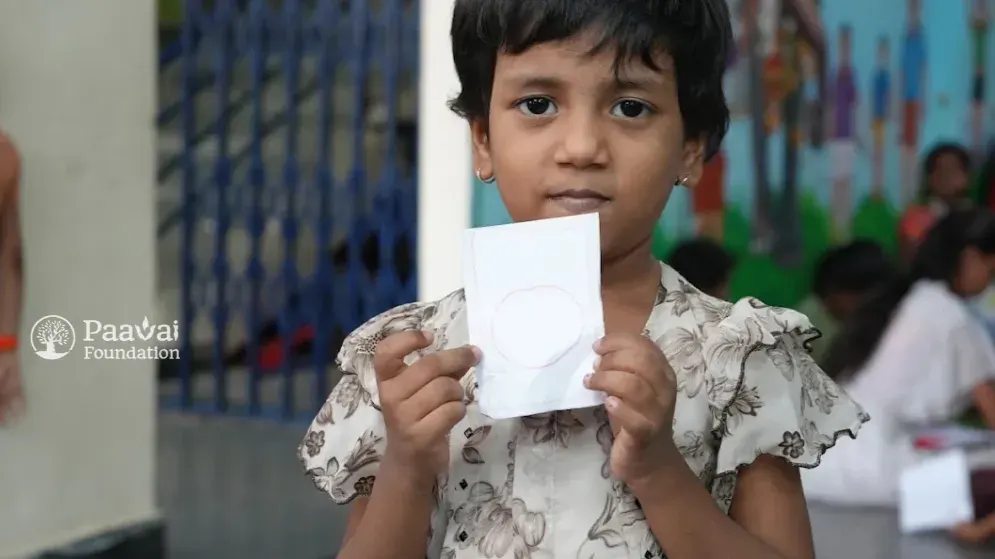
Ask a child what she remembers about Tirupati and you will usually get three things: the hair, the laddu, and how long the line was.
Ask an adult and the answer is not much more detailed. The trip gets planned around darshan timings, accommodation, the drive or the train, what to carry, where to eat. The hours in between are spent waiting, walking and managing a tired child through crowds.
None of that is wrong. It is a pilgrimage, and the pilgrimage is the point.
But somewhere in a Tirupati trip with family there is an hour that is usually wasted the hour of standing around, or the gap before the bus, or the afternoon when nobody can face another queue. And in Tirupati specifically, that hour can be spent looking at something most visitors never consciously register, which may stay with a child considerably longer than the darshan itself.
What almost nobody points out to a child
Tirumala feeds people.
Not a few people, and not occasionally. Every single day, without a break, in quantities that are difficult to picture, strangers are fed free of charge by an operation that simply keeps running. Nobody is asked who they are, where they are from, what they earn, or what they believe. They sit, they are served, they eat.
The same applies to accommodation, to drinking water, to medical help, to the people who guide the elderly through the queue.
Your child has walked past all of it. She has probably eaten some of it.
And she has almost certainly not been told that any of it is remarkable, because to a visiting family it reads as infrastructure the way a railway station or a traffic signal reads as infrastructure. It is simply there.
That is the hour worth spending. Not visiting somewhere new, but looking properly at the thing you are already standing inside.
A note: this article treats a Tirupati visit as a setting for reflection on gratitude, service and effort. The approach works for a family of any level of religious observance, and for children of any age with the questions adjusted. Nothing here requires a child to hold a particular belief.
The five things to show a child
Not a tour. Five things to point at, in passing, over the course of a trip you were making anyway.
1. The kitchen that never stops
The scale of cooking at Tirumala is genuinely hard for an adult to absorb, let alone a child. Vessels the size of a small room. Rice measured in tonnes. A kitchen that does not close.
What makes this a lesson rather than a fact is the follow-up question: somebody had to start cooking that before we woke up. What time do you think they began?
Children understand effort through time far better than through numbers. A lakh of meals means nothing to an eight-year-old. Somebody got up at three in the morning so that we could eat at eleven means a great deal.
2. The queue, and what it does
Everyone waits. The queue compresses a very mixed group of people into a single slow-moving line, for hours, and they share it.
For a child, this is one of the few experiences in modern Indian life where she will stand for a long time beside people from entirely different circumstances, doing exactly the same thing at exactly the same pace.
Worth asking afterwards: who was standing near us? What do you think their day looks like? Not to make a point about advantage just to make other people visible as people, which is the entire foundation of empathy.
3. The giving up of something
The tonsure is the most vivid image of a Tirupati trip for most children, and the one they will describe first when they get home.
It is also the easiest doorway into a conversation about what it means to give something away. Not money, not an old toy something that was yours, that you cannot immediately get back, given without receiving anything visible in return.
A child does not need to be religious to find that interesting. Would you give up something that was yours if nobody was watching? is a question that will sit with a nine-year-old for days.
4. The people whose job is to look after everyone else
This is the one adults consistently fail to point out, and it is the richest.
At every point in Tirumala there is someone working: sweeping, directing, carrying, serving, helping an elderly person who cannot manage a step, standing in the sun doing something thankless so that your family's day goes smoothly.
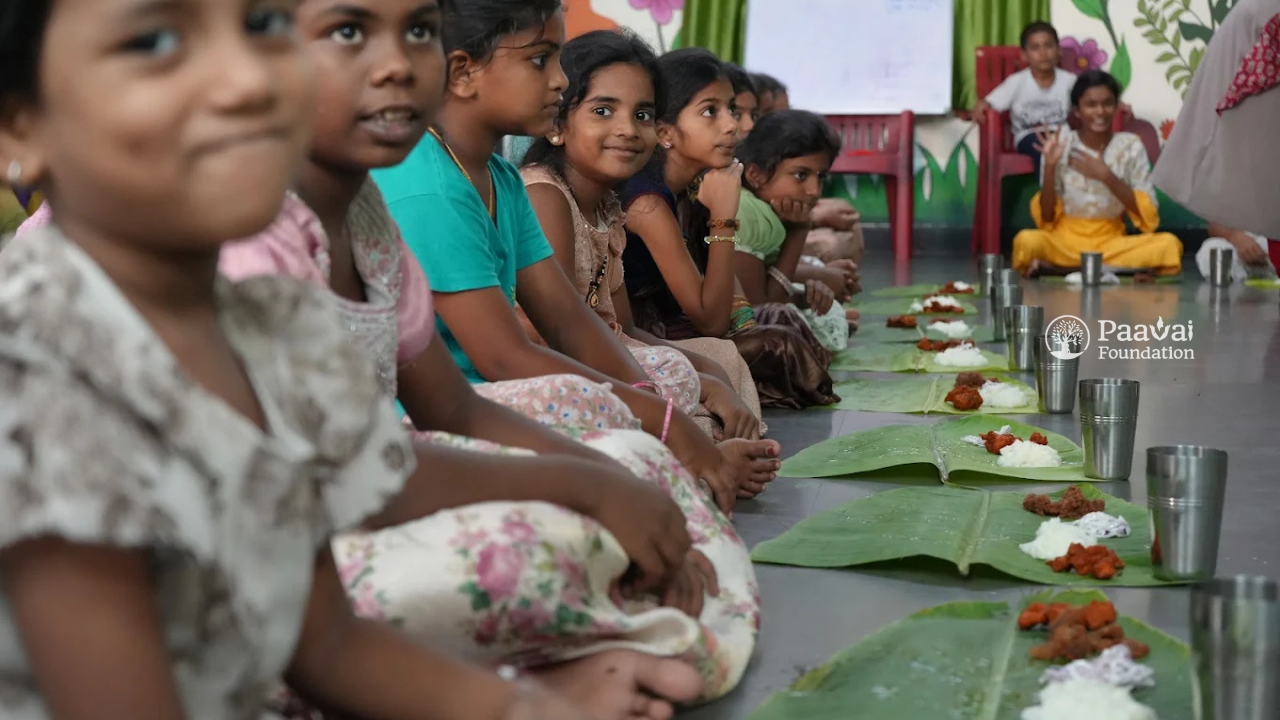
Some are staff. Some are volunteers who have travelled to come and do unpaid work.
Point at one. That uncle has been standing there the whole time we have been in this line. He will be there after we leave.
That single sentence, said once, does more than an hour of instruction about kindness.
5. What happens with what is given
Older children, roughly ten and above, can handle the next step: what is collected here does not stay here.
Hospitals, educational institutions, free food, support for people in difficulty the offerings made by millions of visitors become services used by people who may never visit at all.
The idea underneath is one of the most useful a child can absorb: giving is not a transaction between two people. It joins a pool, and it comes out somewhere you cannot see.
That is the principle behind every form of collective contribution she will encounter for the rest of her life, from taxes to insurance to charity.
The conversation on the way home
This is where the hour becomes something, and it works best during the journey back rather than days later.
Avoid the closed question. Did you like it produces yes.
Ask what she noticed instead:
How many different jobs did you see people doing today?
Who do you think was already awake when we got here?
How many people do you think it takes to run one day in this place?
If everybody stopped helping for one day, what would happen?
Who looked after us today that we never said thank you to?
Then the question that brings it home, which is the only one that really matters: who looks after you every day that you never thank?
Expect family first. Keep going. Teachers. The person who cleans her school. Whoever cooks the mid-day meal. The bus driver. A neighbour. The point is to keep extending the circle outward until it reaches people she has never once thought about.
What not to do
Three things that are well-intentioned and work against you.
Do not teach gratitude by comparison. Be thankful, some children have nothing is the most common approach and the least effective. It produces guilt, which is a different feeling from gratitude and leads to different behaviour. It also teaches a child that her good fortune is measured against someone else's suffering.

Do not arrange a visit to a children's home as part of the trip. Families often consider this, and the instinct behind it is kind. But visits of that kind serve the visitors far more than the resident children, who experience being looked at by strangers who will not return. A well-run home will usually decline, and the ones that agree immediately are the ones to be most careful about. The reasoning is set out in Looking for an Orphanage in Tirupati? Read This Before You Visit.
Do not turn it into a lecture. The entire method here is pointing, not explaining. Look, that uncle has been sweeping since we arrived works. A ten-minute talk about the dignity of labour does not.
Making it last past the weekend
A single good conversation produces a warm evening and very little else. What changes a child is repetition, and the useful version of this is small and frequent.
One specific thank-you a day. Not politeness in general. One named person, for one thing. Specificity is what separates gratitude from manners.
Let the child do the thanking. Adults thank the auto driver, the shopkeeper, the teacher. Hand it over. Being the one who says it is different from watching it said.
Extend the circle weekly. Once a week, name one person outside the family who made something in your day possible. It gets harder as the obvious ones run out, which is precisely the point.
Thank the invisible ones. Periodically and deliberately the sanitation worker, the night watchman, the person who cleans the school toilet. This is the hardest version and the one that actually changes how a child sees the world.
And connect it to doing. Gratitude that stops at feeling is a mood. Gratitude that becomes an action is a value. Practical ways a family can act on it are set out in 10 Ways to Make a Difference in a Child's Life.
Where our work sits
At Paavai Foundation, values are treated as something formed through experience rather than delivered through instruction which is the same argument this article makes.
Paavai Shishumithra, our child development initiative, is built on nurturing children into confident, disciplined and responsible individuals through practice rather than precept. The Foundation works across South India including Tirupati, where its work forms part of a wider child development, education, health and community development effort described in Best NGO in Tirupati for Child Care, Education & Community Development.
One design choice connects directly to this article. Within our programmes, elders are positioned as mentors and storytellers alongside children rather than as a separate group receiving care. Children who spend time with people four generations older absorb, without anyone announcing it, that they belong to something longer than themselves. It is the same lesson a very old place teaches in stone, delivered through a person instead.
If your family's trip leaves you wanting to do something for children in this region, the most useful version is almost never a visit. It is a contribution, made regularly, to an organisation you have checked.
Donate now to support child care, education, health and nutrition work and consider setting it up monthly rather than as a one-time gift.
The part they will actually remember
Children do not remember the things adults schedule for them to remember.
They remember the man selling bangles. They remember being frightened in the crowd. They remember a stranger lifting them up so they could see. They remember being hungry and then being fed.
What an adult can do is small: notice one of those things out loud, at the moment it happens, and ask one good question afterwards.
Of all the places to visit with children in Tirupati, the most valuable is the one you are already standing in looked at properly, for about an hour, with somebody pointing out what is actually happening.
Thousands of strangers are being fed by people who will never meet them. Someone has been sweeping that floor since before your child woke up. A person in the queue beside you has travelled further and with less than you did.
None of that requires a detour, a ticket or an extra day.
Just the question on the way home: who looked after you today?
Care for Life.
FAQs
What are good places to visit with children in Tirupati?
Beyond darshan itself, the most valuable experiences for children are the ones already around them: the scale of the kitchens and free meal service, the queue and the mix of people in it, the work being done by staff and volunteers everywhere, and the tonsure as a visible act of giving something up.
How do I make a Tirupati trip with family meaningful for children?
Give the child one thing to look for before you arrive, point out people rather than only objects during the visit, and ask open questions on the journey home about what she noticed and who looked after her.
What should I ask my child after the visit?
Avoid "did you like it." Ask how many different jobs she saw people doing, who was already awake before you arrived, how many people it takes to run one day in that place, and who looks after her every day without being thanked.
Is Tirupati suitable for young children?
Families travel there with children of all ages. Plan around queue times, heat, rest and food, and expect a young child's attention for the reflective conversation to be short a few minutes in the car is enough.
Should we visit a children's home or orphanage while we are there?
Generally no. Such visits tend to serve the visitors rather than the resident children, and responsible institutions restrict access for safeguarding reasons. If you want to help children in the region, contribute regularly to an organisation you have verified rather than arranging a visit.
How do I teach gratitude without making my child feel guilty?
Build it on noticing contribution rather than on comparison with people who have less. Guilt and gratitude are different feelings and lead to different behaviour. Point out the effort behind ordinary things, and let the child do the thanking herself.
What is the difference between Tirupati and Tirumala?
Tirupati is the town at the base of the hills; Tirumala is the hill where the temple is located. Most families stay in or pass through Tirupati and travel up to Tirumala for darshan.
How do I keep this going after the trip?
One specific thank-you daily, naming one person outside the family weekly, letting the child be the one who thanks people, and periodically thanking someone whose work is normally invisible. Consistency from the adults matters more than enthusiasm from the child.

Comments
Loading comments...
Leave a comment
Your email address will not be published. Only your name is shown with your comment.