Every child already has a sense of justice. You hear it the moment a younger brother gets the bigger piece of cake, or a classmate cuts the queue. "That's not fair!" may be one of the first moral statements a child ever makes.
That small protest shows something wonderful. Children instinctively understand that they matter, and that other people matter too. Teaching children their rights and responsibilities simply builds on that instinct. It turns a feeling about fairness into real understanding: I deserve respect, so does everyone else, and I have a part to play in making things fair.
This guide is for parents, teachers, caregivers and anyone who wants to help children grow up confident about their rights and proud of their responsibilities. It's practical, it's age-appropriate, and above all it's positive. Rights awareness isn't about teaching children to demand things. It's about teaching them that they belong, they deserve care, and they're capable of contributing to the world around them.
Rights and Responsibilities Belong Together
People sometimes worry that teaching children about their rights will make them demanding. In practice, the opposite tends to happen when rights and responsibilities are taught together.
The connection is simple enough for a young child to grasp. If I have the right to be safe, I have a responsibility not to hurt others. If I have the right to learn, I have a responsibility to let others learn too. If I have the right to be heard, I have a responsibility to listen.
When children see this, rights stop being a list of things they're owed. They become a shared agreement that everyone helps to keep. A child who understands that every person has the same rights naturally develops empathy, fairness and respect.
This balance also prepares children for citizenship. Grown-ups live with both rights and duties every day. Children who practise both from an early age grow into adults who can stand up for themselves and still look out for others.
What Rights Do Children Have?
The global promise to children
In 1989, the United Nations adopted the Convention on the Rights of the Child, the most widely ratified human rights treaty in history. India ratified it in 1992. The Convention recognises that children aren't just smaller adults or the property of their parents. They're individuals with their own rights.
Children's rights are often explained in four simple groups:
The right to survival: life, health care, nutrition, clean water and a safe place to live.
The right to development: education, play, rest, culture and the chance to reach their full potential.
The right to protection: safety from abuse, neglect, exploitation, child labour and harmful practices.
The right to participation: expressing their views, being heard in decisions that affect them, and accessing appropriate information.
The Convention also sets out four guiding principles: no child should face discrimination, decisions should be made in the child's best interests, every child has a right to life and development, and every child's views should be respected.
Children's rights in India
India's Constitution protects children in several important ways. Article 21A makes free and compulsory education a fundamental right for children aged 6 to 14, put into practice through the Right of Children to Free and Compulsory Education Act, 2009. Article 24 prohibits employing children below 14 in factories, mines and other hazardous work.
India also has a dedicated national body for child rights. The National Commission for Protection of Child Rights was set up under the Commissions for Protection of Child Rights Act, 2005, to make sure laws, policies and programmes respect children's rights.
India's Constitution also teaches responsibility
Here's a lovely detail to share with older children. India's Constitution doesn't only list rights. Article 51A sets out Fundamental Duties for every citizen: respecting the Constitution and national symbols, promoting harmony and brotherhood, protecting the environment, developing a scientific temper, safeguarding public property and striving for excellence.
One of those duties, added in 2002, is about children themselves. Parents and guardians have a duty to provide opportunities for education to their children aged 6 to 14. It's a perfect real-world example of rights and responsibilities working together: a child's right to education matched by an adult's duty to make it possible.
Responsibilities Children Can Understand at Every Age
Responsibilities should grow with the child. What a four-year-old can manage is very different from what a fifteen-year-old can take on. The aim is always to give children responsibilities they can succeed at, so that each one builds confidence.
Ages 3 to 6: the beginnings of fairness
Young children learn through routine and simple rules. Responsibilities at this age might include putting toys away, sharing, taking turns, washing hands and saying sorry when they hurt someone.
For rights, keep it simple: "Everyone deserves to be safe." "Everyone gets a turn." "Your body belongs to you." Short, warm phrases repeated often are what young children remember.
Ages 7 to 10: understanding why rules exist
Children in this age group love rules and are very alert to fairness. It's a great time to explain the reasons behind rules. They can take on more responsibility: helping with household tasks, looking after their school things, caring for a plant or pet, and including a classmate who's left out.
This is also the age to introduce the idea that every child, everywhere, has the same rights, whatever their background, religion, language, gender or ability.
Ages 11 to 14: rights in the wider world
Pre-teens can think more abstractly. They can discuss real questions: why some children can't go to school, why child labour is wrong, how to treat people who are different from them. Responsibilities can extend into the community through school projects, environmental clean-ups, mentoring younger students or helping in the neighbourhood.
It's also when children start to need digital responsibility: being kind online, respecting privacy and thinking before they share.
Ages 15 to 18: ready to lead
Teenagers can engage with rights at a near-adult level. They can learn about the Constitution, civic processes, and how laws protect people. They're ready for real leadership: running a student council, organising a community event, raising awareness about an issue they care about.
At this stage, responsibility becomes about contribution. The question changes from "What am I owed?" to "What can I give?"
How to Teach Rights Without Creating Entitlement
Always pair a right with a responsibility. Every time you talk about a right, talk about the matching responsibility. "You have the right to be heard, so let's make sure everyone at the table gets heard too."

Focus on everyone's rights, not just theirs. Teach that rights are universal. A child who understands that the new girl in class, the boy who speaks a different language and the child with a disability all have the same rights is learning empathy, not entitlement.
Explain that rights come with limits. Children's rights protect their well-being. They don't mean a child can do whatever they want. The right to play doesn't cancel bedtime, and the right to express an opinion doesn't mean every opinion wins. Being heard and getting your way are different things, and that's a valuable lesson in itself.
Model respect. Children learn more from what adults do than from what they say. When adults listen, apologise when they're wrong, and treat children with dignity, children learn what respect looks like.
How to Teach Responsibilities Without Making Them Feel Like Burdens
Frame responsibility as trust. "I'm giving you this job because I trust you" lands very differently from "You have to do this." Children rise to the trust placed in them.
Offer choice where you can. Let children choose which household task they take on, or how they want to contribute to a class project. Choice builds ownership.
Notice and appreciate effort. A simple "Thank you for watering the plants, they look much healthier" tells a child their contribution matters.
Connect responsibility to impact. Show children what difference their actions make. When they pick up litter, the park looks better for everyone. When they help a younger child read, that child grows more confident. Seeing impact makes responsibility rewarding.
Start small and build up. Success breeds confidence. Begin with tasks children can master, then gradually add more.
Everyday Ways to Make Rights and Responsibilities Real
Children learn best through experience, not lectures. Here are simple ideas that work at home, in classrooms and in children's homes.
Create a family or class charter. Sit together and agree on a short list of rights and responsibilities everyone will keep. "Everyone has the right to be listened to. Everyone has a responsibility to listen." Put it on the wall. When children help write the rules, they're far more likely to follow them.
Hold regular meetings. A short weekly family or group meeting where children can raise ideas and concerns gives them real practice in participation. Let them help make some decisions, like planning a weekend outing or choosing a group activity.
Use stories. Folktales, picture books and films are full of fairness, courage and responsibility. Ask questions afterwards: "Was that fair? What would you have done? Whose rights were being ignored?"
Play role-play games. Act out situations: a friend being left out, someone being teased, a disagreement over a game. Let children practise responding with both confidence and kindness.
Take on a community project. Planting trees, cleaning a public space, collecting books or making cards for elders all show children that responsibility reaches beyond the home.
Celebrate the days that matter. Universal Children's Day on 20 November marks the anniversary of the Convention on the Rights of the Child. India celebrates Children's Day on 14 November. Both are great moments to talk about children's rights in a fun, celebratory way.
Rights Awareness Helps Children Stay Safe
One of the most valuable outcomes of teaching children their rights is safety. Children who know their bodies belong to them, that they can say no, and that they can always tell a trusted adult are much better able to protect themselves and seek help.
This doesn't need to be frightening. It can be taught calmly and positively, as part of knowing you're valued. "You deserve to feel safe. If anything ever makes you feel unsafe or uncomfortable, you can always tell me, and you'll never be in trouble for telling."
Children should also know where help is available beyond their family. In India, 1098 is the CHILDLINE number for children who need support, and 112 is the national emergency number. Knowing these numbers is like knowing where the fire exit is: it's simply sensible, and it's reassuring.
This kind of child protection awareness is strongest when the adults around children are equally informed. Parents, teachers and caregivers who understand children's rights create environments where children feel safe to speak.
How Paavai Nayak Builds Rights-Aware Young Leaders
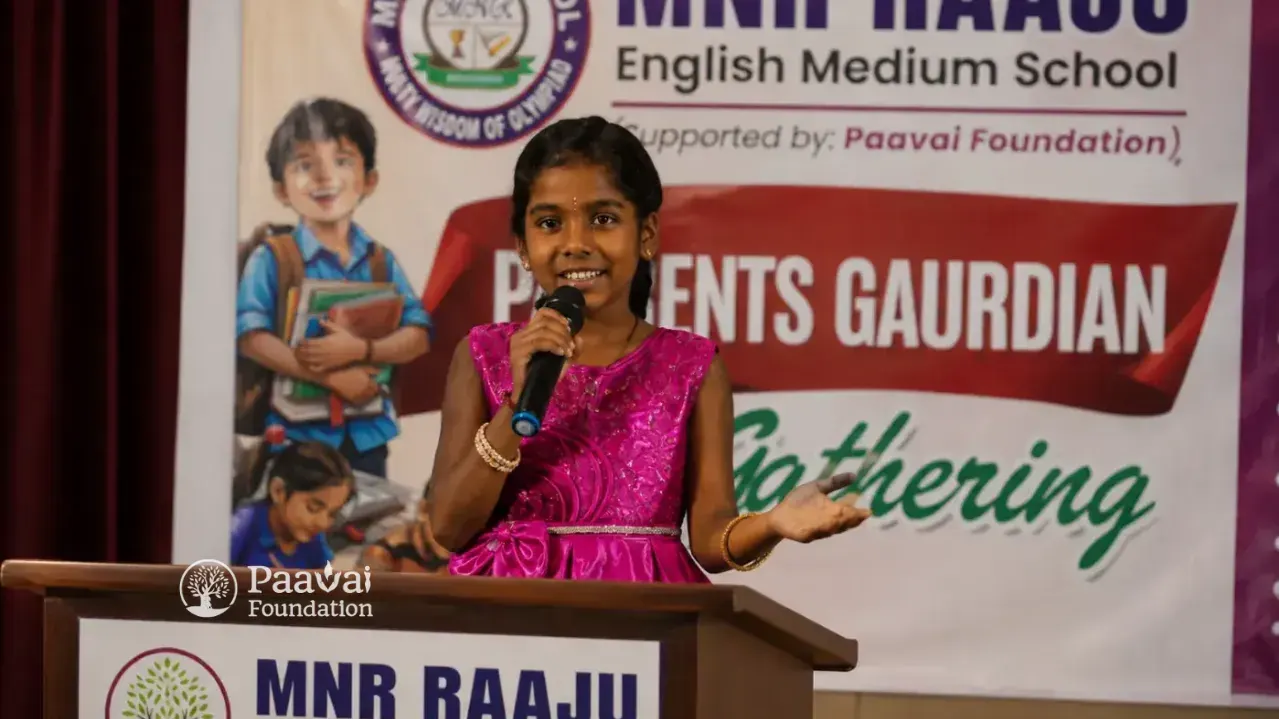
At Paavai Foundation, awareness of rights and responsibilities is one of the core pillars of Paavai Nayak, the Foundation's initiative for voice, leadership and change.
Paavai Nayak is built on the belief that leadership grows through voice, identity, awareness and responsibility. Alongside rights awareness, it focuses on confidence and self-belief, public voice and communication, decision-making, independent thinking and community participation. It helps children understand the importance of personal responsibility, accountability and ethical decision-making, so they grow into informed and thoughtful contributors to their communities. You can read more in Paavai Nayak: Empowering Confident Voices and Future Leaders.
That learning sits on a strong foundation. Paavai Abhayam ensures children grow in a safe, stable environment where values, discipline and responsibility are nurtured. Paavai Gurukul keeps education continuous, which is itself a child's right. Together, they reflect Paavai's Child Life Building Model: Care, Educate, Empower and Lead.
The idea is simple. A child who feels safe and valued learns that she has rights. A child who's educated understands them. A child who's empowered can speak up for them. And a child who leads helps protect the rights of others.
A Hopeful Picture
There's much to be optimistic about. More children in India are in school than ever before. Awareness of child rights is growing in families, schools and communities. Student councils, children's parliaments and youth-led initiatives are giving young people a real voice in many places. Children today are increasingly confident about speaking up, whether about the environment, education or fairness in their own communities.
Every conversation about rights and responsibilities adds to this progress. When one child learns that she matters and that her actions matter, she carries that understanding into her friendships, her classroom and, one day, her own family and workplace.
Teaching children about rights isn't about preparing them for conflict. It's about preparing them for a life of dignity, fairness and contribution. That's one of the best gifts any adult can give a child.
How You Can Help
Every child deserves to grow up knowing their rights and with the support to exercise them. You can be part of that.
Start at home or in your classroom. Try a family charter, a weekly meeting or a community project this month.
Support organisations that work for children. Donations help provide education, safety, healthcare and leadership opportunities for children who need them most. You can donate for children through Paavai Foundation.
Lend your skills. Young professionals can contribute to community projects and leadership work through the Changemakers Fellowship.
Strengthen communities. Child rights thrive in communities that are healthy, aware and inclusive, which is the focus of Paavai Community Connect 360.
For more ideas, read How to Support a Child NGO in India: A Complete Guide to Giving and Volunteering and Let Every Child Grow Up Safe, Seen and Supported.
FAQs
What are the basic rights of a child?
Under the UN Convention on the Rights of the Child, children's rights are often grouped into four areas: survival (life, health, nutrition), development (education, play, rest), protection (from abuse, neglect and exploitation) and participation (expressing views and being heard).
At what age should I start teaching my child about rights and responsibilities?
You can start from about age three with simple ideas like taking turns, sharing and "everyone deserves to be safe". As children grow, explanations and responsibilities can become more detailed.
How do I teach rights without making my child entitled?
Always pair each right with a responsibility, teach that every child has the same rights, and explain that rights protect well-being rather than letting children do whatever they want.
What are some examples of children's responsibilities?
Respecting others, sharing, helping at home, looking after belongings, attending school, listening to others, protecting the environment and helping people in their community.
What rights do children have under the Indian Constitution?
Article 21A gives children aged 6 to 14 the right to free and compulsory education, and Article 24 prohibits employing children under 14 in factories, mines and hazardous work. India also ratified the UN Convention on the Rights of the Child in 1992.
What are Fundamental Duties, and how do they relate to children?
Article 51A of the Constitution lists duties for every citizen, such as respecting the Constitution, protecting the environment and promoting harmony. One duty requires parents and guardians to provide educational opportunities for children aged 6 to 14.
When is Universal Children's Day?
Universal Children's Day is celebrated on 20 November, the anniversary of the adoption of the Convention on the Rights of the Child. India celebrates Children's Day on 14 November.
How does Paavai Foundation teach children about rights and responsibilities?
Through Paavai Nayak, which builds awareness of rights and responsibilities alongside confidence, communication, decision-making, independent thinking and community participation.
Comments
Loading comments...
Leave a comment
Your email address will not be published. Only your name is shown with your comment.